ICAR and FCI Sign MoU to Develop Safer, Sustainable Foodgrain Storage Technologies
Two-Year Research Project to Test Nitrogen and Carbon Dioxide Fumigation as Alternatives to Conventional Chemicals for Wheat and Rice Storage The Indian Council of Agricultural Research (ICAR) and the Food Corporation of India (FCI) have signed
Two-Year Research Project to Test Nitrogen and Carbon Dioxide Fumigation as Alternatives to Conventional Chemicals for Wheat and Rice Storage
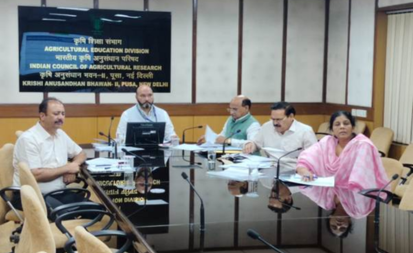
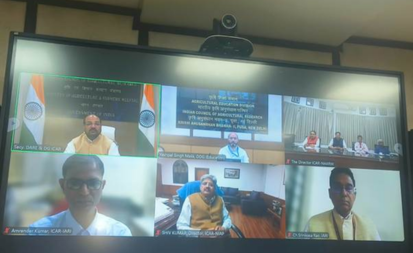
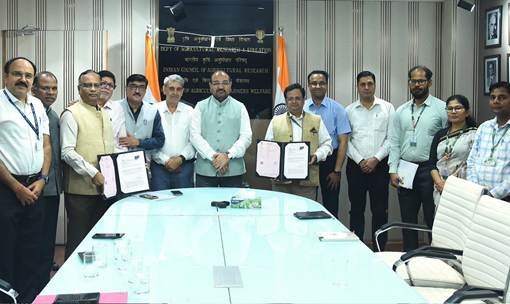
The Indian Council of Agricultural Research (ICAR) and the Food Corporation of India (FCI) have signed a Memorandum of Understanding (MoU) to develop safer and more sustainable technologies for managing storage pests in wheat and rice. Signed on 30 September 2026, the agreement will support research into alternative fumigation methods aimed at reducing pest resistance, occupational health risks and the environmental impact of conventional chemical treatments.
Supported by the Department of Food and Public Distribution (DFPD), Ministry of Consumer Affairs, Food and Public Distribution, the two-year Phase-I project will be implemented by ICAR–Central Institute of Post-Harvest Engineering and Technology (CIPHET), Ludhiana.
The initiative targets challenges in India’s foodgrain storage system, where repeated use of aluminium phosphide and malathion has contributed to increasing pest resistance, higher fumigation requirements and concerns over worker safety and environmental effects.
Key Highlights
- ICAR–FCI MoU: Signed on 30 September 2026 to research alternative fumigation technologies for wheat and rice.
- Project duration: Two-year Phase-I research programme, followed by a proposed one-year multi-location Phase-II trial.
- Nitrogen fumigation: Testing nitrogen gas with purity above 99% for wheat stored in metal silos.
- Carbon dioxide and phosphine: Combined fumigation trials for bagged wheat and rice in FCI and Central Warehousing Corporation (CWC) warehouses.
- Hermetic storage: Carbon dioxide fumigation trials for bagged wheat and rice enclosed in hermetic covers.
- Industry objective: Develop scalable, scientifically validated alternatives to conventional chemical fumigation and establish region-specific Standard Operating Procedures (SOPs).
Three Alternative Fumigation Technologies to Be Tested
The Phase-I research will focus on three approaches to controlling storage pests:
- Nitrogen gas fumigation: Testing nitrogen gas with purity above 99% for pest management in wheat stored in metal silos.
- Combined carbon dioxide and phosphine fumigation: Evaluating the combination for controlling pests in bagged wheat and rice stored in FCI and CWC warehouses.
- Carbon dioxide fumigation under hermetic covers: Testing the technology for bagged wheat and rice enclosed in airtight storage covers.
After the initial two-year phase, a proposed one-year Phase-II programme will conduct multi-location trials across different agro-climatic zones. The findings will support the development of region-specific SOPs for commercial application.
Why Safer Grain Storage Matters
India’s foodgrain reserves have traditionally relied on aluminium phosphide and malathion to control post-harvest pests. According to the project announcement, pest resistance frequencies have reached 72–100% in key Indian states, increasing the need for repeated fumigation and raising operational costs.
Conventional chemical methods also present occupational exposure concerns for workers involved in grain storage and handling, alongside potential environmental risks.
The ICAR–FCI collaboration aims to evaluate alternative methods that can improve pest control while addressing these challenges. Their commercial suitability will depend on the results of the trials, including effectiveness, operational feasibility and safety.
Impact on Hospitality, Foodservice and Tourism
Better Grain Preservation Could Support Food Supply Chains
Wheat and rice are staple ingredients across India’s hotels, restaurants, institutional kitchens, catering businesses and foodservice operations. Improved storage-pest management could help protect grain quality and reduce losses between procurement and distribution.
If the proposed technologies prove effective at scale, they could strengthen the reliability of foodgrain supplies reaching mills, distributors and commercial food buyers.
Potential Implications for Food Quality and Safety
Reducing reliance on conventional fumigants could help address concerns related to chemical exposure and fumigant residues. However, the project is still at the research stage, and its findings will need to establish the safety and effectiveness of each alternative under commercial storage conditions.
For hospitality procurement teams, the development reinforces the importance of sourcing grains from suppliers that maintain appropriate storage, pest-control and food-safety practices.
Opportunities for Warehousing and Food Logistics
The trials will cover metal silos, warehouse-stored grain bags and hermetically enclosed grain. These different storage environments make the research relevant to grain warehousing, bulk handling and post-harvest logistics.
Successful validation could eventually inform storage practices across the wider food supply chain, although commercial adoption will depend on trial outcomes, operating costs, infrastructure requirements and regulatory considerations.
Relevance for Hotels, Restaurants and Institutional Catering
Hotels, restaurants, caterers and large kitchens depend on consistent supplies of rice and wheat at predictable quality and cost. Better post-harvest preservation could help reduce avoidable supply-chain losses and support more reliable procurement over time.
The project does not directly introduce a new food-safety standard for hospitality operators; rather, it seeks to develop improved grain-storage technologies that could benefit the upstream food supply chain.
Industry Takeaway
The ICAR–FCI MoU marks a research-driven step towards safer and more sustainable post-harvest grain management in India. By testing nitrogen and carbon dioxide-based fumigation methods, alongside a combined carbon dioxide and phosphine approach, the project seeks to address pest resistance, worker safety and environmental concerns in wheat and rice storage.
For the hospitality and foodservice industry, the potential benefit lies in stronger grain preservation and more reliable food supply chains. The next milestone will be the results of the two-year Phase-I trials and the subsequent development of region-specific storage protocols.