Southern Agriculture Conference: Centre Sets Deadlines for Farmer ID, AgriStack and Lab-to-Land Initiatives
States Asked to Complete Farmer ID, Land-Record Integration and Digital Crop Survey Work; Bharat Vistar to Expand to 13 Regional Languages Hyderabad, September 18, 2026: The concluding session of the Regional Agriculture Conference for Southern States
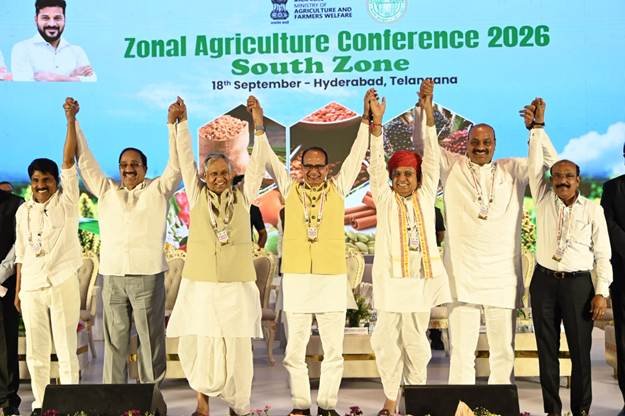
States Asked to Complete Farmer ID, Land-Record Integration and Digital Crop Survey Work; Bharat Vistar to Expand to 13 Regional Languages
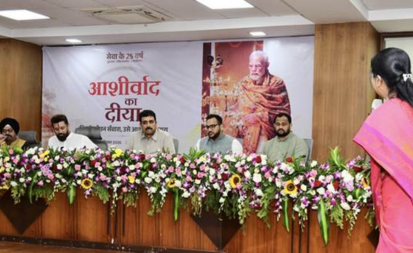
Hyderabad, September 18, 2026: The concluding session of the Regional Agriculture Conference for Southern States focused on translating agricultural commitments into time-bound implementation, with the Centre asking states to accelerate work on Farmer ID, AgriStack, land-record integration, digital crop surveys and farmer-facing technology.
Union Minister for Agriculture and Farmers’ Welfare Shivraj Singh Chouhan said the purpose of regional agriculture conferences was to move beyond discussions and deliver measurable outcomes. He described the Centre, state governments, scientists, farmers and agricultural officials as a common agriculture team and called for coordinated implementation of decisions taken at the conference.
Key Highlights
- States asked to complete agricultural commitments within stipulated timelines.
- Farmer ID generation to be accelerated, with Telangana and Karnataka reported to have crossed 75% completion.
- Andhra Pradesh, Telangana, Karnataka, Kerala and the Andaman and Nicobar Islands have completed the Digital Crop Survey, according to the release.
- Tamil Nadu, Kerala and the Andaman and Nicobar Islands were asked to accelerate Farmer ID generation.
- States urged to integrate land records with Farmer Registry and establish SOPs for tenant farmers.
- Bharat Vistar to expand from Hindi and English to 13 regional languages.
- Farmers will be able to seek agricultural advice through mobile phones in their own languages.
- State government schemes are to be integrated with Bharat Vistar.
- ICAR institutions, KVKs and agricultural scientists will be encouraged to take research directly to farmers through field-level campaigns.
- The Rabi Conference will be held in New Delhi on September 28–29, 2026.
From Conference Commitments to Time-Bound Action
The concluding session placed implementation at the centre of the regional agriculture roadmap.
States were asked to act on the commitments made during the conference instead of repeating discussions on issues that have already been identified. Farmer ID generation was cited as an example, with states expected to meet the deadlines they have committed to.
The approach is intended to make regional agriculture conferences more focused on measurable targets and follow-through.
Farmer ID and AgriStack Work to Accelerate
Digital agricultural infrastructure was a major focus of the meeting.
According to the release, Telangana and Karnataka have crossed 75% completion in Farmer ID generation, while progress in georeferencing has been reported in Tamil Nadu, Karnataka and Telangana.
Andhra Pradesh, Telangana, Karnataka, Kerala and the Andaman and Nicobar Islands have completed their Digital Crop Survey, while Kerala, Tamil Nadu and the Andaman and Nicobar Islands have been asked to accelerate Farmer ID generation.
The Centre also called for faster linking of land parcels and integration between land records and the Farmer Registry, particularly in states where the process remains incomplete.
Tenant Farmers and Land Records Included in Digital Push
The conference also addressed gaps involving farmers who cultivate land without necessarily owning it.
States including Karnataka, Kerala, Tamil Nadu and the Andaman and Nicobar Islands were asked to prepare and notify Standard Operating Procedures for tenant farmers, including sharecroppers and agricultural tenants.
Puducherry and Lakshadweep were also asked to undertake georeferencing of village maps.
Such integration of agricultural, land and farmer data is intended to improve the ability of government systems to identify farmers and deliver agricultural services.
Bharat Vistar to Expand Agricultural Advice Across 13 Languages
A significant technology-related announcement was the planned expansion of Bharat Vistar, a mobile-based platform designed to provide farmers with agricultural information and advice.
Currently available in Hindi and English, the system is expected to expand to 13 regional languages, including Tamil, Telugu, Kannada and Malayalam.
The platform is intended to allow farmers to ask questions in their own language and receive responses in the same language. The Centre has also called for state government schemes to be integrated into the platform.
For a country with diverse agricultural regions and languages, the expansion could make digital agricultural advisory services more accessible at the farm level.
Research to Move from Lab to Land
The conference also reinforced the lab-to-land approach, with agricultural scientists expected to engage more directly with farmers.
States can organise 15-day or 20-day agricultural campaigns, during which scientists from the Government of India, ICAR institutions and Krishi Vigyan Kendras can participate in village and field-level interactions.
The release notes that the agricultural research ecosystem includes around 16,000 scientists, alongside ICAR institutions, KVKs and agricultural universities.
The objective is to increase direct interaction between researchers and farmers so that research outcomes can be translated into practical agricultural applications.
Rabi Conference Set for September 28–29
The next major national agricultural planning exercise will be the Rabi Conference in New Delhi on September 28 and 29.
Agriculture Ministers and officials from states are expected to attend with detailed Rabi-season plans. Discussions will cover the crops to be sown and the area proposed under each crop.
The resulting crop plans will help assess requirements for seeds, fertilisers and other agricultural inputs ahead of the Rabi season.
Impact on Hospitality, Food, Travel & Tourism
The announcements are primarily focused on agricultural administration, but they have several potential downstream implications for the hospitality and food ecosystem.
Food Supply Planning: Better farmer identification, crop surveys and digital agricultural data can strengthen visibility into farm-level production. This can be relevant to food processors, institutional buyers, hotels and restaurants dependent on consistent agricultural supplies.
Regional Food Sourcing: Digital advisory services in regional languages could support farmers in adopting production and quality practices suited to local markets, potentially strengthening regional sourcing for hospitality and food businesses.
Culinary Tourism: Southern India’s diverse agricultural base—including crops such as spices, coffee, coconut, cashew and cocoa—supports regional cuisines and culinary experiences. Better agricultural linkages can indirectly strengthen these local food ecosystems.
Rural and Farm Tourism: Greater engagement between agricultural institutions, farmers and technology platforms could support the development of more organised farm-based experiences, although tourism outcomes would also depend on infrastructure, connectivity and destination development.
Rabi Season: The September 28–29 crop-planning exercise could have wider implications for the availability of agricultural commodities entering food and hospitality supply chains during the Rabi cycle.
Industry Takeaway
The concluding session of the Southern Regional Agriculture Conference shifts the emphasis from policy discussion to implementation, with Farmer ID, AgriStack, land records, digital crop surveys and farmer advisory services receiving specific deadlines and action points.
For the food and hospitality sector, the developments are particularly relevant because better agricultural data, stronger farmer services and improved research-to-farm connectivity can influence the reliability and quality of future food supply chains. The upcoming Rabi Conference will provide another key checkpoint for crop planning and agricultural input preparedness.