Ahmedabad Joins India’s International Hub-and-Spoke Network, Expanding Global Air Connectivity
Third spoke airport after Varanasi and Amritsar to connect passengers seamlessly to 22 international destinations via Delhi, with 22 more airports planned under the next phase Key Highlights Ahmedabad becomes the third spoke airport under India’s International

Third spoke airport after Varanasi and Amritsar to connect passengers seamlessly to 22 international destinations via Delhi, with 22 more airports planned under the next phase
Key Highlights
- Ahmedabad becomes the third spoke airport under India’s International Aviation Hub Strategy after Varanasi and Amritsar.
- Passengers can complete check-in, immigration, customs and baggage formalities at Ahmedabad before flying to Delhi for onward international connections.
- AI 1117 will connect Ahmedabad passengers to 22 destinations, mainly across Europe, Southeast Asia and the Middle East.
- Evening service AI 1121 will extend connectivity to 17 destinations across North America, East Asia, Southeast Asia, Australia and Europe.
- The next phase will extend Hub & Spoke connectivity to 22 more airports, including Surat.
- The government expects aviation hub development to generate around 4 lakh direct and indirect jobs and contribute an additional US$30 billion to India’s GDP by 2030.
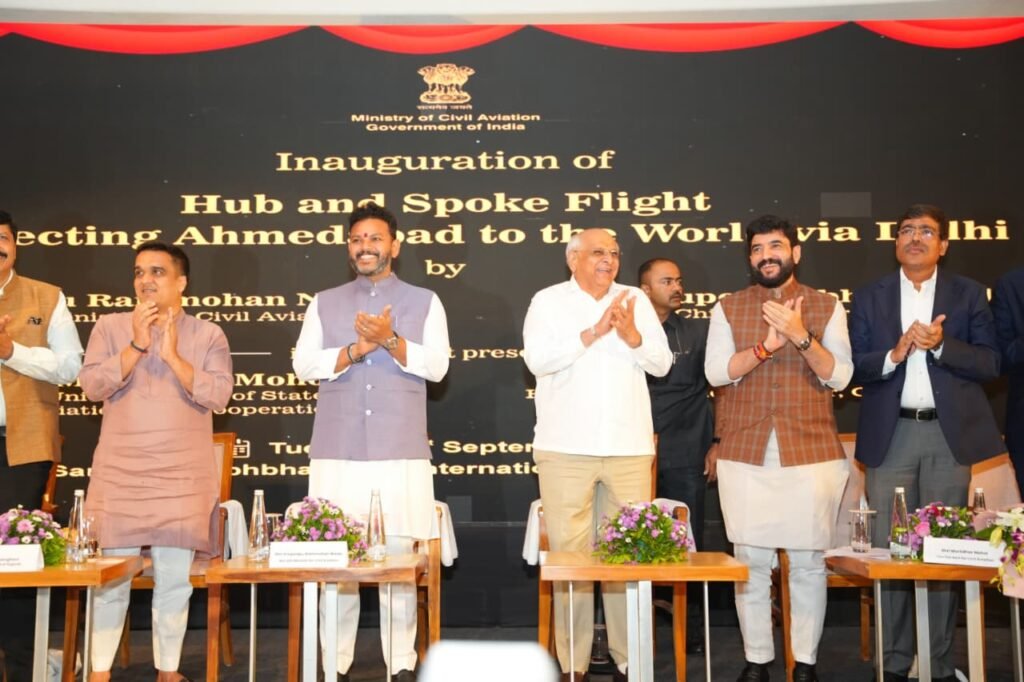
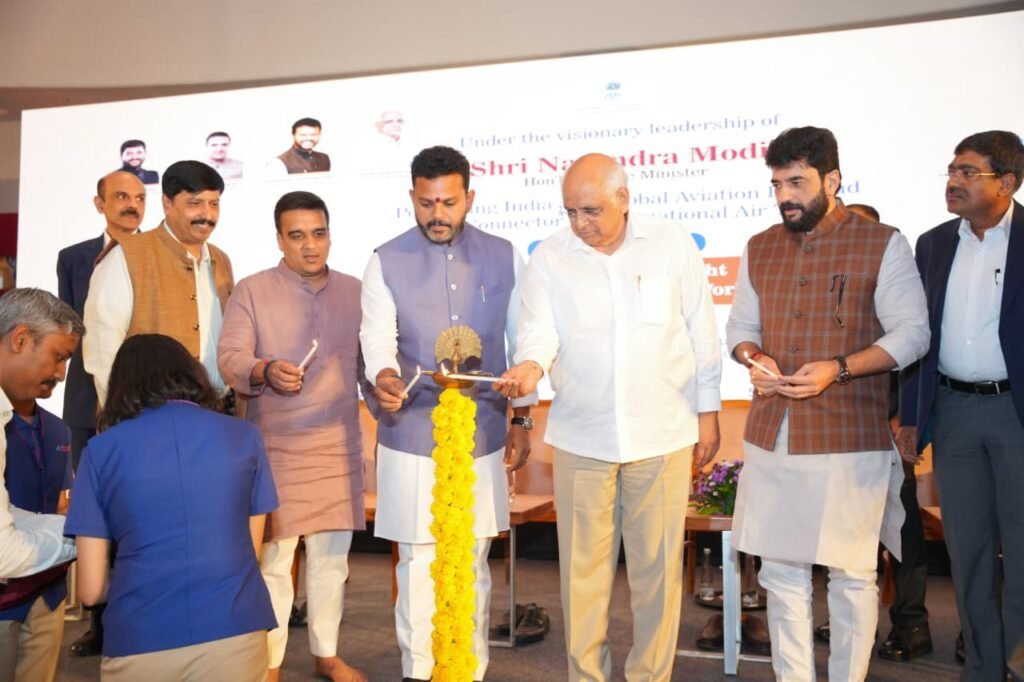
India has expanded its international aviation hub strategy with the launch of Hub-and-Spoke international flight operations from Ahmedabad, giving passengers from Gujarat a more seamless route to international destinations through Delhi.
The Ministry of Civil Aviation launched the Ahmedabad operations on September 1, making it the third airport in the country to join the Hub-and-Spoke framework, following Varanasi and Amritsar.
The initiative is designed to reduce the complexity of international travel for passengers originating from regional airports while strengthening Delhi’s role as India’s international aviation hub.
Ahmedabad passengers to complete immigration and baggage formalities locally
Under the new system, passengers travelling from Ahmedabad to international destinations via Delhi will be able to complete check-in, immigration and customs formalities at Ahmedabad itself.
Their baggage will also be checked through to the final international destination.
After reaching Delhi, passengers can proceed to their onward international flight without repeating immigration or customs procedures.
The Ministry said the system will eliminate several steps that passengers previously had to undertake when connecting from a domestic Ahmedabad flight to an international service at Delhi, including collecting baggage and completing immigration procedures again.
39 international destinations covered through two services
The new network is expected to significantly expand Ahmedabad’s international connectivity through Delhi.
AI 1117 will connect passengers to 22 destinations, primarily across Europe, Southeast Asia and the Middle East.
The evening AI 1121, departing Ahmedabad at 8:15 pm, will extend connectivity to 17 destinations covering North America, East Asia, Southeast Asia, Australia and Europe.
Together, the services provide access to a broad international network while allowing passengers to begin the international travel process at Ahmedabad.
1.6 crore passengers travelled Ahmedabad-Delhi for international flights

Civil Aviation Minister Shri Ram Mohan Naidu highlighted the scale of the opportunity, noting that approximately 1.6 crore passengers travelled from Ahmedabad to Delhi last year to board international flights.
The government expects the Hub-and-Spoke model to substantially improve the experience for these travellers while strengthening Ahmedabad’s position as an international gateway.
The Minister also linked the improved connectivity to Gujarat’s preparations to attract a global audience for the Commonwealth Games in 2030.
Boost expected for Gujarat’s business and tourism economy
The government expects the improved air network to benefit Gujarat’s major economic sectors, including textiles, pharmaceuticals, diamonds and gems, and engineering.
The benefits are also expected to extend to exporters, handicraft producers, investors, students and tourists by improving access to international markets and destinations.
For Gujarat, stronger integration with India’s aviation hub network could support increased trade, investment, tourism and regional economic activity.
Hub strategy targets global aviation leadership
The Hub-and-Spoke model forms a key part of the government’s International Aviation Hub Strategy, which aims to position India as the preferred aviation hub for Indian travellers by 2030 and as a leading global aviation hub by 2047.
The strategy seeks to use India’s geographical position and expanding airport infrastructure to increase international connectivity through Indian hubs and reduce dependence on overseas transit airports.
The government estimates that aviation hub development could generate approximately 4 lakh direct and indirect jobs and contribute an additional US$30 billion to India’s GDP by 2030.
By 2047, the cumulative impact could support around 16 million direct and indirect jobs and contribute nearly US$1.4 trillion to the economy, according to Ministry estimates.
Hub-and-Spoke network to expand to 22 more airports
Ahmedabad’s inclusion is part of a phased national expansion.
The government plans to extend Hub-and-Spoke connectivity to 22 additional airports during the next phase, including Surat in Gujarat.
The expansion could bring the benefits of international connectivity and simplified passenger processing to more regional airports across the country.
Impact on Hospitality, Travel and Tourism
Higher international tourist arrivals: Easier connections through Ahmedabad could encourage more inbound visitors to Gujarat, particularly travellers from Europe, Southeast Asia, the Middle East and other markets served through Delhi.
Hotel demand: Improved international connectivity can support higher demand for hotels across Ahmedabad and other Gujarat destinations from leisure travellers, business visitors, airline passengers and international delegations.
Business and MICE tourism: Better access to global markets could strengthen Ahmedabad and Gujarat as destinations for conferences, exhibitions, corporate travel and international business events.
Destination tourism: Faster and simpler international access can benefit Gujarat’s heritage, cultural, religious, wildlife and leisure destinations by making the state more accessible to overseas travellers.
Travel experience: Completing immigration, customs, check-in and baggage procedures at Ahmedabad can reduce the friction associated with international connecting journeys, making the overall travel experience more convenient.
Hospitality ecosystem: Greater passenger movement can create opportunities not only for hotels but also for restaurants, airport lounges, travel operators, destination-management companies, tour guides and other tourism businesses.
For the hospitality and tourism sector, Ahmedabad’s integration into the international Hub-and-Spoke network is particularly significant because air connectivity is a major driver of destination growth. As more airports join the system, the model could help distribute international visitor flows beyond traditional metro gateways and create new opportunities for regional tourism economies.