UP Gets MSP Relief and 6.18 Lakh Rural Homes as Centre Unveils Climate-Resilient Agriculture Roadmap
Shivraj Singh Chouhan and CM Yogi Adityanath review agriculture, rural development and climate preparedness; key decisions aim to strengthen food security and rural infrastructure Key Highlights MSP procurement for wheat, gram and masoor extended till July 8,
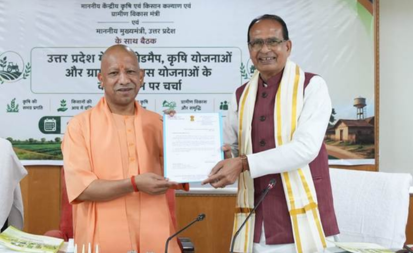
Shivraj Singh Chouhan and CM Yogi Adityanath review agriculture, rural development and climate preparedness; key decisions aim to strengthen food security and rural infrastructure
Key Highlights
- MSP procurement for wheat, gram and masoor extended till July 8, 2026 in Uttar Pradesh.
- Centre approves 6.18 lakh houses under the new phase of PMAY-Gramin.
- Scientific agriculture roadmap to address climate change, groundwater depletion and El Niño risks.
- District-wise contingency plans to promote short-duration and low-water crops.
- Greater focus on irrigation, water conservation, technology and farm advisory services.
- Centre and Uttar Pradesh to jointly strengthen agriculture and rural development.
Lucknow | June 25, 2026
The Central Government has announced a series of measures aimed at strengthening agriculture and rural development in Uttar Pradesh, including an extension of the Minimum Support Price (MSP) procurement period for key Rabi crops and approval of more than 6.18 lakh rural houses under the Pradhan Mantri Awas Yojana-Gramin (PMAY-G).
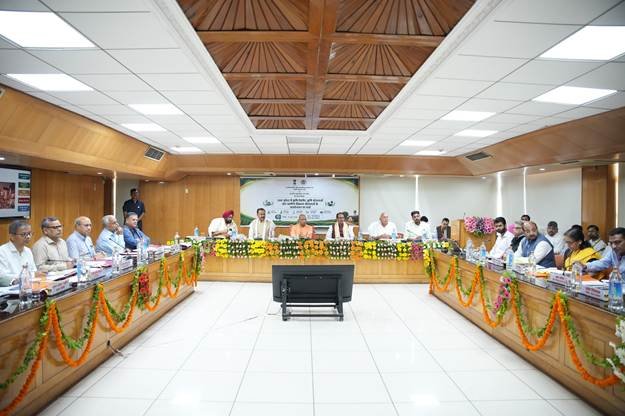
The decisions were taken during a high-level review meeting between Union Agriculture & Farmers’ Welfare and Rural Development Minister Shivraj Singh Chouhan and Uttar Pradesh Chief Minister Yogi Adityanath in Lucknow.
MSP Procurement Extended to Support Farmers
In a major relief for farmers, the Centre has extended MSP procurement for wheat, gram and masoor under the Rabi Marketing Season 2026–27 from June 24 to July 8.
The extension is expected to benefit lakhs of farmers by providing additional time to sell their produce at government procurement centres, reducing the risk of distress sales due to delayed arrivals, weather-related disruptions or mandi congestion.
6.18 Lakh Rural Houses Approved
The Union Government also approved 6,18,482 pucca houses for Uttar Pradesh under the new phase of PMAY-Gramin (2024–25 to 2028–29).
The allocation forms part of the Centre’s nationwide target of constructing an additional two crore rural houses, with priority to eligible families identified through completed household surveys.
Officials said implementation will focus on timely construction, quality standards and technology-based monitoring to ensure transparency and efficient delivery.
Climate-Resilient Agriculture Roadmap
Recognising Uttar Pradesh’s significant contribution to India’s food production, the Centre and the state government agreed to prepare a scientific, long-term agricultural roadmap focused on climate resilience.
The strategy will integrate crop planning, irrigation, water conservation, improved seeds, technology adoption and market linkages while addressing emerging challenges such as rising temperatures, groundwater depletion and the possibility of El Niño-induced weak rainfall.
District-level contingency plans are also being developed to encourage short-duration and low-water crops while ensuring timely supply of quality seeds, technical guidance and scientific advisories through Krishi Vigyan Kendras and state agriculture departments.
Unified Vision for Rural Development
The meeting also reviewed the implementation of major agriculture and rural development programmes, with both governments emphasising stronger coordination to ensure benefits reach farmers, agricultural labourers and rural households more efficiently.
Officials highlighted that agriculture, rural infrastructure and housing are being viewed as part of an integrated development strategy aimed at improving livelihoods and strengthening the rural economy.
Hospitality & Tourism Impact
The decisions carry long-term significance for India’s hospitality and tourism industries, particularly in northern India, where agriculture forms the backbone of food supply chains.
The extension of MSP procurement is expected to support farm incomes and improve stability in the supply of wheat and pulses—essential ingredients for hotels, restaurants, catering businesses and food processors. A more resilient agricultural sector also helps moderate food price volatility, enabling hospitality businesses to better manage procurement costs.
The approval of over 6.18 lakh rural homes is likely to improve living standards and infrastructure across villages, creating opportunities for rural tourism, homestays and local entrepreneurship. Improved housing and connectivity can strengthen village-based tourism experiences while generating new demand for hospitality services.
The proposed climate-resilient agriculture roadmap further supports the hospitality sector’s growing emphasis on sustainable sourcing. Better water management, diversified cropping and climate-smart farming practices can enhance long-term food security, ensuring a more reliable supply of cereals, pulses and fresh produce for hotels, restaurants and institutional kitchens.