Historic Qadian–Beas Railway Line Revived After Nearly a Century, Set to Boost Religious Tourism and Connectivity in Punjab
₹1,400 crore rail corridor to connect key pilgrimage destinations, improve regional mobility and unlock economic opportunities across the Majha regionChandigarh, June 18, 2026: In a landmark development for Punjab's transportation and tourism landscape, the Government
₹1,400 crore rail corridor to connect key pilgrimage destinations, improve regional mobility and unlock economic opportunities across the Majha region
Chandigarh, June 18, 2026: In a landmark development for Punjab’s transportation and tourism landscape, the Government of India has revived the long-pending Qadian–Beas New Railway Line Project, nearly a century after it was first conceived during the British era.
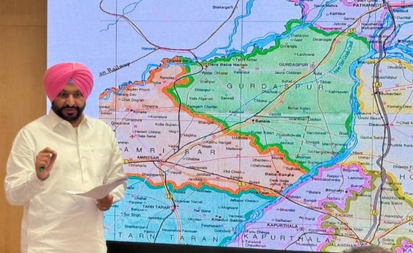
Announcing the revival, Union Minister of State for Railways and Food Processing Industries Ravneet Singh Bittu described the project as a transformative initiative that will strengthen connectivity, promote religious tourism and accelerate economic development across Punjab’s Majha region.
The proposed 39.68-kilometre broad-gauge railway corridor will connect Qadian in Gurdaspur district with Beas in Amritsar district at an estimated cost of approximately ₹1,400 crore.
Key Highlights
- ₹1,400 crore investment approved for Qadian–Beas Railway Line
- 39.68-km broad-gauge corridor to be developed by Northern Railway
- Project revived nearly 100 years after its original approval
- Railway line to pass through Qadian, Dhapai, Ghuman, Butala, Sathiala and Beas
- Two crossing stations planned at Ghuman and Butala
- Modern signalling systems and Kavach technology to be deployed
- Significant boost expected for religious tourism and regional development
- Alternative rail corridor to strengthen network resilience in Punjab
A Railway Project Nearly 100 Years in the Making
The Qadian–Beas rail link has a unique place in India’s railway history.
Originally approved during 1928-29 by the then North-Western Railway, construction work had advanced considerably by the early 1930s before the project was eventually discontinued due to changing priorities and circumstances.
Recognising its long-term strategic importance, the railway line was later included under the Socially Desirable Rail Connectivity Programme and featured in the supplementary Railway Budget of 2010-11.
Following years of delays, the project has now been revived with a revised cost estimate of approximately ₹1,400 crore, bringing renewed momentum to one of Punjab’s oldest pending railway proposals.
Modern Infrastructure for Future Growth
The project will feature modern railway infrastructure designed to meet contemporary operational and safety standards.
Key components include:
- Two crossing stations at Ghuman and Butala
- Eleven major bridges
- 121 minor bridges
- Fifty-four Road Under Bridges (RUBs)
- Advanced signalling and telecommunication systems
- Kavach automatic train protection technology
The corridor will significantly improve rail access for communities across the Majha belt, many of which currently lack direct railway connectivity.
Major Boost for Religious and Spiritual Tourism
One of the most significant impacts of the new railway line is expected to be on Punjab’s religious tourism sector.
The corridor will improve accessibility to several important spiritual and pilgrimage destinations, including:
- Qadian, birthplace of the Ahmadiyya Muslim Community
- Dera Baba Jaimal Singh, Beas
- Sri Darbar Sahib (Golden Temple) region
- Dera Baba Nanak
- Gurdwara Achal Sahib
- Gurdwara Bhagat Namdev Ji, Ghuman
- Gurdwara Sahib Patshahi Panjavi
- Burj Sahib
- Gurdwara Baba Raja Ram Ji
- Pandori Dham
- Ram Sharnam Temple
- Shirdi Sai Temple, Gurdaspur
Improved rail connectivity is expected to make travel more convenient for pilgrims and visitors arriving from across India and international markets, potentially increasing tourist footfall throughout the region.
Opportunities for Hospitality and Travel Businesses
Enhanced railway connectivity often serves as a catalyst for hospitality sector growth, particularly in pilgrimage and heritage destinations.
Hotels, guesthouses, restaurants, tour operators and local transport providers in towns along the corridor are expected to benefit from increased visitor movement and longer tourist stays.
The project could also encourage the development of integrated religious tourism circuits linking Amritsar, Beas, Qadian, Gurdaspur and surrounding destinations, creating new opportunities for tourism operators and destination marketers.
For Punjab’s hospitality industry, improved access to lesser-connected pilgrimage centres may help diversify tourism beyond traditional high-traffic destinations.
Economic Impact Beyond Tourism
Apart from tourism benefits, the railway line is expected to generate substantial economic gains across the Majha region.
According to the Ministry, the project will:
- Improve market access for farmers
- Facilitate efficient movement of agricultural produce
- Strengthen trade and commerce
- Support small-scale industries
- Generate employment during construction and operation
- Encourage new investments and economic activity
Improved transportation infrastructure is expected to contribute to broader regional development while enhancing mobility for residents and businesses.
Strategic Importance for Northern India
The project also holds strategic value from an operational perspective.
Once completed, the line will provide an alternative rail corridor to the important Amritsar–Pathankot route, enhancing network resilience during emergencies, maintenance blocks or operational disruptions.
This additional route flexibility can improve overall efficiency and reliability of rail services across northern India.
Strengthening Punjab’s Tourism and Infrastructure Ecosystem
The revival of the Qadian–Beas Railway Line represents more than a transportation project; it is an investment in regional connectivity, religious tourism and economic development.
For the hospitality and travel sectors, the corridor offers the potential to unlock new tourism flows, strengthen pilgrimage circuits and create opportunities for destination development across Punjab’s culturally rich Majha region.
Nearly a century after it was first envisioned, the project is poised to become a transformative infrastructure link connecting heritage, faith, commerce and community development in one of North India’s most significant cultural landscapes.