Kharif Sowing Gains Momentum: Rice, Bajra and Groundnut Acreage Rise as Cotton and Pulses Lag
Early-season government data shows mixed sowing trends across major crops, with implications for food inflation, hospitality supply chains and food processing industries Key Highlights Total Kharif sowing reached 84.60 lakh hectares as of June 12, 2026. Rice acreage
Early-season government data shows mixed sowing trends across major crops, with implications for food inflation, hospitality supply chains and food processing industries
Key Highlights
- Total Kharif sowing reached 84.60 lakh hectares as of June 12, 2026.
- Rice acreage increased by 1.09 lakh hectares compared with the same period last year.
- Bajra recorded one of the strongest gains, rising by 0.91 lakh hectares.
- Groundnut sowing expanded by 0.30 lakh hectares.
- Cotton acreage declined sharply by 3.66 lakh hectares year-on-year.
- Pulses sowing fell by 1.18 lakh hectares, led by lower moong and arhar coverage.
- Sugarcane area remained largely stable.
- Government continues to push self-reliance in pulses and higher cotton production amid weather uncertainties.
Early Kharif Sowing Data Signals Strong Start for Rice and Millets, Concerns Over Cotton and Pulses
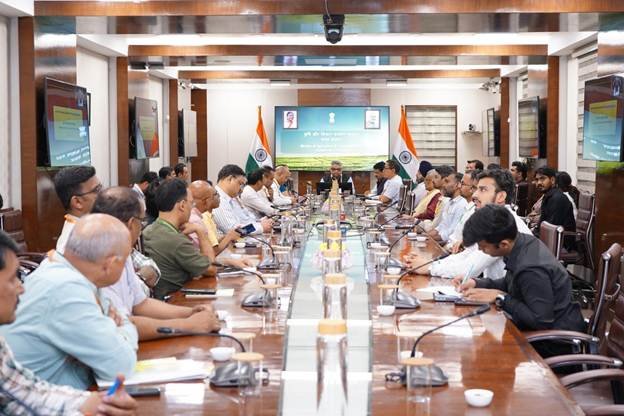
New Delhi, June 17: India’s Kharif sowing season has begun on a mixed note, with rice, bajra and groundnut registering higher acreage compared to the corresponding period last year, while cotton and pulses have witnessed slower planting progress, according to the latest data released by the Ministry of Agriculture and Farmers Welfare.
As of June 12, farmers had sown crops across 84.60 lakh hectares, slightly lower than the 88.04 lakh hectares recorded during the same period in 2025.
The early sowing figures offer an important indicator of crop production trends that could influence food prices, agricultural supply chains and raw material availability for food processing industries in the coming months.
Rice Sowing Moves Ahead of Last Year
Rice, India’s most important Kharif crop, has shown encouraging momentum.
The area under paddy cultivation reached 4.98 lakh hectares, compared with 3.88 lakh hectares during the same period last year, reflecting an increase of 1.09 lakh hectares.
The improvement comes as several states begin sowing operations with the onset of monsoon activity.
Pulses Coverage Declines
Despite the government’s continued focus on achieving self-reliance in pulses, overall sowing of pulse crops has declined.
Total pulses acreage stood at 1.55 lakh hectares, down from 2.73 lakh hectares a year ago.
Among major pulse crops:
- Arhar acreage declined by 0.12 lakh hectares.
- Moong acreage fell by 0.86 lakh hectares.
- Urd acreage dropped by 0.07 lakh hectares.
The lower acreage will be closely watched by policymakers given ongoing efforts to reduce import dependence and stabilize domestic pulse supplies.
Millets and Bajra Show Strong Growth
Shri Anna (millets) and coarse cereals recorded positive growth overall, reaching 4.77 lakh hectares, compared with 4.32 lakh hectares last year.
The standout performer was bajra, where acreage jumped by 0.91 lakh hectares, supported by increasing demand for climate-resilient crops and government promotion of millets.
Ragi also recorded marginal growth, while maize acreage remained slightly lower than last year.
Groundnut Gains, Soybean Softens
Within oilseeds, overall sowing remained largely stable at 3.51 lakh hectares.
Groundnut emerged as a bright spot, recording an increase of 0.30 lakh hectares.
However:
- Soybean acreage declined by 0.20 lakh hectares.
- Sunflower and sesame also reported lower sowing coverage.
The performance of oilseed crops remains important for India’s edible oil industry and food manufacturing sector.
Cotton Area Falls Sharply
Cotton sowing registered the steepest decline among major crops.
The area under cotton cultivation stood at 9.53 lakh hectares, compared with 13.19 lakh hectares during the same period last year, representing a decline of 3.66 lakh hectares.
The drop comes even as the government recently launched a mission-mode initiative to boost cotton production and improve farmer incomes.
Industry stakeholders will closely monitor whether acreage improves as monsoon conditions stabilize.
Sugarcane and Jute Remain Stable
Sugarcane acreage remained broadly unchanged at 54.08 lakh hectares, while jute and mesta recorded a marginal increase compared to the previous year.
The stability in sugarcane planting provides some reassurance for the sugar and ethanol sectors, which continue to play a significant role in India’s biofuel ecosystem.
Why It Matters for Hospitality and Food Processing
The Kharif sowing season directly influences raw material availability across India’s food ecosystem.
Impact on Hospitality
Hotels, restaurants and catering operators rely heavily on:
- Rice
- Pulses
- Edible oils
- Sugar
Higher rice acreage could help support stable supplies and moderate price pressures later in the year. However, lower pulses acreage may keep procurement costs elevated for institutional kitchens and foodservice operators if production remains constrained.
Impact on Food Processing
The growth in:
- Groundnut
- Bajra
- Millets
could benefit manufacturers producing snacks, health foods, ready-to-eat products and millet-based value-added foods.
Meanwhile, any prolonged weakness in soybean or pulse production could affect ingredient sourcing for food processors and packaged food companies.
Outlook
The Kharif season is still at an early stage, and sowing patterns are expected to evolve as monsoon coverage expands across key agricultural regions. While rice, millets and groundnut have started strongly, policymakers will be closely monitoring pulses and cotton acreage, especially amid concerns over weather variability and the potential impact of El Niño conditions.
For the hospitality, food processing and agribusiness sectors, the coming weeks will provide a clearer indication of crop availability, pricing trends and supply chain stability for the remainder of the year.