Centre Allocates ₹544 Crore for Stubble Management, Expands Biomass and Biofuel Push Ahead of Harvest Season
Government targets distribution of 46,000 crop residue machines and development of 141 stubble supply chain projects as part of a long-term strategy to convert agricultural waste into economic value Key Highlights Centre reviews nationwide stubble management preparedness
Government targets distribution of 46,000 crop residue machines and development of 141 stubble supply chain projects as part of a long-term strategy to convert agricultural waste into economic value
Key Highlights
- Centre reviews nationwide stubble management preparedness ahead of the 2026 paddy harvest season.
- ₹544.15 crore allocated under the Crop Residue Management (CRM) Scheme for 2026-27.
- More than 46,000 crop residue management machines to be distributed.
- 141 stubble-based supply chain projects planned across participating states.
- Strong focus on biomass power, compressed biogas (CBG), ethanol and pellet manufacturing.
- ‘Stubble Protection Force’ to monitor stubble burning in 70 tehsils across 14 NCR districts.
- Government promotes short-duration paddy varieties and Direct Seeded Rice (DSR) technology.
- Efforts aimed at reducing pollution, improving soil health and creating additional farmer income streams.
Centre Strengthens Stubble Management Strategy with ₹544 Crore Outlay, Expands Biomass and Biofuel Ecosystem
New Delhi, June 16: The Centre has unveiled an expanded strategy to tackle crop residue burning, combining mechanisation, bioenergy development and supply chain investments to transform agricultural stubble from an environmental challenge into an economic resource.
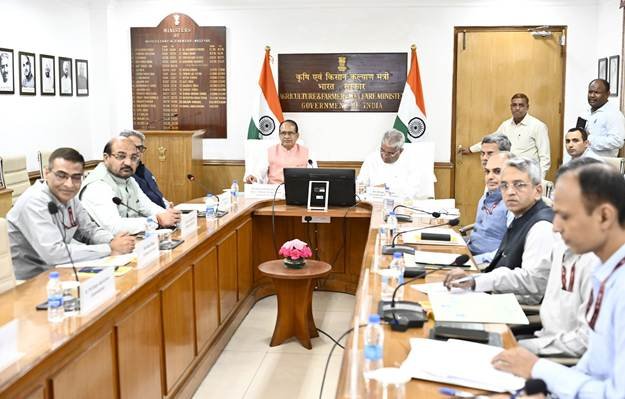
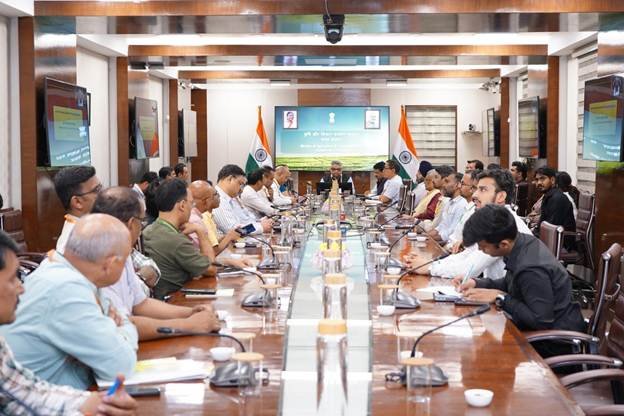
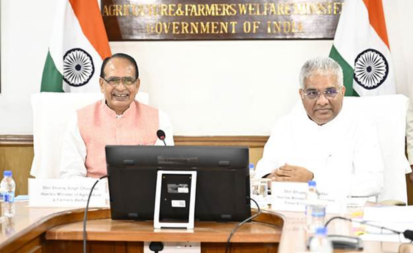
At a high-level inter-ministerial meeting chaired by Union Agriculture Minister Shivraj Singh Chouhan and Union Environment Minister Bhupender Yadav, officials reviewed preparedness for the upcoming paddy harvesting season and outlined measures aimed at achieving a permanent solution to stubble burning.
₹544 Crore Allocated for 2026-27
Under the Crop Residue Management (CRM) Scheme, the government has earmarked ₹544.15 crore for 2026-27, with the first installment of ₹272.07 crore already released to states.
The programme’s targets for the year include:
- Distribution of over 46,000 crop residue management machines.
- Establishment of 910 new Custom Hiring Centres.
- Development of 141 stubble supply chain projects.
- Scientific management of an estimated 2.76 crore tonnes of paddy residue.
Since the launch of the CRM scheme in 2018-19, the Centre has provided over ₹4,266 crore in assistance to Punjab, Haryana, Uttar Pradesh, Madhya Pradesh and research institutions, facilitating the deployment of more than 3.54 lakh crop residue management machines.
From Waste to Resource
A major focus of the meeting was the expansion of industrial uses for agricultural residue.
Both ministries emphasized scaling up:
- Biomass-based power generation.
- Compressed Biogas (CBG) projects.
- Ethanol production facilities.
- Pellet and briquette manufacturing units.
According to the government, these initiatives are helping create a commercial market for agricultural residue, providing farmers with alternatives to burning stubble while generating additional revenue streams.
“We will work towards turning stubble from a problem into a resource,” Agriculture Minister Shivraj Singh Chouhan said during the review.
NCR Monitoring to Intensify
To further reduce crop residue burning incidents, the government plans to activate a dedicated ‘Stubble Protection Force’ across 70 tehsils in 14 districts of the National Capital Region (NCR).
The monitoring mechanism will work alongside state administrations and pollution control authorities to track stubble management practices and promote timely intervention where required.
Officials noted that stubble burning incidents have already declined significantly in recent years due to coordinated efforts involving the Centre, state governments, ICAR institutions, Krishi Vigyan Kendras (KVKs) and farmer groups.
Focus on Short-Duration Paddy Varieties
The government is also encouraging the adoption of short-duration and low-water-consuming paddy varieties to increase the interval between paddy harvesting and wheat sowing.
A longer sowing window allows farmers more time to manage crop residue without resorting to burning.
In parallel, authorities will continue promoting Direct Seeded Rice (DSR) technology, which can reduce water consumption and support sustainable crop management practices.
Why It Matters for Hospitality, Food Processing and Travel
While stubble management is often viewed as an environmental issue, the initiative carries significant implications for hospitality, tourism and food processing industries.
Cleaner Air for Tourism and Hospitality
Reduced stubble burning can contribute to lower seasonal air pollution levels across North India, particularly in Delhi-NCR and surrounding destinations. Improved air quality benefits:
- Hotels and resorts.
- Business travel.
- Urban tourism.
- Outdoor events and hospitality operations.
New Opportunities in Bioenergy
The expansion of biomass, compressed biogas and ethanol projects could strengthen India’s renewable energy ecosystem, creating opportunities for hospitality businesses seeking sustainable energy solutions and lower carbon footprints.
Sustainable Supply Chains
Food processing companies sourcing agricultural raw materials increasingly face sustainability requirements. Better crop residue management aligns with ESG goals and environmentally responsible sourcing practices.
Industry Outlook
The government’s latest strategy signals a shift from merely controlling stubble burning to building a full-fledged agricultural residue economy. By connecting farmers with biomass energy, biofuel and industrial applications, policymakers aim to simultaneously address environmental concerns, improve soil health and create new income opportunities.
For agribusinesses, food processors, hospitality operators and renewable energy investors, the evolving stubble management ecosystem could emerge as an important component of India’s broader sustainability and circular economy agenda.