SAPLING 2026: India and World Bank Chart Roadmap to Make South Asia a Global Food Processing Hub
From value addition and cold chains to MSMEs and culinary tourism, SAPLING Dialogue 2026 ends with a call for a concrete action plan to transform South Asia’s food economy Key Highlights SAPLING Dialogue 2026 concluded in Ahmedabad
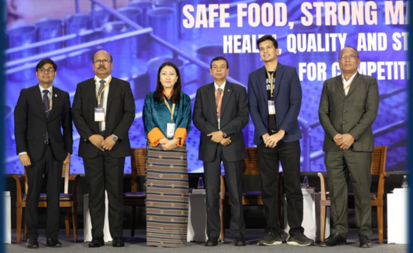
From value addition and cold chains to MSMEs and culinary tourism, SAPLING Dialogue 2026 ends with a call for a concrete action plan to transform South Asia’s food economy
Key Highlights
- SAPLING Dialogue 2026 concluded in Ahmedabad with a call for a concrete action plan for the holistic development of the food processing sector.
- The two-day dialogue was jointly organized by the Ministry of Food Processing Industries (MoFPI) and the World Bank Group.
- Around 200 policymakers, industry leaders, startups, financial institutions and international organizations participated.
- The conference emphasized employment generation, value addition, MSME growth, women entrepreneurship and farmer welfare.
- Discussions focused on cold chains, logistics, food processing infrastructure, technology adoption and regional cooperation.
- The outcomes have significant implications for India’s hospitality, foodservice, tourism and culinary industries.
SAPLING 2026 Ends with Focus on Action, Not Just Discussion
The SAPLING (South Asian Policy Leadership for Improved Nutrition and Growth) Dialogue 2026 concluded in Ahmedabad with a strong message that South Asia’s food economy requires practical implementation, investment and regional collaboration rather than policy discussions alone.
Jointly organized by the Ministry of Food Processing Industries and the World Bank Group, the dialogue brought together approximately 200 stakeholders representing governments, industry, research institutions, startups, financial organizations and development partners from across South Asia.
The event was held under the theme:
“Unlocking Value: Advancing Food Processing for Employment Generation and Sustainable Growth in South Asia.”
Food Processing Positioned as the Next Growth Engine
Throughout the dialogue, policymakers highlighted that food processing is emerging as one of the most important sectors connecting agriculture with manufacturing, exports and employment generation.
The conference emphasized that increasing value addition can:
- Reduce post-harvest losses
- Improve farmer incomes
- Create large-scale employment
- Strengthen food security
- Increase exports
- Build resilient food supply chains
Rather than simply increasing agricultural production, experts stressed that greater investment is needed in processing, packaging, storage, logistics and branding.
Call for Stronger India-World Bank Collaboration
During the concluding session, MoFPI Secretary Shri Avinash Joshi emphasized that food processing is both a national and regional priority for South Asia.
He highlighted that future growth should particularly benefit:
- MSMEs
- Women entrepreneurs
- Farmers
- Rural communities
- Young entrepreneurs
He also underlined that governments, industry and development institutions must work together to convert policy ideas into measurable outcomes.
The dialogue concluded with a call for deeper collaboration between the Ministry of Food Processing Industries and the World Bank Group to prepare a concrete action plan for the sector’s long-term development.
Technology, Infrastructure and Investment Remain Central Themes
Across multiple sessions, participants identified several priority areas for accelerating growth:
- Modern food processing infrastructure
- Cold chain expansion
- Warehousing and logistics
- Digital traceability
- Food safety and certification
- Public-private partnerships
- Investment mobilisation
- Regional cooperation across South Asia
The discussions also highlighted the importance of strengthening integrated value chains that connect farmers directly with processors and markets.
Why This Matters for Hospitality, Food & Tourism
The outcomes of SAPLING 2026 extend far beyond agriculture and have direct implications for India’s hospitality ecosystem.
Hotels and Restaurants
Better food processing infrastructure and stronger cold chains can ensure more reliable supplies of high-quality ingredients, helping hotels and restaurants maintain consistency while reducing wastage.
Food & Beverage Industry
Growth in processing capacity supports packaged foods, ready-to-eat products, beverages, bakery ingredients and specialty foods that are increasingly used across hospitality and quick-service restaurant chains.
Culinary Tourism
Improved processing and preservation of regional products can enhance India’s culinary identity by enabling local specialties to reach wider domestic and international markets, strengthening food tourism experiences.
MICE and Business Tourism
Hosting international policy dialogues such as SAPLING reinforces Ahmedabad’s position as a growing destination for Meetings, Incentives, Conferences and Exhibitions (MICE), generating demand for hotels, convention centres, restaurants and local tourism services.
Investment Opportunities
Expansion of food parks, agro-processing clusters and logistics infrastructure will create opportunities for hospitality suppliers, food manufacturers, cold storage operators and tourism-linked businesses.
Industry Takeaway
SAPLING 2026 signals a strategic shift from viewing agriculture as only farm production to seeing it as an integrated farm-to-fork economy. For the hospitality and tourism industry, stronger food processing ecosystems mean improved ingredient quality, better supply chain resilience, reduced food loss and new opportunities in culinary tourism and value-added food experiences. The dialogue’s final call for a concrete action plan indicates that the next phase will focus on implementation, investment and regional cooperation to build a more sustainable and competitive food economy across South Asia.