Kharif 2026 Strategy Takes Centre Stage as India Targets Food Security, Climate Resilience and Agri Self-Reliance
Record foodgrain production, regional farming strategies and digital agriculture emerge as key focus areas at National Kharif Conclave 2026 India is intensifying preparations for the Kharif 2026 season with a renewed focus on food security, climate-resilient
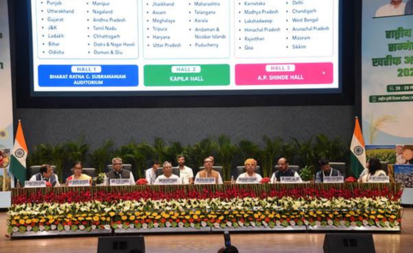
Record foodgrain production, regional farming strategies and digital agriculture emerge as key focus areas at National Kharif Conclave 2026
India is intensifying preparations for the Kharif 2026 season with a renewed focus on food security, climate-resilient agriculture, digital farming and self-reliance in pulses and oilseeds, as policymakers, scientists and state governments gather for the National Kharif Conclave 2026 in New Delhi.
Addressing a press conference during the two-day conclave at the NASC Complex, Pusa, Union Agriculture Minister Shri Shivraj Singh Chouhan said the government’s primary objective remains ensuring food security, improving farmer incomes and providing nutritious food to citizens while building a stronger and more resilient agricultural ecosystem.
The conference brings together Agriculture Ministers, senior officials, scientists from the Indian Council of Agricultural Research (ICAR), Farmer Producer Organisations (FPOs), state governments and other stakeholders to formulate a coordinated roadmap for the upcoming crop season.
Key Highlights
- National Kharif Conclave 2026 underway in New Delhi
- India records historic foodgrain production of 376.56 million tonnes
- Rice production reaches record 154.02 million tonnes
- India emerges as the world’s largest rice producer
- Regional agricultural planning gains policy importance
- Focus on pulses, oilseeds, horticulture and climate resilience
- Digital agriculture, Farmer ID and FPO strengthening under discussion
- Khet Bachao Abhiyan and natural farming initiatives to be expanded
Team Agriculture Comes Together
The Union Agriculture Minister described the conclave as a gathering of “Team Agriculture” — a collaborative platform involving the Centre, states, scientists, agricultural institutions, farmer organisations and industry stakeholders.
According to the Ministry, extensive consultations were conducted with states before the conference through virtual meetings, enabling state governments to arrive with crop preparedness plans, region-specific challenges and recommendations for the upcoming Kharif season.
Unlike previous editions that were limited to a single day, the conclave has been expanded into a two-day format to allow deeper discussions on crop planning, seed availability, agricultural missions and implementation challenges.
Regional Farming Strategies Gain Importance
Recognising the vast diversity of Indian agriculture, the government is increasingly adopting region-specific planning models.
The Ministry has already organised regional agriculture conferences in Jaipur, Lucknow and Bhubaneswar, while similar consultations for the North-East and southern states are expected in the coming months.
Officials indicated that future policy planning may increasingly align with India’s eight agro-climatic zones identified by ICAR, enabling more targeted interventions based on local climatic conditions, cropping patterns and resource availability.
The move is aimed at improving the effectiveness of agricultural schemes and ensuring better outcomes at the grassroots level.
Record Production Reinforces Agricultural Momentum
The conference comes against the backdrop of India’s strongest agricultural production performance to date.
According to the Third Advance Estimates for 2025-26:
- Total foodgrain production is estimated at 376.56 million tonnes
- Rice production has reached a record 154.02 million tonnes
- Wheat production stands at 120.66 million tonnes
- Maize production has touched 55.09 million tonnes
- Oilseed production is estimated at 43.06 million tonnes
- Groundnut production has reached 13.07 million tonnes
- Rapeseed and mustard production stands at 13.77 million tonnes
The government attributes the growth to improved seed varieties, scientific farming practices, research-led interventions, favourable policies and stronger collaboration between the Centre and states.
Self-Reliance in Pulses and Oilseeds Remains a Priority
Reducing dependence on imports of edible oils and pulses continues to be a major policy objective.
Dedicated missions for pulses and oilseeds are under review at the conference, with discussions focusing on:
- Quality seed availability
- Higher seed replacement rates
- Demonstration programmes
- Processing infrastructure
- Market support mechanisms
- Farmer awareness and extension services
Officials believe increased domestic production can improve food security while creating new income opportunities for farmers.
Climate Change and Sustainable Farming Under Spotlight
Climate variability remains one of the biggest concerns for policymakers and agricultural experts.
The conference is examining challenges such as:
- Rising temperatures
- Erratic rainfall patterns
- Extended dry spells
- Extreme weather events
- Soil degradation
To address these concerns, discussions are focused on natural farming, soil health management, balanced fertiliser use and climate-resilient agricultural practices.
The Khet Bachao Abhiyan, aimed at improving soil health and reducing excessive fertiliser use, is expected to receive significant attention during the deliberations.
Digital Agriculture and Farm Financing on Agenda
The conclave is also reviewing strategies to accelerate technology adoption across the agriculture sector.
Key areas under discussion include:
- Digital Agriculture Mission
- Farmer ID implementation
- Strengthening Farmer Producer Organisations (FPOs)
- Agriculture Infrastructure Fund
- PM-AASHA Scheme
- Agricultural credit access
- Post-harvest management systems
- Risk mitigation and crop protection
The Ministry emphasised that improving access to institutional finance remains critical for enhancing productivity and supporting long-term agricultural investments.
Impact on Hospitality, Foodservice and Tourism
The discussions at the National Kharif Conclave carry significant implications for India’s hospitality, foodservice and tourism sectors. Record production of rice, wheat, maize, pulses and oilseeds is expected to strengthen agricultural supply chains that support hotels, restaurants, catering businesses and food manufacturers. Greater focus on horticulture, natural farming and climate-resilient agriculture can improve the availability of fresh produce and region-specific ingredients increasingly sought by premium hospitality brands. The push towards self-reliance in pulses and edible oils could help stabilise input costs for foodservice operators, while promotion of regional agricultural strengths may create new opportunities for culinary tourism, farm tourism and destination-based food experiences. As travellers increasingly seek authentic local cuisine and sustainable food experiences, stronger agricultural ecosystems are likely to play an important role in shaping India’s tourism and hospitality offerings.
Industry Outlook
The National Kharif Conclave 2026 signals a shift towards more localised, technology-driven and climate-resilient agricultural planning. Combined with record crop production and ongoing reforms in seed systems, digital agriculture and infrastructure development, the initiatives discussed at the conference are expected to strengthen India’s food economy while supporting sectors such as food processing, hospitality, rural tourism and agribusiness in the years ahead.