India’s First Hydrogen Train Set Marks Green Mobility Milestone; Indian Railways Targets Sustainable Passenger Transport
10-Coach Hydrogen Fuel Cell Train to Debut on Jind–Sonipat Route with Capacity for 2,600 Passengers Key Highlights India to launch its first Hydrogen Fuel Cell Trainset powered by onboard hydrogen-generated electricity. 10-coach train designed to carry around 2,600
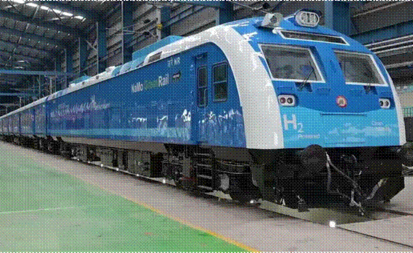
10-Coach Hydrogen Fuel Cell Train to Debut on Jind–Sonipat Route with Capacity for 2,600 Passengers
Key Highlights
- India to launch its first Hydrogen Fuel Cell Trainset powered by onboard hydrogen-generated electricity.
- 10-coach train designed to carry around 2,600 passengers—one of the largest hydrogen-powered passenger trains globally.
- Operates with near-zero emissions, producing only water vapour as a by-product.
- Multi-layer safety systems include hydrogen leak, flame, heat and smoke detection along with automatic shutdown mechanisms.
- Dedicated hydrogen production and refuelling ecosystem established at Jind, Haryana.
- Indigenous technology developed under Indian Railways with RDSO, ICF and Medha Servo Drives.
New Delhi | July 16
Indian Railways is preparing to introduce India’s first Hydrogen Fuel Cell Trainset, marking a significant step in the country’s transition towards cleaner and more sustainable rail transportation. The hydrogen-powered passenger train will initially operate on the Jind–Sonipat section of Northern Railway, generating electricity onboard through hydrogen fuel cells instead of relying on overhead electric lines or diesel engines.
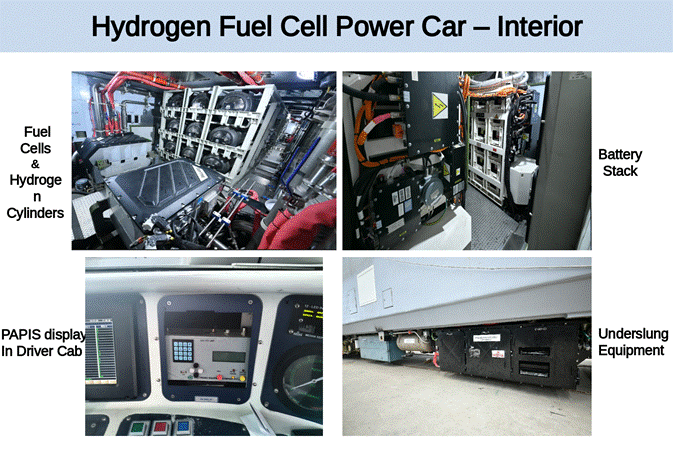
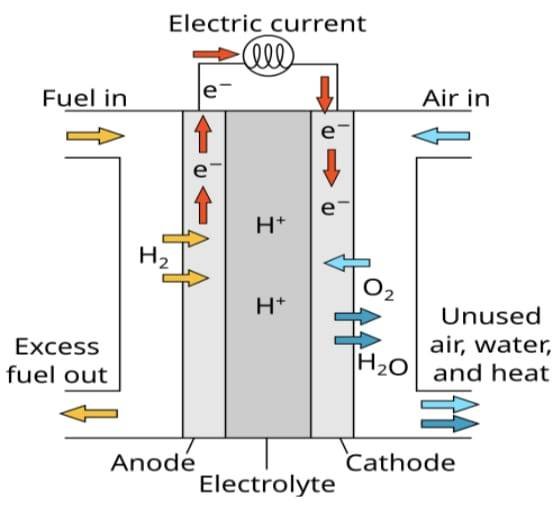
The project represents another milestone in India’s green mobility roadmap after achieving electrification of more than 99% of its Broad Gauge network. Unlike conventional trains, the hydrogen-powered train produces electricity through a chemical reaction between hydrogen and oxygen, with water vapour as the only direct emission, making it one of the cleanest forms of railway propulsion.
One of the World’s Largest Hydrogen Passenger Trains
While hydrogen trains operating in countries such as Germany, France and Italy generally consist of two to four coaches, the Indian Railways version has been developed as a 10-coach train capable of carrying approximately 2,600 passengers, making it one of the largest hydrogen-powered passenger trainsets globally.
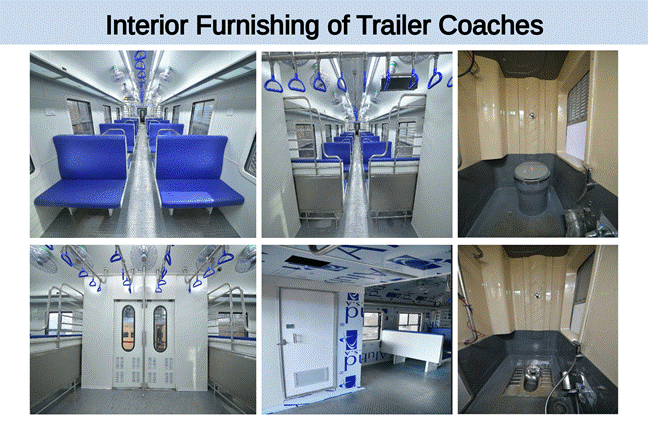
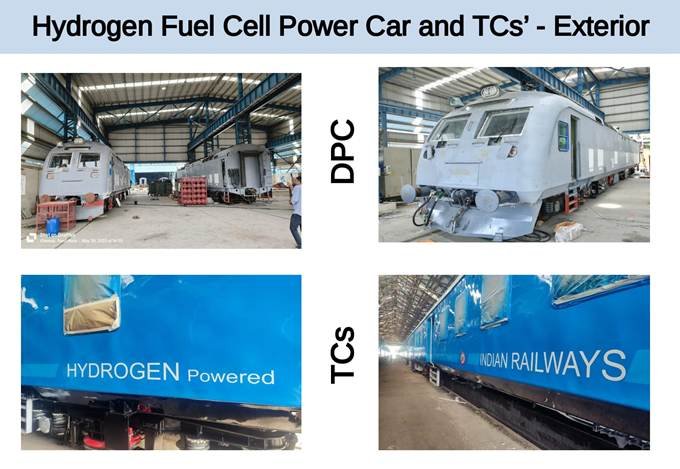
The train comprises two Hydrogen Driving Power Cars and eight trailer coaches. Together, the two power cars generate sufficient traction power for a design speed of 110 kmph, while commercial operations on the Jind–Sonipat route will initially be conducted at 75 kmph.
Hydrogen Infrastructure Built at Jind
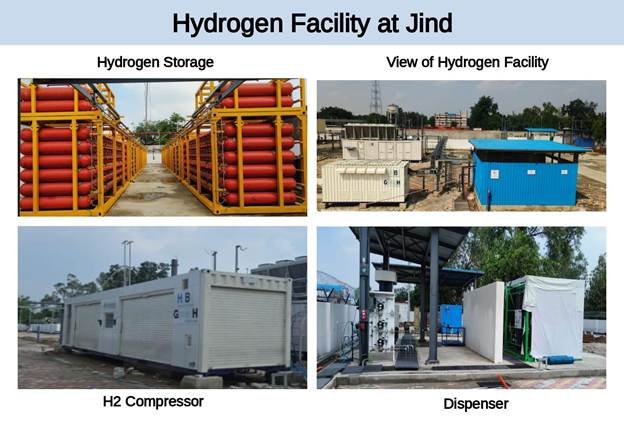
To support operations, Indian Railways has developed India’s largest railway hydrogen refuelling facility at Jind. The facility includes hydrogen production through electrolysis, high-pressure storage, compression systems and twin dispensers capable of simultaneously refuelling both power cars, reducing turnaround time. The facility can store nearly 3,000 kg of hydrogen and has received approval from the Petroleum and Explosives Safety Organisation (PESO).
Safety Systems Designed to International Standards
Recognising public concerns over hydrogen’s flammability, Indian Railways has equipped both the train and the refuelling infrastructure with multiple layers of protection. These include continuous monitoring for hydrogen leaks, heat, flames and smoke, automatic hydrogen shut-off systems, emergency operating modes for locomotive pilots and extensive ventilation systems. The project has undergone independent third-party safety assessment by TÜV SÜD Germany and complies with international safety standards including NFPA-2 and ISO 19880.
Developed with Indigenous Technology
The Hydrogen Fuel Cell Trainset has been designed and integrated in India under the leadership of Indian Railways. The Research Designs and Standards Organisation (RDSO) led technical development, Medha Servo Drives integrated the trainset, while the Integral Coach Factory (ICF) contributed to its design.
Indian Railways also plans to explore hydrogen-powered operations on heritage routes, including the Kalka–Shimla Railway, using experience gained from the Jind–Sonipat project.
Hospitality, Travel & Tourism Impact
The introduction of India’s first hydrogen-powered passenger train strengthens the country’s image as a destination investing in green transportation and sustainable tourism. The project is expected to:
- Enhance the appeal of rail travel among environmentally conscious domestic and international tourists.
- Support future deployment of clean trains on heritage and scenic routes, creating new tourism experiences.
- Encourage eco-friendly travel packages for tour operators and hospitality businesses.
- Boost visitor confidence in India’s sustainable infrastructure initiatives, complementing the country’s Net Zero and Green Hydrogen Mission goals.
- Generate long-term opportunities for hotels, restaurants and local tourism businesses along routes where hydrogen-powered services may be expanded.