Shivraj Singh Chouhan Calls for ‘Team Agriculture’ to Make India a Global Food Basket
Centre sanctions over ₹1,200 crore under PM-RKVY to 10 states; Rabi 2026 strategy focuses on crop diversification, natural farming, assured procurement and stronger Centre-State coordination PIB Delhi | 29 September 2026 Key Highlights Over ₹1,200 crore sanctioned to
Centre sanctions over ₹1,200 crore under PM-RKVY to 10 states; Rabi 2026 strategy focuses on crop diversification, natural farming, assured procurement and stronger Centre-State coordination
PIB Delhi | 29 September 2026
Key Highlights
- Over ₹1,200 crore sanctioned to 10 states under the Prime Minister Rashtriya Krishi Vikas Yojana (PM-RKVY).
- Agriculture Minister Shivraj Singh Chouhan calls for a unified ‘Team Agriculture’ approach beyond political differences.
- Agriculture growth rate increased from 3% to 4.5% since 2015, according to the Minister.
- Monthly virtual review meetings with states and district-level coordination teams to strengthen agricultural planning.
- Nationwide ‘Khet Bachao Abhiyan’ scheduled from 22 October to 30 November 2026 to promote balanced fertiliser use and soil health.
- Government to pursue 100% assured procurement of tur, urad and masoor at MSP, with payments planned within 48 hours.
- Focus on natural farming, integrated agriculture, crop diversification and climate-resilient farming.
- India aims to expand agricultural exports by leveraging opportunities under international Free Trade Agreements (FTAs).
Centre and States to Work as ‘Team Agriculture’
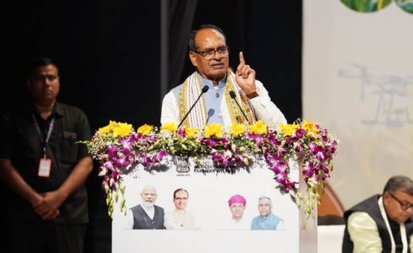
Union Minister for Agriculture and Farmers’ Welfare and Rural Development Shri Shivraj Singh Chouhan has called for stronger Centre-State coordination to improve farmers’ incomes, strengthen food security and position India as a global food basket.
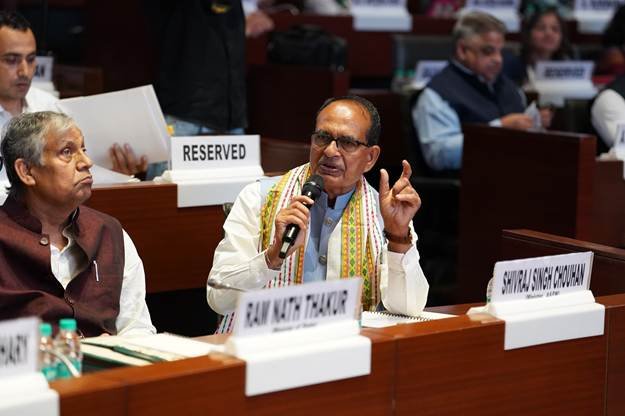
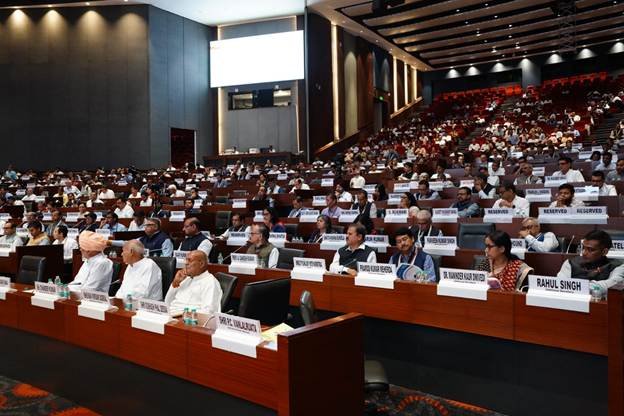
Addressing the second day of the National Agriculture Conference – Rabi Campaign 2026 in New Delhi on 29 September, the Minister urged state governments to rise above political differences and work collectively in the interest of farmers.
Emphasising the importance of cooperation between the Centre and states, Shri Chouhan said agricultural development requires coordinated action involving policymakers, scientists, farmers and other stakeholders.
The conference was attended by Union Ministers of State for Agriculture and Farmers’ Welfare Shri Ram Nath Thakur and Shri Bhagirath Choudhary, Agriculture Secretary Shri Atish Chandra, ICAR Director General Dr. M. L. Jat, state Agriculture Ministers, senior officials and representatives of agricultural institutions.
Over ₹1,200 Crore Sanctioned to 10 States Under PM-RKVY
Financial assistance aimed at accelerating agricultural development and implementation of state-level schemes.
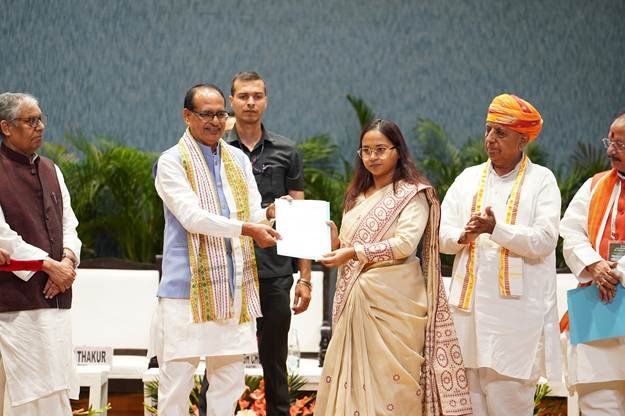
The Centre distributed financial sanction letters worth more than ₹1,200 crore to 10 states under the Prime Minister Rashtriya Krishi Vikas Yojana (PM-RKVY).
| State | Sanctioned amount |
|---|---|
| West Bengal | ₹290 crore |
| Haryana | ₹198 crore |
| Chhattisgarh | ₹181 crore |
| Arunachal Pradesh | ₹154 crore |
| Bihar | ₹114 crore |
| Karnataka | ₹104 crore |
| Mizoram | ₹75 crore |
| Himachal Pradesh | ₹64 crore |
| Jharkhand | ₹58 crore |
| Punjab | ₹43 crore |
The Minister said the Union Government is working to ensure that financial resources reach states in a timely manner, enabling them to initiate scheme implementation on the ground without delays.
Agriculture Growth Rate Reaches 4.5%
Highlighting India’s agricultural performance, Shri Chouhan stated that the country’s agriculture growth rate had increased from 3% to 4.5% since 2015.
According to the Minister, the average annual increase in foodgrain production has more than doubled, rising from approximately 40 lakh tonnes to 84 lakh tonnes. Rabi foodgrain production also recorded an increase of 205 lakh tonnes between 2023-24 and 2025-26.
He attributed this growth to the collective contribution of state agriculture departments, agricultural scientists and farmers.
Monthly Centre-State Reviews to Strengthen Agricultural Coordination
To improve coordination and monitor the implementation of agricultural schemes, the Agriculture Minister announced a mechanism for monthly virtual review meetings with states.
At the state level, a dedicated State Agriculture Team will bring together Agriculture Ministers, Agriculture Secretaries, state agricultural universities, ICAR institutions, Krishi Vigyan Kendras (KVKs), ATMA, Farmer Producer Organisations (FPOs), progressive farmers, processors, exporters and government nodal officers.
At the district level, monthly meetings will involve Collectors, Deputy Directors of Agriculture, ATMA representatives, KVKs, ICAR scientists, bankers and farmers.
The Minister also announced a recurring annual calendar for pre-season agricultural consultations:
- Kharif season: District-level meetings on 10 May and state-level meetings on 17 May.
- Rabi season: District-level meetings on 10 September and state-level meetings on 17 September.
A one-day nationwide special meeting will also be organised on a common date to facilitate discussions among Agriculture Ministers, officials and agricultural scientists.
Nationwide ‘Khet Bachao Abhiyan’ From 22 October
The Agriculture Minister announced that the nationwide ‘Khet Bachao Abhiyan’ will be conducted from 22 October to 30 November 2026, focusing on soil health, balanced fertiliser use and environmental protection.
The campaign will use Soil Health Card recommendations to encourage farmers to apply fertilisers according to crop requirements, reduce excessive application and protect soil fertility and beneficial organisms.
Scientists and other agricultural stakeholders will participate in the initiative to promote sustainable farming practices.
The Minister also called for increased cultivation of pulses in rice-fallow areas of eastern India, particularly in Jharkhand, Bihar, Odisha and West Bengal, following the paddy harvest.
Rabi 2026 Preparations Focus on Water Availability and Crop Protection
As part of Rabi season preparations, states have been asked to formulate crop plans based on soil moisture, water availability and suitable seed varieties.
The Minister emphasised the need for effective arrangements to protect crops against pests and diseases, alongside timely access to agricultural inputs.
States have also been directed to ensure that all eligible farmers are covered under Kisan Credit Cards (KCCs) and that transparent Crop Cutting Experiments (CCEs) are conducted under crop insurance schemes.
Shri Chouhan urged state Agriculture Ministers to personally review the implementation of departmental schemes and strengthen monitoring at the field level.
Strict Action Against Fake Seeds and Fertilisers
The Agriculture Minister stated that the availability of seeds and fertilisers in the country is adequate and called on states to take strict legal action against spurious seeds, fake fertilisers and substandard pesticides.
He also directed states to eliminate forced tagging of agricultural inputs.
To improve the sustainability and profitability of agriculture, the Minister called for the wider adoption of natural farming, integrated farming systems and crop diversification in mission mode.
Assured Procurement and MSP to Support Farmers’ Income
The Centre is pursuing a multi-pronged strategy to improve farmers’ returns through stronger post-harvest management, scientific warehousing and efficient marketing systems.
Shri Chouhan stated that 100% assured government procurement of tur, urad and masoor at Minimum Support Price (MSP) would be undertaken, with arrangements for payments within 48 hours.
The strategy also involves strengthening procurement infrastructure and ensuring that agricultural produce reaches markets efficiently.
The Minister highlighted the importance of international trade opportunities emerging from Free Trade Agreements (FTAs), which could help connect Indian agricultural products, including fruits, vegetables and foodgrains, with global markets.
The government aims to expand export opportunities and improve market access for Indian farmers, supporting its broader ambition of positioning India as a major global food supplier.
Natural Farming and Crop Diversification to Drive Sustainability
The conference also placed emphasis on natural farming, integrated agriculture and crop diversification as part of the country’s long-term agricultural strategy.
The adoption of diversified farming systems is expected to support better resource utilisation, improve resilience to changing climatic conditions and create additional opportunities for agricultural producers.
Strengthening coordination among farmers, agricultural research institutions, processors and exporters will be central to implementing these initiatives.
Impact on Hospitality, Food and Travel & Tourism
The agricultural measures outlined under Rabi Campaign 2026 have implications for India’s food supply chain, food-service industry and rural tourism ecosystem.
- Hotels and restaurants: Greater focus on pulses, oilseeds, assured procurement and agricultural diversification could support the availability of key food commodities used by hotels, restaurants, catering companies and institutional kitchens.
- Food processing and supply chains: Investment in scientific warehousing, post-harvest management and marketing systems can help improve storage, handling and distribution of agricultural produce.
- Sustainable hospitality: Natural farming, balanced fertiliser use and crop diversification may create opportunities for hospitality businesses interested in sourcing agricultural products through sustainable and local supply chains.
- Rural and agritourism: Greater agricultural resilience and stronger farmer-market linkages could support rural livelihoods and destinations where local food, farming experiences and regional produce contribute to tourism.
- Culinary tourism and exports: Expanding market access for Indian agricultural products may create opportunities for regional food products to gain wider recognition, supporting India’s culinary identity.