Lakshadweep and Andaman & Nicobar Islands to Emerge as Key Hubs for Tuna, Seaweed and Ornamental Fisheries
Government steps up island fisheries investment with ₹393 crore under PMMSY, targeting sustainable seafood production, export growth and high-value marine businesses Key Highlights: Andaman & Nicobar Islands allocated ₹218 crore and Lakshadweep ₹175 crore under the Pradhan
Government steps up island fisheries investment with ₹393 crore under PMMSY, targeting sustainable seafood production, export growth and high-value marine businesses
Key Highlights:
- Andaman & Nicobar Islands allocated ₹218 crore and Lakshadweep ₹175 crore under the Pradhan Mantri Matsya Sampada Yojana (PMMSY).
- Lakshadweep targets doubling tuna production to 50,000 tonnes over five years.
- Dedicated Tuna Cluster in Andaman & Nicobar Islands to support fleet modernisation, cold storage and export infrastructure.
- Lakshadweep identified as a dedicated Seaweed Cluster, with opportunities in food, nutraceuticals, cosmetics and pharmaceuticals.
- Lakshadweep’s reef ecosystems host more than 300 ornamental fish species.
- Government investment in the fisheries sector has reached ₹39,272 crore since 2015.
- India’s seafood exports valued at approximately ₹73,890 crore in FY 2025-26.
Island Fisheries to Drive India’s Blue Economy and Seafood Export Growth
India is positioning Lakshadweep and the Andaman & Nicobar Islands as major growth centres for marine fisheries, with a strategic focus on tuna production, seaweed cultivation and ornamental fisheries. The Government’s island-focused development strategy aims to unlock underutilised marine resources, strengthen seafood value chains and expand export opportunities while maintaining ecological sustainability.
Under the Pradhan Mantri Matsya Sampada Yojana (PMMSY), the Andaman & Nicobar Islands have been allocated ₹218 crore, while Lakshadweep has been earmarked ₹175 crore to strengthen fisheries infrastructure and unlock the economic potential of these strategically important maritime territories.
The initiative comes against the backdrop of India’s expanding fisheries economy. With a coastline of approximately 11,099 km and an Exclusive Economic Zone (EEZ) of nearly 24 lakh sq. km, India has an estimated marine fisheries potential of 58.6 lakh metric tonnes. The sector supports the livelihoods of nearly 50 lakh fishers and contributes to food security, employment and international seafood trade.
India’s seafood exports reached approximately ₹73,890 crore in FY 2025-26. Since 2015, the Government has committed ₹39,272 crore towards fisheries development through various schemes and programmes.
Lakshadweep and Andaman & Nicobar: Strategic Centres for Marine Fisheries
Together, Lakshadweep and the Andaman & Nicobar Islands account for nearly 40% of India’s Exclusive Economic Zone, giving them access to important oceanic fishing grounds across the Arabian Sea and the Bay of Bengal.
Lakshadweep’s lagoons, coral reefs and deep-sea waters offer opportunities for tuna fisheries, seaweed cultivation and reef-based livelihoods. Meanwhile, the Andaman & Nicobar Islands, with their extensive coastline, diverse marine ecosystems and proximity to Southeast Asian maritime routes, have considerable potential for sustainable fisheries, mariculture and value-added seafood production.
The Union Budget 2025-26 also highlighted the sustainable utilisation of fisheries resources in India’s EEZ and the High Seas, with particular emphasis on these island territories.
Tuna Fisheries to Lead High-Value Seafood Development
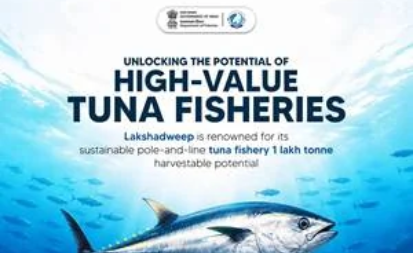
Tuna has emerged as a major focus of India’s island fisheries development strategy. The surrounding waters support substantial stocks of Yellowfin, Skipjack and Bigeye tuna, offering opportunities for sustainable fishing and export-oriented seafood businesses.
In Lakshadweep, a five-year development plan aims to double tuna production to 50,000 tonnes. The strategy includes the induction of deep-sea fishing vessels, mother vessels and the promotion of traditional pole-and-line fishing practices.
For the Andaman & Nicobar Islands, a dedicated Tuna Cluster under PMMSY is supporting fleet modernisation and fisheries infrastructure development. Planned interventions include new fishing vessels, upgrades to existing fleets and expanded cold storage facilities.
The Marine Products Export Development Authority (MPEDA) is also strengthening its presence in the islands to improve market access and facilitate direct seafood exports.
The broader strategy covers modern deep-sea fishing vessels, selective fishing techniques, improved onboard fish handling, cold-chain infrastructure, processing and canning facilities, and stronger export linkages.
Seaweed and Ornamental Fisheries Open New Business Opportunities
Beyond tuna, the Government is promoting seaweed cultivation and ornamental fisheries to diversify island livelihoods and develop alternative marine-based enterprises.
Lakshadweep has been notified as a dedicated Seaweed Cluster. The development roadmap includes large-scale cultivation, seed banks, hatcheries and capacity-building initiatives to establish a reliable seaweed value chain.
Seaweed has applications across several industries, including food and beverages, nutraceuticals, cosmetics, pharmaceuticals and bio-industrial products. Its development could encourage new processing enterprises and create opportunities for local entrepreneurs.
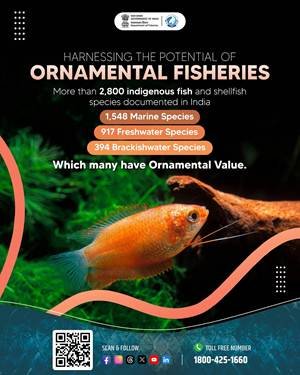
Ornamental fisheries represent another promising segment, particularly in Lakshadweep, which hosts more than 300 reef-associated ornamental species. The proposed development approach includes medium-scale rearing units, regulated collection practices and improved market access for sustainably sourced aquarium species.
These initiatives aim to generate additional income opportunities for island communities while protecting sensitive coral reef ecosystems.
Infrastructure Investment to Strengthen Seafood Value Chains
Modern fisheries infrastructure is central to the Government’s strategy to improve productivity, reduce post-harvest losses and connect island-based fishers with domestic and international markets.
Key infrastructure interventions include:
- Modern fish landing centres.
- Ice plants and cold-chain networks.
- Improved onboard fish preservation systems.
- Fish Aggregating Devices (FADs).
- Boat-building and fleet modernisation facilities.
- Seafood processing and value-addition units.
- Export facilitation and market connectivity infrastructure.
These investments are expected to improve the quality and shelf life of marine products while strengthening the competitiveness of island-based seafood enterprises.
Impact on Hospitality, Food and Travel & Tourism
The island fisheries development programme has implications beyond the seafood production sector, particularly for hospitality businesses, restaurants, food processing companies and tourism operators.
1. Greater availability of premium seafood: Improved tuna production, processing and cold-chain facilities could strengthen the supply of quality seafood to hotels, resorts, restaurants and speciality seafood outlets. Yellowfin and Skipjack tuna could create opportunities for premium seafood menus and destination-based culinary experiences.
2. Opportunities for seafood processing and food businesses: Investments in canning, ready-to-cook products, preservation and value addition could encourage food processing companies, seafood brands and local entrepreneurs to establish businesses in the island territories.
3. Island culinary tourism: Greater visibility of locally sourced tuna and traditional pole-and-line fishing could support seafood-focused culinary experiences, local food festivals and coastal dining concepts in Lakshadweep and the Andaman & Nicobar Islands.
4. Seaweed-based food and beverage innovation: Seaweed cultivation could create opportunities for functional foods, health-oriented beverages, nutraceutical ingredients and innovative food products, opening another avenue for hospitality suppliers and food entrepreneurs.
5. Sustainable marine tourism: Responsible ornamental fisheries and conservation-based marine activities could complement the islands’ existing tourism appeal. However, these opportunities will require strict protection of coral reefs and marine biodiversity.
6. Employment and local enterprise development: Improved fisheries infrastructure and market access could generate employment across seafood handling, logistics, processing, hospitality supply chains and tourism-linked businesses.
Sustainability Remains Central to Island Fisheries Growth
The Government’s island fisheries strategy represents a shift from production-led development towards an integrated marine economy based on value addition, infrastructure, scientific management and market connectivity.
The success of this approach will depend on maintaining a balance between commercial fisheries expansion and the protection of fragile marine ecosystems. Sustainable fishing practices, regulated ornamental fish collection and responsible seaweed cultivation will be important to preserving the ecological assets that support both fisheries and tourism.
By connecting tuna fisheries, seaweed cultivation, ornamental fisheries, processing infrastructure and export markets, Lakshadweep and the Andaman & Nicobar Islands are being positioned as important contributors to India’s Blue Economy, with potential benefits extending to seafood businesses, hospitality and island tourism.