PMFME Scheme Boosts India’s Rural Food Processing Ecosystem; Over 1.96 Lakh Micro Enterprises Supported
MoFPI highlights women entrepreneurship, ODOP expansion, branding support and rural employment generation under PMFME Scheme Key Highlights PMFME Scheme extended till September 2026 with a total outlay of ₹10,000 crore Over 1.96 lakh micro food processing enterprises supported
MoFPI highlights women entrepreneurship, ODOP expansion, branding support and rural employment generation under PMFME Scheme
Key Highlights
- PMFME Scheme extended till September 2026 with a total outlay of ₹10,000 crore
- Over 1.96 lakh micro food processing enterprises supported under credit-linked subsidy
- More than 40% beneficiaries are women entrepreneurs
- 4 lakh+ SHG members approved for seed capital assistance
- 137 ODOP products identified across 726 districts in 35 States and UTs
- 80 incubation centres approved; 31 already operational
- Over 200 food products launched under branding and marketing support
- Scheme supporting employment opportunities for nearly 5.88 lakh individuals
India’s micro food processing sector is witnessing rapid formalisation and growth under the Pradhan Mantri Formalisation of Micro Food Processing Enterprises (PMFME) Scheme, with the Ministry of Food Processing Industries (MoFPI) highlighting strong progress in entrepreneurship development, women-led enterprises and rural livelihoods.
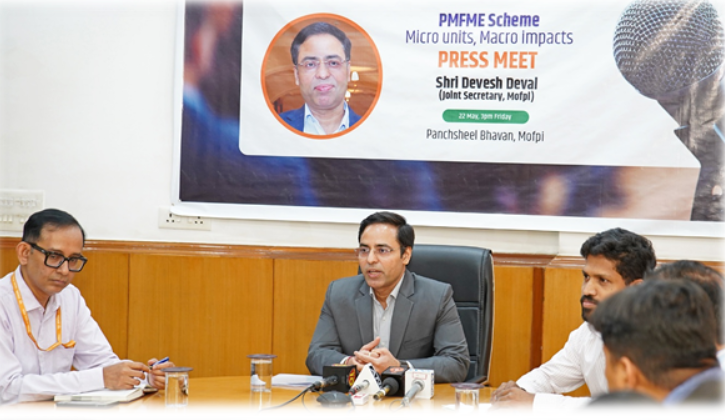
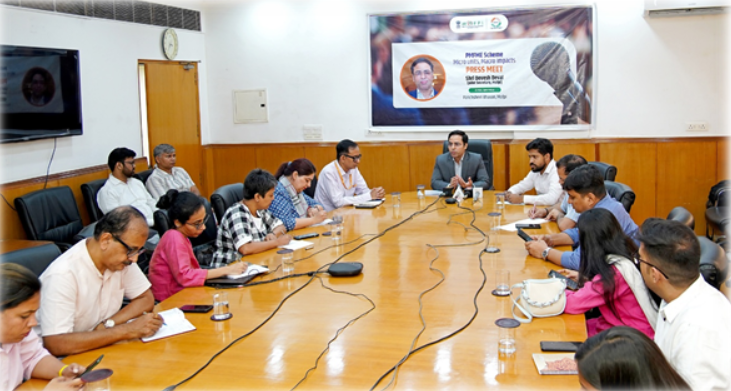
During a media interaction held at Panchsheel Bhawan, New Delhi, Shri Devesh Deval, Joint Secretary, MoFPI, shared the latest achievements and implementation status of the PMFME Scheme, which was launched in 2020 under the Aatmanirbhar Bharat Abhiyan.
The centrally sponsored scheme was introduced to strengthen India’s largely unorganised micro food processing sector, which comprises nearly 25 lakh informal enterprises. The sector has historically faced challenges related to access to finance, modern machinery, packaging, branding, food safety compliance and organised market linkages.
PMFME Scheme Driving Food Processing Growth in Rural India
MoFPI stated that the PMFME Scheme is playing a crucial role in modernising micro food processing units while improving value addition, reducing post-harvest losses and generating employment opportunities in rural India.
The scheme follows the One District One Product (ODOP) approach, aimed at creating product-specific clusters and improving economies of scale. So far, 137 unique ODOP products have been identified across 726 districts covering 35 States and Union Territories.
Popular categories receiving support include:
- Millet-based products
- GI-tagged regional foods
- Pickles and condiments
- Makhana products
- Spices
- Dairy products
- Bakery items
Financial Assistance and Subsidy Support Under PMFME
Under the PMFME Scheme, individual micro food processing units are eligible for a 35% credit-linked subsidy of up to ₹10 lakh for setting up or upgrading operations.
Farmer Producer Organisations (FPOs), Self Help Groups (SHGs) and cooperatives can avail subsidies up to ₹3 crore for developing common infrastructure facilities.
The scheme also provides:
- Seed capital assistance of ₹40,000 per SHG member
- Entrepreneurship and capacity-building training
- Branding and marketing grants
- Handholding support for formalisation and compliance
- Incubation and technology support centres
According to MoFPI, over 1,96,270 individual enterprises have already benefited from the subsidy component, while more than 4 lakh SHG members have received seed capital approvals.
Women Entrepreneurs Emerging as Major Beneficiaries
The Ministry highlighted that women entrepreneurs account for more than 40% of PMFME beneficiaries, underlining the scheme’s growing role in strengthening women-led food businesses and rural self-employment opportunities.
Capacity-building initiatives under the scheme have covered over 1,72,870 beneficiaries and stakeholders through entrepreneurship development programmes and skill training.
Branding, Market Linkages and GeM Integration
MoFPI informed that 32 branding and marketing proposals along with 40 ODOP brands have been approved under the scheme. This has resulted in the launch of over 200 packaged food products from regional and rural enterprises.
To strengthen digital and institutional market access, the Ministry has also signed an MoU with the Government e-Marketplace (GeM) for onboarding PMFME-supported enterprises onto the platform.
The Ministry added that PMFME beneficiaries have participated in major food industry exhibitions including:
- World Food India
- AAHAR
- SIAL India
At World Food India 2025, subsidy support worth ₹778 crore was released to around 26,000 beneficiaries. More than 100 PMFME beneficiary stalls participated in the event, while nearly 250 products were showcased through QR-enabled digital displays linked to the PMFME Marketplace.
Formalisation and Rural Employment on the Rise
MoFPI stated that the scheme has significantly accelerated formalisation in the food processing sector, with more entrepreneurs obtaining FSSAI registrations and adopting better food safety and packaging standards.
The Ministry estimates that the scheme has supported livelihood opportunities for nearly 5,88,810 individuals across the food processing value chain.
Officials noted that PMFME continues to strengthen rural economies by encouraging sustainable entrepreneurship, supporting local processing infrastructure and enabling better income opportunities for farmers, SHGs and small food businesses.
Impact on Hospitality, Travel & Tourism Sector
The expansion of regional food processing and ODOP-based branding under PMFME could significantly strengthen India’s hospitality, culinary tourism and travel ecosystem. The growing availability of branded regional food products, GI-tagged specialties and locally processed ingredients can support hotels, restaurants, cafes and resort chains seeking authentic regional sourcing and farm-to-table experiences. The scheme also creates opportunities for culinary tourism, food festivals, highway hospitality, airport retail and souvenir food markets by promoting local food identity and artisanal products. As rural food enterprises become more organised and market-ready, tourism destinations can increasingly integrate local gastronomy into visitor experiences, helping boost regional tourism economies and cultural food storytelling.