India’s Aircraft Leasing Market Eyes $50 Billion Opportunity as GIFT City Push Gains Momentum
Civil Aviation Ministry positions GIFT IFSC as India’s emerging aviation finance hub amid rapid airline fleet expansion India’s aviation sector is set for a major transformation as the government intensifies efforts to position GIFT City as
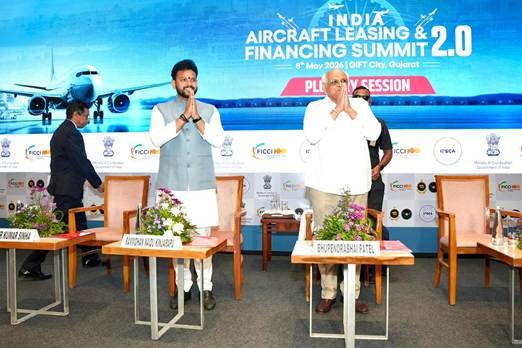
Civil Aviation Ministry positions GIFT IFSC as India’s emerging aviation finance hub amid rapid airline fleet expansion
India’s aviation sector is set for a major transformation as the government intensifies efforts to position GIFT City as a global aircraft leasing and financing destination. At the India Aircraft Leasing & Financing Summit 2.0 (IALFS 2.0) held in Gandhinagar, the Ministry of Civil Aviation highlighted that India’s aircraft leasing ecosystem could unlock a $50 billion opportunity over the next decade.
The summit, organised jointly by the Ministry of Civil Aviation, International Financial Services Centres Authority (IFSCA) and FICCI, brought together aviation leaders, financiers, lessors and regulators to discuss India’s growing aviation finance landscape.
Key Highlights
- India’s commercial aircraft fleet projected to cross 2,250 aircraft by 2035
- Indian carriers currently have pending deliveries of 1,640 aircraft
- Government targets GIFT IFSC as a global aviation leasing hub
- ₹5,000 crore airline credit guarantee scheme reiterated for liquidity support
- Air India, IndiGo, Akasa Air and Star Air announce expansion plans through GIFT City
- New reforms aimed at improving aircraft financing, leasing and investor confidence
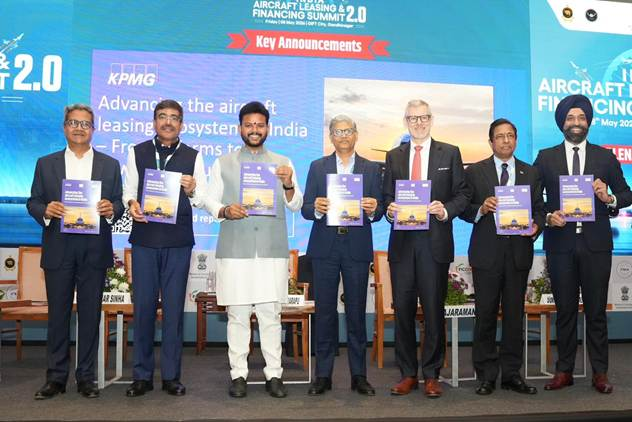
India’s Aviation Growth Driving Leasing Demand
Union Civil Aviation Minister Ram Mohan Naidu Kinjarapu said India is rapidly emerging not just as one of the world’s fastest-growing aviation markets, but also as a future aviation financing destination. According to the ministry, India’s commercial aircraft fleet is expected to grow from the current levels to nearly 1,100 aircraft by 2027 and over 2,250 aircraft by 2035.
The minister stated that pending aircraft deliveries by Indian carriers alone represent a massive financing opportunity for global and domestic lessors.
GIFT City Emerges as Aviation Finance Hub
The government is positioning Gujarat’s GIFT IFSC as the centre of India’s aircraft leasing ecosystem through regulatory reforms, tax incentives and financing structures.
Airbus India President Jürgen Westermeier noted that India’s aviation and aerospace industry continues to grow on the pillars of affordability, competitiveness and sustainability.
IFSCA Chairperson K. Rajaraman highlighted reforms including tax holiday extensions, SPV structures and operational single-window systems designed to attract global aviation financiers to GIFT City.
Airlines Expand Leasing Operations
Several airlines used the summit to announce major expansion plans linked to GIFT IFSC.
- Air India plans to expand its leasing portfolio from over 50 aircraft to 76 aircraft by March 2027
- IndiGo aims to nearly double its portfolio to around 150 aircraft
- Akasa Air announced a dedicated leasing entity at GIFT City to support leasing of around 60 aircraft over five years
- Star Air also confirmed plans to lease additional regional aircraft through GIFT IFSC
Government Announces Continued Support for Airlines
The Civil Aviation Minister reiterated that the government has capped ATF price increases at 25%, reduced airport landing and parking charges by 25%, and approved a ₹5,000 crore Credit Line Guarantee Scheme to support airlines facing liquidity pressure.
Industry experts believe these measures could improve airline stability, accelerate fleet expansion and support India’s broader travel, tourism and hospitality sectors.
| Why This Matters for Hospitality & Tourism The expansion of aircraft leasing and financing infrastructure directly impacts India’s hospitality ecosystem by supporting airline growth, route connectivity and international passenger traffic. For hotels, tourism operators, airports and travel businesses, stronger airline balance sheets and faster fleet additions are expected to drive business travel, inbound tourism and regional connectivity over the coming years. |