Indian Student Wins Global Youth Institute Award as NAAS Showcases Agricultural Research at World Food Prize 2026
NAAS–CAST MoU to Strengthen International Cooperation; ICAR Chief Calls for Global Partnerships and Integrated Agri-Food Value Chains Key Highlights The National Academy of Agricultural Sciences (NAAS) showcased Indian agricultural research at the Norman E. Borlaug International Dialogue,
NAAS–CAST MoU to Strengthen International Cooperation; ICAR Chief Calls for Global Partnerships and Integrated Agri-Food Value Chains
Key Highlights
- The National Academy of Agricultural Sciences (NAAS) showcased Indian agricultural research at the Norman E. Borlaug International Dialogue, held in Des Moines, Iowa, USA, from October 20–22, 2026.
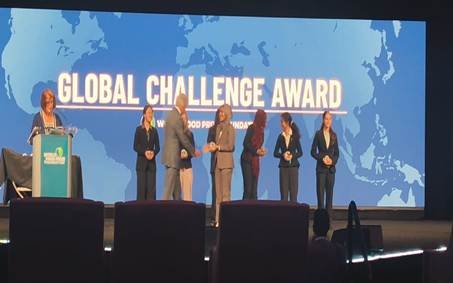
- Indian student Ameena Nazreen A S won a US$500 Global Youth Institute (GYI) award.
- Seven Indian high school students presented research papers on global food-security challenges.
- NAAS and the US-based Council for Agricultural Science and Technology (CAST) signed an MoU to promote research collaboration, capacity development and knowledge exchange.
- Dr. M. L. Jat called for stronger academia–industry partnerships and a shift towards integrated agri-food systems and value chains.
India’s agricultural research capabilities and young scientific talent received international recognition at the 2026 Norman E. Borlaug International Dialogue, organised by the World Food Prize Foundation in Des Moines, Iowa, USA, from October 20 to 22. The National Academy of Agricultural Sciences (NAAS), New Delhi, used the global platform to showcase Indian research, encourage youth participation and strengthen international scientific cooperation.
A major highlight was the recognition of Indian student Ameena Nazreen A S, who won a US$500 award at the Global Youth Institute (GYI). The event also saw the signing of a Memorandum of Understanding (MoU) between NAAS and the Council for Agricultural Science and Technology (CAST), USA, aimed at creating opportunities for cooperation in agricultural research, capacity development and knowledge exchange.
Seven Indian Students Present Research on Global Food Security
Seven high school students from different parts of India, selected through the NAAS-YUVA selection drive, participated in the Global Youth Institute programme. They presented research papers addressing critical food-security challenges and exchanged perspectives with international peers.
The recognition of Ameena Nazreen A S highlighted the role of young researchers in developing ideas for sustainable agriculture and resilient food systems. NAAS also showcased publications from the Academy and the Indian Council of Agricultural Research (ICAR), bringing Indian agricultural research and policy perspectives to an international audience of researchers, academicians, policymakers and other stakeholders.
NAAS–CAST MoU Opens Avenues for Research Collaboration
The NAAS–CAST agreement marks an important step towards strengthening institutional links between Indian and international agricultural science organisations. According to the PIB release, the partnership is intended to support cooperation in research, capacity development and knowledge exchange.
Such collaboration can create opportunities for scientific engagement and professional development while helping institutions share expertise on emerging agricultural challenges. The specific projects and implementation timelines under the MoU were not detailed in the announcement.
Dr. M. L. Jat Calls for a New Approach to Agricultural Education
A special roundtable on agricultural higher education, organised alongside the Dialogue, brought members of the Indian agricultural diaspora into discussions on global partnerships and the future of agricultural education.
Addressing the meeting virtually, Dr. M. L. Jat, President of NAAS, Secretary of the Department of Agricultural Research and Education (DARE), and Director General of ICAR, called for agricultural education to evolve beyond a narrow focus on production.
He highlighted the need to prepare future professionals to address climate change, natural-resource degradation, biodiversity loss and the growing demand for nutritious and healthy food.
Dr. Jat also emphasised stronger academia–industry collaboration, international knowledge exchange and engagement with the Indian agricultural diaspora. An integrated agri-food systems and value-chain approach, he said, would be important for developing industry-ready professionals and strengthening research and education.
The discussions reinforced NAAS’s role in bringing together researchers, policymakers, academic institutions and industry to address emerging priorities in agricultural research and development.
Impact on Hospitality, Food Processing, Travel and Tourism
Food processing and supply-chain innovation: Greater cooperation between research institutions and industry could support future knowledge exchange around agricultural production, food systems and value-chain development. For food processors, this is relevant to the longer-term development of skills, research partnerships and approaches to food security. The announcement does not identify specific commercial projects or immediate industry outcomes.
Hospitality procurement and food security: Hotels, restaurants and institutional catering businesses depend on agricultural supply chains for consistent access to food ingredients. Research addressing climate change, natural-resource management and sustainable agri-food systems may have long-term relevance to supply resilience, although the release does not establish a direct effect on hospitality procurement or food prices.
Culinary sustainability and nutrition: The focus on nutritious and healthy food highlights areas of shared interest for agriculture, food processing and hospitality. Future research–industry collaboration could offer opportunities to explore sustainable sourcing and food-system innovation, depending on the outcomes of subsequent partnerships.
Agricultural education and workforce development: Stronger links between academia and industry may help develop skills relevant to food production, processing and related services. For hospitality businesses, the relevance is indirect and will depend on how research findings and training initiatives translate into practical applications.
International collaboration and knowledge exchange: The Dialogue provided an international platform for Indian agricultural research and youth participation. While the event was not a tourism initiative, international scientific exchanges also demonstrate how academic institutions contribute to India’s broader global engagement.
Industry Takeaway
NAAS’s participation in the World Food Prize Foundation event highlights the growing importance of international research partnerships, youth engagement and integrated agri-food value chains. For hospitality and food businesses, the significance lies in the long-term relationship between agricultural research, food security, nutrition and the resilience of ingredient supply chains.
The NAAS–CAST MoU establishes a framework for further cooperation, while the recognition of an Indian student at the Global Youth Institute underscores the importance of nurturing the next generation of talent in sustainable agriculture.
Source: Press Information Bureau (PIB), October 23, 2026.