Indian Railways Announces 8 New ‘Reform Express’ Initiatives to Modernise Freight, Food Logistics and Supply Chains
New policies simplify freight operations, promote containerisation of foodgrains and fertilizers, encourage private investment, and strengthen India's logistics ecosystem with lower costs and greener transportation. Key Highlights Indian Railways unveils 8 new structural reforms, taking the total
New policies simplify freight operations, promote containerisation of foodgrains and fertilizers, encourage private investment, and strengthen India’s logistics ecosystem with lower costs and greener transportation.
Key Highlights
- Indian Railways unveils 8 new structural reforms, taking the total under the ‘Reform Express’ initiative to 17.
- Reforms target freight transportation, logistics, infrastructure, wagon design, construction and skilling.
- Foodgrains, flour and pulses can now be transported in containers with simplified freight pricing.
- New policy enables containerised fertilizer transportation for flexible distribution.
- Unified Pan-India Container Train Operator licence to improve ease of doing business.
- Fly ash to move through closed ISO containers, reducing pollution and improving efficiency.
- Oil companies can introduce specialised railway tank wagons under new petroleum transport policy.
- Reforms aim to lower logistics costs, promote innovation and shift more freight from road to rail.
Indian Railways Rolls Out Eight More ‘Reform Express’ Measures to Strengthen Freight, Food Logistics and Infrastructure
New Delhi, July 14: Indian Railways has announced eight new structural reforms under its flagship ‘Reform Express’ initiative, aimed at modernising freight transportation, improving logistics efficiency, simplifying business processes and encouraging private sector participation. With the latest announcement, the total number of reforms introduced under the programme has reached 17, as the Ministry of Railways works towards implementing 52 reforms in 52 weeks.
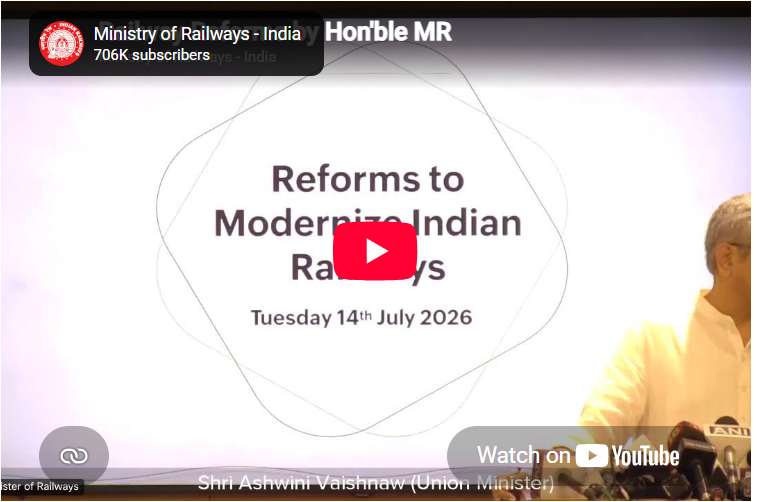
Union Railway Minister Ashwini Vaishnaw said the reforms are designed to build a future-ready railway ecosystem by improving supply chains, accelerating infrastructure development, promoting innovation and reducing logistics costs across multiple sectors.
Major Push for Food and Agricultural Logistics
Among the most significant announcements for the food sector is the introduction of containerised transportation for foodgrains, flour and pulses.
The new policy replaces the earlier complex slab-based freight structure with a simplified per tonne per kilometre pricing system. By allowing commodities to move in sealed containers, Indian Railways will enable flexible storage, phased deliveries and improved protection against contamination while reducing delays caused by rake detention.
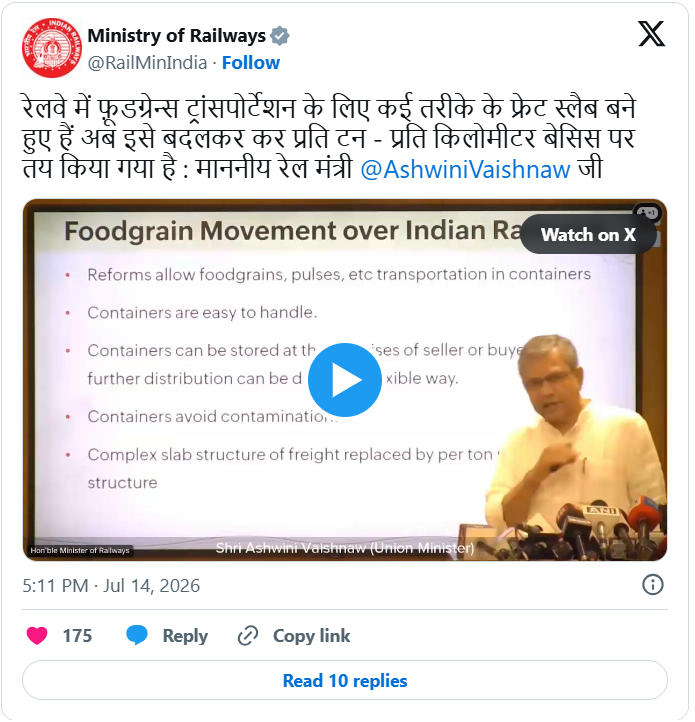
Similarly, fertilizer logistics have been modernised through simplified freight charges and permission for container-based transportation, allowing distributors to unload cargo according to demand instead of waiting for an entire rake to be emptied. This is expected to improve wagon utilisation, reduce turnaround time and minimise weather-related damage.
Containerisation to Drive Logistics Efficiency
To encourage greater container movement, Indian Railways has introduced a single Pan-India Container Train Operator (CTO) licence, replacing the earlier category-based licensing system.
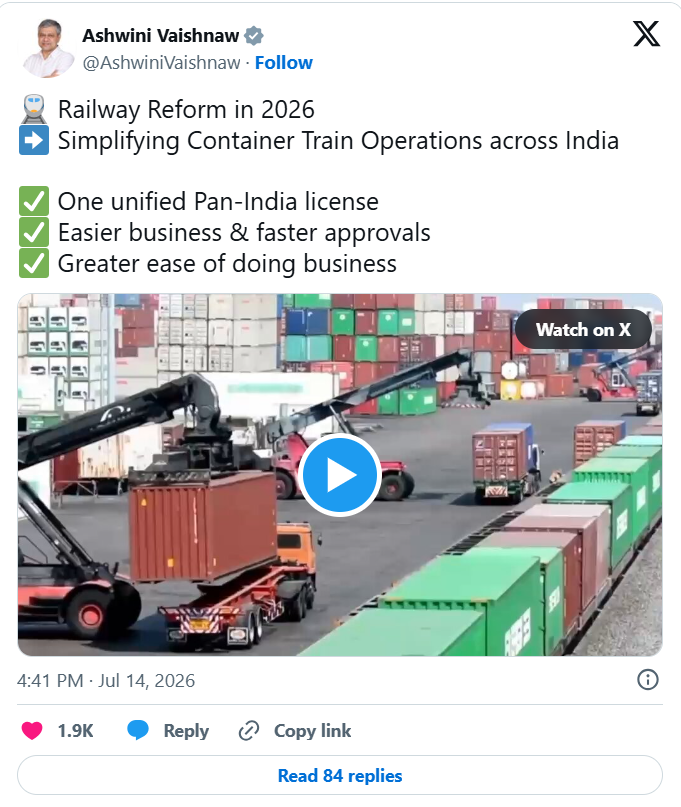
Operators will now be able to run container trains across the entire railway network under a unified registration framework, making it easier for logistics companies to expand operations and transport a wider range of cargo through rail.
Cleaner Freight Transportation
Indian Railways has also introduced a new policy for transporting fly ash using specially designed ISO-standard containers.
The shift from open wagons to closed containers will reduce dust pollution during loading and unloading, improve handling efficiency and encourage greater movement of fly ash from thermal power plants to cement manufacturers through rail.
Boost for Infrastructure and Private Participation
The reforms include new policies covering construction contracts, artisan skill certification, wagon design approvals and petroleum transportation.
Construction reforms introduce stronger contractor eligibility norms, improved insurance coverage and digital land acquisition management through the Rail Bhoomi platform to speed up project execution.
A new wagon design policy allows industries to develop specialised freight wagons for sectors such as steel, chemicals, petroleum, milk and plastics, while oil companies can now introduce customised tank wagons for petroleum products on the Indian Railways network.
Driving a Greener Freight Future
According to the Railway Ministry, the reforms are expected to increase the share of freight moving by rail, which generates nearly 90% lower carbon emissions than road transport, while also diversifying Indian Railways’ freight basket beyond traditional bulk commodities.
Impact on Hospitality, Food Processing, Travel and Tourism
The latest railway reforms carry significant implications for India’s hospitality, food and tourism sectors. The simplified movement of foodgrains, flour, pulses and fertilizers through containerisation will strengthen supply chains for hotels, restaurants, caterers, food processors and retail businesses by improving delivery flexibility, reducing spoilage and lowering transportation costs.
The unified container operator policy is expected to enhance multimodal logistics, making food and beverage distribution more efficient across the country. Improved freight efficiency will also benefit tourism destinations by ensuring timely supply of food products, fuel and hospitality essentials, particularly in high-demand travel seasons.
Additionally, cleaner freight transportation, faster project execution and greater private investment in logistics infrastructure support the development of a more sustainable travel and hospitality ecosystem while contributing to India’s broader goals of reducing logistics costs and promoting environmentally friendly transportation.