India Sets BRICS Tourism Agenda for 2026, Focuses on AI, Sustainable Travel and Seamless Cross-Border Tourism
Jaipur to host key BRICS tourism meetings as member nations explore collaboration on travel technology, workforce development and responsible tourism growth Key Highlights India chairs the first BRICS Tourism Working Group Meeting of 2026 Tourism cooperation theme centres
Jaipur to host key BRICS tourism meetings as member nations explore collaboration on travel technology, workforce development and responsible tourism growth
Key Highlights
- India chairs the first BRICS Tourism Working Group Meeting of 2026
- Tourism cooperation theme centres on resilience, innovation and sustainability
- Artificial Intelligence identified as a key focus area for tourism development
- Responsible tourism and sustainability high on BRICS agenda
- Tourism skilling and workforce development to receive attention
- Discussions include travel facilitation and improving visitor mobility
- Jaipur selected to host BRICS Tourism Working Group and Ministers’ Meetings in August
India Puts AI, Sustainability and Seamless Travel at the Centre of BRICS Tourism Agenda
NEW DELHI, May 25, 2026: India has formally launched the BRICS tourism cooperation process for 2026, placing artificial intelligence, sustainable tourism, workforce development and travel facilitation at the centre of discussions among some of the world’s fastest-growing travel markets.
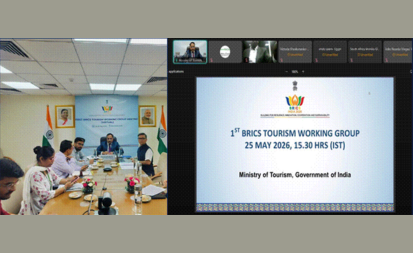
The first BRICS 2026 Tourism Working Group (TWG) Meeting was held virtually under India’s chairship, bringing together member nations to begin shaping a collaborative tourism agenda under the theme: “Building for Resilience, Innovation, Cooperation and Sustainability.”
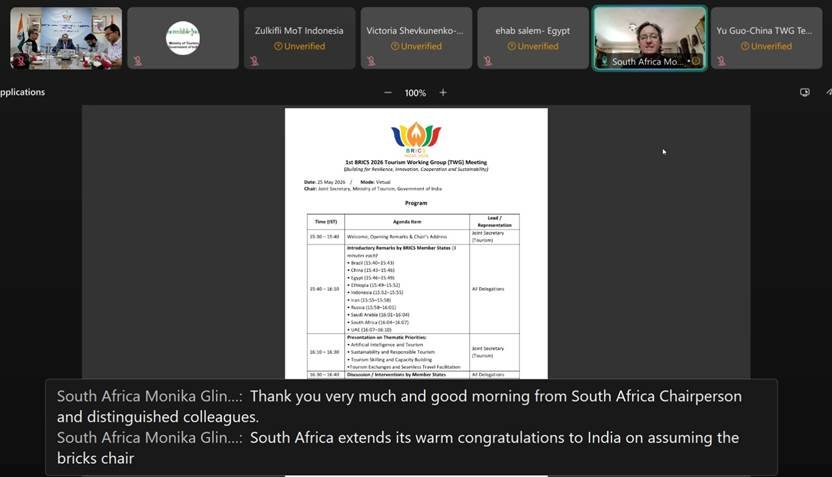
The meeting marks the first step in what could become an important platform for strengthening tourism partnerships, knowledge exchange and travel connectivity among BRICS economies.
AI Emerges as a Strategic Priority for Tourism
One of the most significant themes outlined by India is the integration of Artificial Intelligence into tourism development.
As destinations worldwide increasingly adopt AI-driven tools for visitor management, personalised travel experiences, predictive analytics and digital customer engagement, the BRICS platform could become a forum for sharing best practices and innovation models.
For hospitality businesses, AI is already transforming revenue management, guest services, customer support and operational efficiency, making this a key area to watch as discussions evolve during India’s chairship.
Sustainability Moves to the Forefront
Sustainability and responsible tourism have also been identified as core priorities for cooperation.
The focus aligns with growing global demand for environmentally conscious travel experiences and increasing efforts by destinations to balance tourism growth with environmental and cultural preservation.
Industry stakeholders expect discussions to cover sustainable destination management, community participation, climate resilience and responsible tourism practices that can support long-term sector growth.
For hotels, tour operators and destination managers, sustainability standards are increasingly becoming a competitive advantage in attracting both international and domestic travellers.
Workforce Development and Tourism Skills Gain Importance
India has also prioritised tourism skilling and capacity building, reflecting the sector’s growing need for a future-ready workforce.
The hospitality and tourism industries continue to face talent shortages and changing skill requirements driven by digitalisation, technology adoption and evolving traveller expectations.
Greater cooperation among BRICS countries could facilitate knowledge exchange in hospitality education, vocational training, tourism entrepreneurship and workforce development programmes.
Focus on Easier Travel and Visitor Mobility
Another notable priority is tourism exchanges and seamless travel facilitation.
While details are expected to emerge in subsequent meetings, the focus suggests efforts to improve travel experiences through stronger cooperation on visitor movement, tourism promotion and connectivity initiatives.
For the travel industry, easier movement between BRICS nations could support higher visitor flows, business travel and cultural exchange opportunities in the coming years.
Why It Matters for Hospitality and Tourism
Collectively, BRICS nations represent some of the world’s largest tourism source markets and fastest-growing travel economies. Greater cooperation among member countries has the potential to influence visitor flows, tourism investment, aviation connectivity and destination marketing strategies.
For India’s hospitality sector, the discussions may create opportunities to attract a larger share of travellers from BRICS countries while strengthening partnerships across tourism, aviation, travel technology and hospitality services.
The focus on AI, sustainability and workforce development also aligns closely with priorities already shaping the future of hotels, resorts, travel companies and tourism destinations worldwide.
Jaipur to Host Key BRICS Tourism Meetings
The tourism cooperation process will continue later this year when Jaipur hosts the second BRICS Tourism Working Group Meeting on August 19–20, followed by the BRICS Tourism Ministers’ Meeting on August 21–22.
The meetings are expected to translate the initial discussions into more concrete areas of cooperation and could produce policy recommendations that influence tourism development across BRICS member countries.
As India leads the bloc’s tourism agenda in 2026, industry stakeholders will closely watch how discussions on technology, sustainability, skills and travel facilitation evolve into actionable initiatives that support tourism growth and international collaboration.