ICAR-CIRCOT Transfers Protective Glove Technology to Improve Safety of Cotton-Picking Workers
MoU with Trust ARS Rubber to Support Commercialisation of Reusable Gloves Designed to Protect Workers from Sharp Cotton Bracts Key Highlights ICAR-CIRCOT signed an MoU with Trust ARS Rubber Private Limited on October 22, 2026, for technology
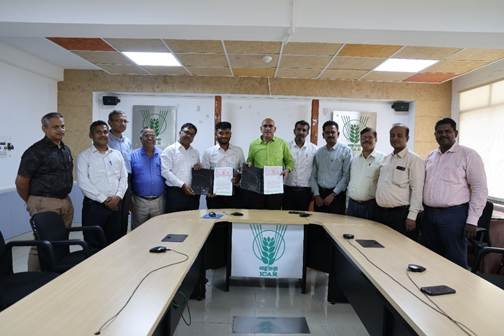
MoU with Trust ARS Rubber to Support Commercialisation of Reusable Gloves Designed to Protect Workers from Sharp Cotton Bracts
Key Highlights
- ICAR-CIRCOT signed an MoU with Trust ARS Rubber Private Limited on October 22, 2026, for technology transfer of protective gloves for cotton-picking workers.
- The gloves are designed to protect workers’ hands from injuries caused by sharp cotton bracts during harvesting.
- Flexible, comfortable, durable and reusable construction makes the gloves suitable for repeated use in demanding field conditions.
- The agreement aims to facilitate commercialisation and wider availability of the protective equipment.
- The initiative highlights the role of industry–research partnerships in translating agricultural innovations into practical solutions.
The ICAR–Central Institute for Research on Cotton Technology (ICAR-CIRCOT), Mumbai, has signed a Memorandum of Understanding (MoU) with Trust ARS Rubber Private Limited, Chengalpattu, Tamil Nadu, to transfer technology for protective gloves designed for cotton-picking workers.
Signed on October 22, 2026, the agreement aims to support commercialisation and wider availability of the gloves, addressing a practical occupational-safety challenge faced by agricultural labourers during cotton harvesting.
Protective Gloves Designed for Field Conditions
Cotton-picking workers can sustain hand injuries from sharp cotton bracts while harvesting. The gloves developed by ICAR-CIRCOT are intended to provide protection while retaining the flexibility and comfort required for field operations.
According to the Press Information Bureau (PIB), the gloves are durable and reusable, making them suitable for repeated use under demanding agricultural conditions.
The technology transfer is expected to help bring the protective equipment to a wider market. Its intended benefits include reducing hand injuries, improving working conditions and promoting safer harvesting practices.
Industry–Research Collaboration to Support Commercialisation
The MoU represents a collaboration between a public agricultural research institution and a private company to move a developed technology towards wider practical use.
By facilitating commercialisation, the partnership aims to connect research and development with the needs of cotton farmers and agricultural workers. The agreement also reflects ICAR-CIRCOT’s focus on developing technologies that address field-level challenges and support worker welfare across the cotton value chain.
The PIB announcement does not specify production capacity, commercial launch dates, pricing or the expected number of workers who will receive the gloves.
Impact on Hospitality, Food Processing, Travel and Tourism
Agricultural worker safety: Although the initiative is focused on cotton harvesting rather than hospitality, it highlights the importance of suitable protective equipment for workers in labour-intensive sectors. Hotels, food processors and other businesses can draw a broader operational lesson from the emphasis on workplace safety and practical, reusable equipment.
Cotton and textile supply chains: Cotton is an important agricultural raw material for the textile sector, which supplies fabrics used in hospitality settings, including hotel linen, towels and uniforms. Improving working conditions within cotton production may contribute to wider responsible-sourcing discussions, although the MoU does not establish a direct link to hospitality textile procurement.
Sustainability and reusable products: The gloves’ reusable and durable design is relevant to discussions about product longevity and reducing reliance on disposable equipment. Their actual environmental benefits would depend on factors such as lifespan, maintenance and disposal.
Rural livelihoods: By aiming to reduce hand injuries and improve harvesting conditions, the technology could support agricultural worker welfare. Any broader impact on labour productivity or incomes will depend on adoption, affordability and demonstrated results.
Industry Takeaway
The ICAR-CIRCOT–Trust ARS Rubber agreement demonstrates how agricultural research can be translated into practical workplace-safety solutions. For businesses connected to cotton and textiles, the development is a reminder that responsible supply chains extend beyond the finished product to the working conditions of people involved in raw-material production.
The next step will be the commercialisation and wider availability of the gloves, with their practical impact depending on accessibility, adoption and performance in field conditions.
Source: Press Information Bureau (PIB), Government of India, October 23, 2026.