How India’s Climate Shapes Whisky Maturation: The Science of Heat, Evaporation, and Flavor Development
Article by Maj Gen (Dr) Rajesh Chopra, AVSM (Retd), Director General, The Indian Malt Whisky Association (IMWA) The era when traditional geographies held an unchallenged monopoly on luxury spirits has definitively passed. The numbers clearly tell
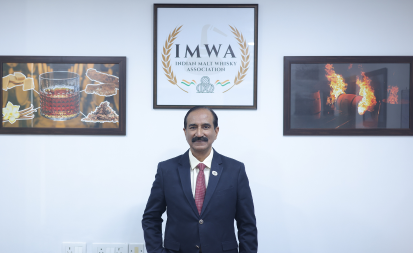
Article by Maj Gen (Dr) Rajesh Chopra, AVSM (Retd), Director General, The Indian Malt Whisky Association (IMWA)
The era when traditional geographies held an unchallenged monopoly on luxury spirits has definitively passed. The numbers clearly tell the story. Recent market shifts have seen Indian single malt achieve a historic milestone by outselling imported Scotch domestically. Adding to this momentum, the broader Indian whisky sector now commands an overwhelming majority of the Asia Pacific market revenue. Current market reports project the domestic single malt category will continue to expand at a robust compound annual growth rate exceeding 12 per cent through the next decade. However, this exceptional trajectory is not driven by sheer market volume or clever branding alone. It represents a fundamental rewriting of the science of maturation, heavily influenced by the subcontinent’s singular tropical climate. Tropical heat exacts a heavy toll, creating an annual angel’s share of roughly 10 to 12 per cent, compared to a mere 2 per cent in colder climates. This dramatic rate of evaporation is, however, only one side of the equation. The liquid left behind is incredibly concentrated and rich, shaped by a depth of wood interaction that India’s climate intensifies with every passing season. What the tropical environment delivers within the years of maturation is an intensity that temperate climates simply cannot replicate over equivalent time — the barrel breathing deeper, the spirit drawing more from the wood, the flavours compressing into something denser and more layered. It requires meticulous barrel management, with releases guided by flavour maturity and not age alone. This careful method of tracking barrels ensures that the climate-driven ageing process results in a well-balanced, high-quality product without letting the wood tannins overpower the subtle malt flavours.
This unique production environment has attracted the keen attention of global investors and international connoisseurs, elevating Indian single malt from a category of curiosity to one of serious premium standing. Investor sentiment is shifting, with a growing appetite for these limited-run spirits, seen as solid investment assets with unique, terroir-driven flavour profiles. Meanwhile,
conscientious global buyers are increasingly questioning the environmental credentials of luxury buys. The Indian industry is proactively leading the way with stringent water stewardship practices and is cognisant of the water footprint of distilling. Distilleries are developing holistic approaches to effluent treatment, groundwater recharge and overall sustainability to protect resources and maintain long-term investor confidence. The deep interaction of heat, evaporation and wood has shown that quality is not solely a function of time — it is equally a matter of environment and expertise, redefining exactly what the world expects from a truly authentic, luxury pour.
With the industry’s voice growing more prominent, the unified goal of Indian Malt Whisky Association (IMWA) remains clear — to protect, preserve and promote the true category of Indian malt whisky globally.
Towards this objective, IMWA has established a transparent environment for the benefit of the craftsman and the consumer by establishing clear, world aligned “Guidelines and Standards for Indian Single Malt Whisky and Indian Pure Malt Whisky”.