India Launches First Indigenous H5N1 Bird Flu Vaccine at ₹1–2 per Dose; ₹300-Crore Animal Disease Research Lab Announced in Bhopal
ICAR-NIHSAD-developed vaccine targets H5N1 Clade 2.3.2.1a, strengthening poultry disease preparedness as India steps up investment in animal health research Bhopal | 20 November 2026 India has dedicated its first indigenous vaccine against H5N1 avian influenza in chickens
ICAR-NIHSAD-developed vaccine targets H5N1 Clade 2.3.2.1a, strengthening poultry disease preparedness as India steps up investment in animal health research
Bhopal | 20 November 2026
India has dedicated its first indigenous vaccine against H5N1 avian influenza in chickens to the nation, marking a significant development in the country’s efforts to strengthen poultry disease control and reduce dependence on imported animal-health technologies.
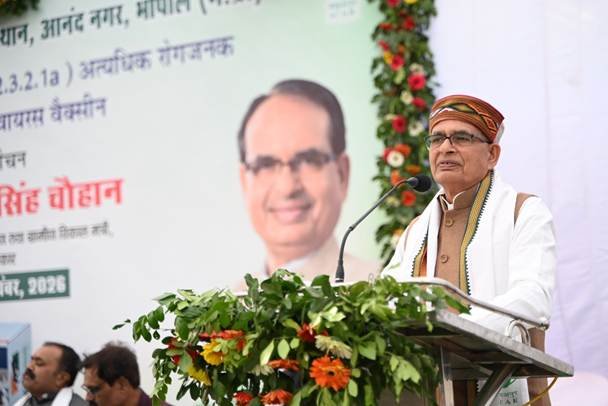
Union Minister for Agriculture and Farmers’ Welfare and Rural Development Shivraj Singh Chouhan dedicated the inactivated H5N1 vaccine, targeting Clade 2.3.2.1a, at the ICAR-National Institute of High Security Animal Diseases (ICAR-NIHSAD) in Bhopal on 20 November 2026.
Developed by ICAR-NIHSAD, the vaccine has been priced at approximately ₹1–2 per dose, with the stated objective of making preventive vaccination affordable for poultry farmers, including smaller producers. The Minister described it as the world’s first vaccine against this particular H5N1 variant.
The announcement was accompanied by a proposal to establish a state-of-the-art animal disease research laboratory in Bhopal at an estimated investment of ₹300 crore, further strengthening the city’s role in India’s animal-health research infrastructure.
Indigenous vaccine targets a major bird flu threat
India has reported more than 500 bird flu outbreaks since the first detection of the disease in 2006. H5N1 infections can cause severe mortality in poultry, resulting in large-scale culling, trade restrictions and substantial financial losses for farmers and businesses.
Recalling the history of outbreaks, Chouhan said the first reported outbreak in India occurred in Navapur, Maharashtra, in 2006, resulting in the death of 10 lakh chickens. He also referred to the loss of around nine lakh chickens in 2021 and another two lakh this year.
The newly dedicated vaccine targets H5N1 Clade 2.3.2.1a, a strain responsible for major poultry outbreaks. Its development addresses an important gap in India’s animal disease prevention capabilities, as the earlier PIB announcement noted the absence of a specific commercial vaccine for this variant.
The affordable pricing is intended to improve access to preventive protection, although the scale and effectiveness of its eventual deployment will depend on vaccination strategy, regulatory requirements and implementation across poultry operations.
₹300-crore laboratory to strengthen animal disease research
The Minister announced a new state-of-the-art laboratory in Bhopal with an estimated investment of ₹300 crore. The proposed facility is expected to add to the research infrastructure supporting animal disease surveillance, diagnostics and vaccine development.
Chouhan said he chose Bhopal for the vaccine dedication rather than Delhi to recognise the scientists who developed it at ICAR-NIHSAD and acknowledge their contribution at the institute where the research was undertaken.
The institute has previously developed indigenous vaccines for Gumboro disease, Brucella abortus S-19 Delta, Classical Swine Fever and African Swine Fever. The H5N1 vaccine adds to its contribution to India’s animal-health research capabilities.
Animal diseases cause an estimated ₹56,000-crore annual burden
Highlighting the economic importance of animal health, Chouhan described livestock as farmers’ “moving ATMs”, providing regular income alongside crop cultivation.
According to figures shared by the Minister, animal husbandry contributes 14% to India’s GDP, while the poultry sector accounts for another 1%.
He cited the following estimated annual economic losses from major animal diseases:
| Animal disease | Estimated annual losses |
|---|---|
| Foot and Mouth Disease | ₹22,000 crore |
| Lumpy Skin Disease | ₹20,000 crore |
| Brucellosis | ₹9,212 crore |
| Peste des Petits Ruminants | ₹4,683 crore |
| Combined estimated losses | Approximately ₹56,000 crore |
The figures underline the economic importance of preventive animal healthcare, particularly for farmers and businesses dependent on livestock and poultry production.
National vaccination programme records major progress
The Minister also highlighted the government’s National Animal Disease Control Programme and its role in controlling major livestock diseases.
According to the figures shared at the event, 147.16 crore free vaccine doses have been administered against Foot and Mouth Disease. He also cited progress in controlling Brucellosis.
Referring to the 2022 Lumpy Skin Disease outbreak, Chouhan said approximately 32.8 lakh animals were infected and 1.86 lakh died. Scientists at Hisar and Izatnagar subsequently developed the Lumpi-ProVacInd vaccine to combat the disease.
He credited India’s scientific institutions with strengthening domestic capabilities in animal disease prevention and vaccine development.
Key Highlights
- First indigenous H5N1 chicken vaccine: Developed by ICAR-NIHSAD, Bhopal, against Clade 2.3.2.1a.
- Affordable pricing: Approximately ₹1–2 per dose, as announced by the Minister.
- National dedication: Union Minister Shivraj Singh Chouhan dedicated the vaccine on 20 November 2026.
- New research infrastructure: ₹300-crore state-of-the-art animal disease research laboratory announced for Bhopal.
- Outbreak history: More than 500 bird flu outbreaks reported in India since 2006.
- Economic burden: Major animal diseases cited by the Minister account for approximately ₹56,000 crore in annual losses.
- Vaccination progress: 147.16 crore free doses administered against Foot and Mouth Disease under the National Animal Disease Control Programme.
Impact on Hospitality, Food & Beverage and Travel & Tourism
1. Greater poultry supply-chain resilience
Bird flu outbreaks can affect poultry availability through mortality, culling and restrictions on the movement and trade of birds. An affordable indigenous vaccine could strengthen preventive disease management and potentially reduce the risk of major supply disruptions, subject to effective implementation.
For hotels, restaurants, caterers and institutional kitchens, poultry supply stability is particularly important because chicken remains a widely used ingredient across food service operations.
2. Potential reduction in procurement volatility
Large-scale poultry losses can affect prices and procurement costs for food businesses. Improved disease prevention could help reduce the likelihood and severity of outbreak-related supply shocks, supporting more predictable sourcing for hospitality operators.
3. Stronger confidence in domestic poultry production
Investment in animal disease research and indigenous vaccine development can strengthen the domestic poultry industry’s disease-management capabilities. This could support confidence among producers, processors, distributors and institutional buyers.
4. Opportunities for animal-health and agri-food businesses
The proposed ₹300-crore research laboratory could strengthen Bhopal’s animal-health research ecosystem. Over time, developments in diagnostics, vaccines and disease surveillance may create opportunities for collaboration among research institutions, veterinary businesses and poultry-sector stakeholders.
5. Relevance for food safety and responsible sourcing
Hospitality businesses will continue to require strong supplier checks, appropriate food-handling practices and compliance with applicable food-safety requirements. Vaccination is one component of disease control and does not replace surveillance, biosecurity or safe handling of poultry products.
Industry Takeaway
India’s first indigenous H5N1 chicken vaccine and the proposed ₹300-crore animal disease research laboratory represent important developments for the country’s poultry and wider animal-health ecosystem.
For the hospitality industry, the significance extends to the reliability of chicken supplies, procurement planning and the resilience of food service operations. If the vaccine is effectively deployed alongside surveillance and farm-level biosecurity, it could help reduce the economic and supply-chain consequences of future bird flu outbreaks.
The larger message for the food industry is that investment in animal health is also an investment in food-system stability.