Government Plans Transport Support and Direct Compensation for Potato, Onion and Tomato Farmers
At KVK Samrala, Agriculture Minister Shivraj Singh Chouhan outlines measures to protect growers from price crashes, promote crop diversification and improve soil health under the nationwide Khet Bachao Abhiyan Samrala, Punjab | 17 November 2026 The Centre
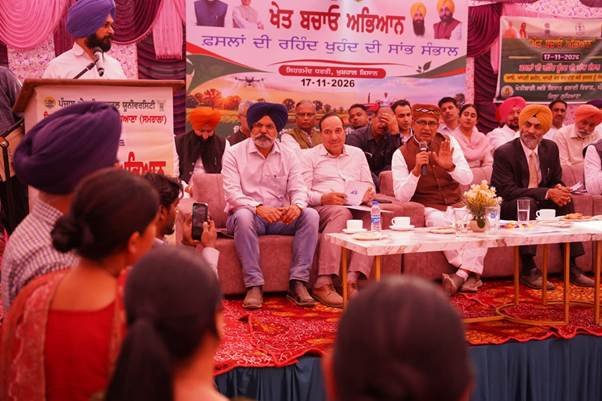
At KVK Samrala, Agriculture Minister Shivraj Singh Chouhan outlines measures to protect growers from price crashes, promote crop diversification and improve soil health under the nationwide Khet Bachao Abhiyan
Samrala, Punjab | 17 November 2026
The Centre has announced proposed measures to support farmers facing sharp price declines in potato, onion and tomato markets, including bearing the full transportation cost of moving produce to better-paying markets in other states. Union Agriculture and Farmers’ Welfare Minister Shivraj Singh Chouhan outlined the measures during an interaction with farmers and agricultural scientists at Krishi Vigyan Kendra (KVK), Samrala, in Ludhiana district, under the nationwide Khet Bachao Abhiyan.
The Minister said that when prices of potatoes, onions or tomatoes fall in Punjab while better prices are available in cities such as Delhi, Mumbai, Kolkata or Chennai, the Central Government would bear the entire transportation cost. The produce would be moved through state government agencies, helping farmers access markets outside their home state without having to absorb additional freight expenses.
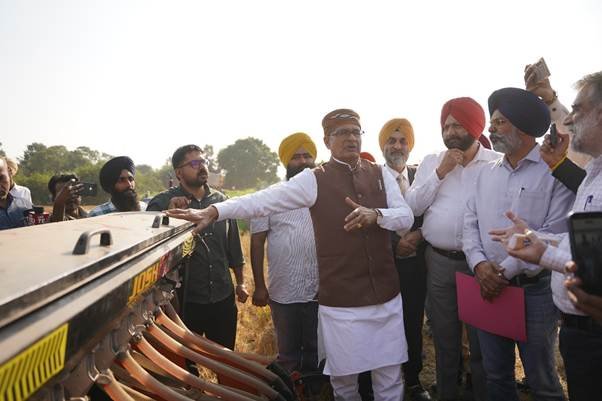
He also highlighted the Market Intervention Scheme, under which the Centre and state governments would jointly intervene when farmers are forced to sell their produce at very low prices. The two governments would share the cost equally, with 50% contribution each, and the price difference would be transferred directly to farmers’ bank accounts.
The announcements are significant for the fresh-produce supply chain, as transportation expenses and sudden market-price fluctuations can affect the movement of perishable commodities from producing regions to major consumption centres.
Integrated farming and crop diversification take centre stage
Chouhan called for moving beyond the wheat-paddy cropping cycle and adopting integrated farming models that combine foodgrain cultivation with fruits, flowers, vegetables, medicinal plants, animal husbandry, goat rearing and fish farming.
He highlighted Punjab Agricultural University’s three-crop model, under which farmers can cultivate three crops on one acre and potentially earn net annual income of up to ₹1.5 lakh. He asked KVK Samrala to popularise the model across the region.
The Minister said that smaller landholdings require farming approaches that generate higher returns from limited acreage. Diversification, he added, can create additional income sources while reducing dependence on a single cropping pattern.
Farmer IDs and proposed laws to address fertiliser and pesticide concerns
The Minister said the government was issuing Farmer IDs to prevent the diversion of subsidised fertilisers such as urea and DAP for unauthorised uses. He informed farmers that six lakh Farmer IDs had already been created in Punjab.
He also announced plans to introduce a stringent Pesticide Act and a new seed law to protect farmers from counterfeit pesticides and poor-quality seeds.
Highlighting the fertiliser subsidy burden, Chouhan said DAP, whose cost was approximately ₹5,000 per bag, was being supplied to farmers at ₹1,350, while urea costing around ₹3,000 was being made available at ₹266 per bag.
Natural farming and stubble management
Addressing soil degradation and excessive chemical input use, the Minister urged farmers to experiment with natural farming on at least half of their land and assess the results before expanding the practice.
On stubble management, he said crop residue should be treated as a resource for the soil rather than simply waste. Incorporating stubble into fields can increase organic carbon content and contribute to soil health.
He assured farmers that the government would work towards making machinery used for residue management, including seeders, more affordable and accessible.
The interaction was organised as part of the nationwide Khet Bachao Abhiyan, being conducted from 22 October to 30 November 2026 under the theme Healthy Soil, Prosperous Farmers.
Key Highlights
- Transportation support: Centre to bear the entire transportation cost when potato, onion and tomato farmers move produce to better-paying markets in other states through state government agencies.
- Market Intervention Scheme: Centre and state governments to share intervention costs equally, with the price difference transferred directly to farmers’ bank accounts.
- Integrated farming: PAU’s three-crop model can generate net annual income of up to ₹1.5 lakh per acre.
- Farmer IDs: Six lakh Farmer IDs created in Punjab to help prevent the diversion of subsidised fertilisers.
- New legislation: Proposed stringent Pesticide Act and new seed law to address counterfeit pesticides and poor-quality seeds.
- Natural farming: Farmers encouraged to test natural farming on at least half their land.
- Stubble management: Government to focus on making residue-management machinery more affordable.
Impact on Hospitality, Food & Beverage and Travel & Tourism
1. Potential improvement in fresh-produce market movement
The proposed transportation support for potato, onion and tomato growers could help connect producing regions with major consumption markets. For hotels, restaurants, caterers and institutional kitchens, improved inter-state movement may support access to fresh produce from different sourcing regions.
2. Greater opportunities for farm-to-hotel sourcing
The emphasis on fruits, vegetables, flowers and medicinal plants through integrated farming could broaden the range of agricultural products available to hospitality procurement networks. Hotels and restaurants promoting regional menus, seasonal ingredients and locally sourced food may benefit from stronger links with diversified farms.
3. Scope for food processing and value addition
More diversified agricultural production could create opportunities for processors handling vegetables, fruits and other farm commodities. This is particularly relevant to hospitality suppliers, central kitchens and food businesses looking to develop processed and semi-processed ingredient supply chains.
4. Natural farming and sustainable food procurement
The government’s encouragement of natural farming and improved soil management aligns with the growing focus on responsible sourcing and sustainable food practices. Hospitality businesses may find opportunities to develop procurement partnerships with farmers adopting such practices.
Industry Takeaway
The announcements at Samrala connect agricultural policy with two important priorities for the food and hospitality sector: reliable movement of fresh produce and diversification of farm output. If implemented effectively, the proposed transportation support and Market Intervention Scheme could help reduce some market-access challenges for growers, while integrated farming may expand the range of products available to food businesses.
For hotels, restaurants, caterers and food processors, stronger connections with diversified farming communities could support regional sourcing strategies and create opportunities for more resilient fresh-food supply chains.