India’s Horticulture Production Projected to Hit Record 386.9 Million Tonnes in 2025-26, Boosting Food and Hospitality Supply Chains
Third Advance Estimates project 4.36% growth in horticulture output despite a decline in cultivated area; potato production expected to rise nearly 12%, while fruits, vegetables, flowers and plantation crops register gains New Delhi, November 17, 2026:

Third Advance Estimates project 4.36% growth in horticulture output despite a decline in cultivated area; potato production expected to rise nearly 12%, while fruits, vegetables, flowers and plantation crops register gains
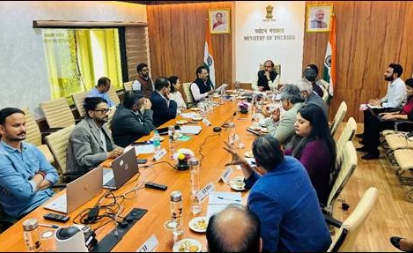
New Delhi, November 17, 2026: India’s horticulture production is projected to reach a record 386.9 million tonnes in 2025-26, marking a 4.36% increase over the previous year’s output, according to the Third Advance Estimates released by Union Minister for Agriculture and Farmers’ Welfare and Rural Development, Shri Shivraj Singh Chouhan.
The estimated production stands at 3,869.15 lakh tonnes, compared with 3,707.38 lakh tonnes in 2024-25, representing an increase of 161.77 lakh tonnes.
The growth is particularly significant as it is projected despite a reduction in the total area under horticultural cultivation. The cultivated area is estimated at 297.21 lakh hectares in 2025-26, compared with 301.36 lakh hectares in the previous year.
The estimates indicate improving productivity and continued diversification towards fruits, vegetables, flowers, spices, plantation crops and high-value agricultural products.
For India’s food processing, hospitality and foodservice sectors, the projected increase in horticultural output carries significance for raw material availability, procurement planning and the development of value-added food products.
Vegetable Production Leads with 227.26 Million Tonnes
Vegetables remain the largest contributor to India’s horticulture output. Production is projected to increase by 4.35%, from 2,177.97 lakh tonnes in 2024-25 to 2,272.68 lakh tonnes in 2025-26.
The increase is supported by higher production of potato, tomato, brinjal, bottle gourd, cucumber, cabbage, beans and peas.
Among individual crops, potato production is expected to register particularly strong growth.
- Potato: Estimated at 655.70 lakh tonnes, an increase of 11.95% over 585.71 lakh tonnes in 2024-25.
- Tomato: Projected to rise to 214.11 lakh tonnes from 205.99 lakh tonnes.
- Onion: Production estimated at 288.96 lakh tonnes.
The expansion in vegetable production is relevant for foodservice businesses, particularly hotels, restaurants, institutional kitchens, catering companies and food processors that depend on consistent supplies of fresh produce.
Fruit Production Expected to Increase by 4.60%
Fruit production is projected to increase from 1,176.49 lakh tonnes in 2024-25 to 1,230.66 lakh tonnes in 2025-26, registering growth of 4.60%.
Higher production of banana, mango, papaya, apple, pomegranate and jackfruit is expected to contribute to the increase.
The projected growth could support multiple segments of the food and beverage industry, including fresh fruit distribution, juice manufacturing, desserts, bakery operations, fruit-based beverages and processed food production.
Flower Production Records Nearly 14.5% Growth
India’s flower production is projected to increase by approximately 14.45%, from 42.65 lakh tonnes in 2024-25 to 48.82 lakh tonnes in 2025-26.
The area under flower cultivation has also increased to 4.10 lakh hectares.
Beyond the agricultural sector, this growth is relevant to hotels, wedding venues, event management companies and the broader hospitality industry, where flowers are an important component of guest experiences, banquet decoration, weddings and festive celebrations.
Plantation Crops and Medicinal Plants Register Growth
The estimates also indicate higher production of plantation crops, including arecanut, coconut, cashew, betel leaves and cocoa.
Combined production of these crops is projected to increase by 7.56% to 182.64 lakh tonnes.
Aromatic and medicinal plant production is also expected to increase from 9.01 lakh tonnes to 9.28 lakh tonnes.
The expansion has potential implications for food processing, confectionery, traditional food preparations, wellness products and the beverage industry.
Coconut and cocoa, in particular, are important ingredients for food manufacturers, bakeries, confectionery businesses, cafés and hotel kitchens.
Spice Production Estimated at 123.54 Lakh Tonnes
India’s spice production is estimated at 123.54 lakh tonnes in 2025-26, with the total area under spice cultivation projected at 47.56 lakh hectares.
Improved production of turmeric, garlic, curry leaves and cardamom is expected to support growth in the sector, according to data from the Directorate of Arecanut and Spices Development.
For India’s hospitality industry, spices remain central to regional cuisines, restaurant menus, packaged foods and beverage preparations. Improved availability of these ingredients could support food manufacturers, spice processors, exporters and commercial kitchens.
Key Highlights: India’s Horticulture Production 2025-26
THIRD ADVANCE ESTIMATES | YEAR-ON-YEAR COMPARISON
386.9 MT
Total horticulture production projected
4.36%
Overall production growth
227.27 MT
Vegetable production
123.07 MT
Fruit production
| Crop category | 2025-26 estimated production | Growth |
|---|---|---|
| Fruits | 1,230.66 lakh tonnes | 4.60% |
| Vegetables | 2,272.68 lakh tonnes | 4.35% |
| Flowers | 48.82 lakh tonnes | 14.45% |
| Plantation crops | 182.64 lakh tonnes | 7.56% |
| Aromatic and medicinal plants | 9.28 lakh tonnes | Increased |
| Spices | 123.54 lakh tonnes | Not specified |
Note: Figures are based on the Third Advance Estimates. The categories are presented as reported in the PIB release.
Impact on Hospitality, Food & Beverage and Travel & Tourism
The projected increase in horticulture production has implications across India’s hospitality and food supply ecosystem. Fruits, vegetables, flowers, spices and plantation crops are essential inputs for hotels, restaurants, catering companies, food manufacturers and tourism businesses.
1. Hotel and restaurant procurement
Higher projected vegetable and fruit production could support sourcing opportunities for hotels, restaurants, resorts and institutional catering businesses. Potato, tomato, onion and other vegetables are among the most frequently used ingredients in commercial kitchens.
However, the actual benefit to hospitality procurement will depend on regional availability, seasonal supply, transportation, storage infrastructure and market prices.
2. Opportunities for food processing and beverage businesses
The projected growth in banana, mango, papaya, apple and other fruits could create opportunities for juice manufacturers, beverage companies, bakeries, dessert producers and packaged food businesses.
Higher coconut and cocoa production could also support businesses involved in coconut-based beverages, confectionery, chocolate, bakery products and speciality desserts.
3. Flower supply for hotels, weddings and events
The nearly 14.5% projected growth in flower production is relevant to India’s wedding, events and hospitality markets.
Hotels, banquet venues, wedding planners and event management companies depend on flowers for decoration, installations, table arrangements and large-scale celebrations. Increased domestic production could offer additional sourcing opportunities, subject to flower varieties, quality and distribution.
4. Regional cuisine and culinary tourism
Growth in spices, plantation crops and traditional agricultural produce can support the promotion of regional Indian cuisines.
Hotels and restaurants developing destination-led dining experiences can use locally sourced ingredients to strengthen regional food identity. This also creates opportunities to connect agricultural production with culinary tourism and local food experiences.
5. Farm-to-table and sustainable sourcing
The increase in production despite a reduction in cultivated area highlights the importance of productivity improvements in horticulture.
For hospitality businesses, stronger connections with farmers, FPOs and local agricultural suppliers could support seasonal procurement, traceability and farm-to-table initiatives.
6. Food cost and supply-chain management
Higher production does not automatically translate into lower food prices. Nevertheless, improved availability can potentially support procurement flexibility and reduce supply constraints for certain commodities.
For hotel purchasing departments and foodservice operators, monitoring crop production trends can help with sourcing strategies, seasonal menu planning and inventory management.
Industry Takeaway
India’s projected horticulture production of 386.9 million tonnes in 2025-26 represents an important development for the country’s agricultural and food economy.
For the hospitality industry, the most relevant developments are the projected increase in vegetable and fruit output, nearly 14.5% growth in flower production, and expansion in plantation crops and spices.
These developments could create opportunities across hotel procurement, restaurant operations, food processing, beverage manufacturing, wedding and event services, and culinary tourism.
The next important factor will be how effectively this projected agricultural output is connected to processing facilities, cold-chain infrastructure, organised distribution networks and institutional buyers.