West Bengal Fisheries: Centre Approves ₹8.32 Crore Reservoir Development, Targets Higher Production and Exports
Six reservoirs approved with ₹4.99 crore Central share as Centre and West Bengal push aquaculture, cold chain, exports and fisheries infrastructure The Government of India and the West Bengal Government have outlined a roadmap to expand
Six reservoirs approved with ₹4.99 crore Central share as Centre and West Bengal push aquaculture, cold chain, exports and fisheries infrastructure
The Government of India and the West Bengal Government have outlined a roadmap to expand the state’s fisheries and aquaculture sector, with a focus on higher productivity, aquaculture, exports, cold-chain infrastructure, technology adoption and stronger fisheries value chains.
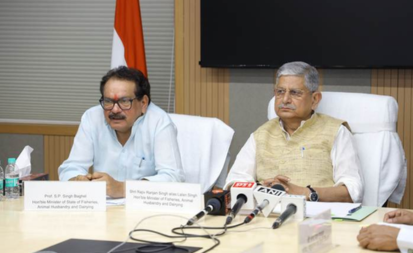
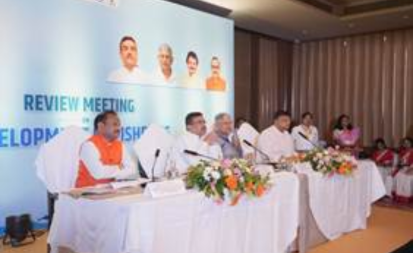
The roadmap was discussed at a high-level review meeting held in Kolkata on 21 September 2026, co-chaired by Union Minister for Fisheries, Animal Husbandry & Dairying and Panchayati Raj Rajiv Ranjan Singh and West Bengal Chief Minister Suvendu Adhikari.
A key outcome of the meeting was the approval for development of six reservoirs at a cost of ₹832.50 lakh, including a Central share of ₹499.50 lakh.
Key Highlights
- ₹8.32 crore approved for development of six reservoirs in West Bengal.
- ₹4.99 crore will be provided as the Central share.
- West Bengal produced 25.43 lakh metric tonnes of fish in 2025-26.
- The state is described as India’s second-largest fish-producing state and the leading fish seed producer.
- West Bengal currently exports fisheries products worth about ₹5,000 crore, according to the Union Minister.
- The state has potential to raise fisheries exports to ₹15,000–20,000 crore, subject to expansion of aquaculture and value addition.
- The Sundarbans were identified for potential development of high-value species including black tiger shrimp, mud crab, hilsa and ornamental fish.
- Nearly 32 lakh people are supported by the fisheries sector in West Bengal, according to the State Fisheries Department.
- Focus areas include cold chains, fishing harbours, seed and feed quality, disease management, traceability and market linkages.
- PMMSY Phase-II is expected to support further fisheries infrastructure and development initiatives.
Six Reservoirs Approved for Fisheries Development
Union Minister Rajiv Ranjan Singh handed over the administrative approval for the development of six reservoirs in West Bengal to Chief Minister Suvendu Adhikari.
The project has a total cost of ₹832.50 lakh, with a Central share of ₹499.50 lakh.
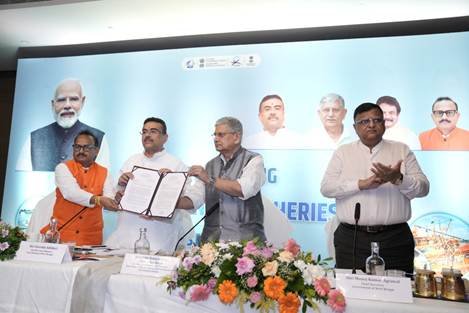
Reservoir fisheries are among the areas being explored to expand the state’s fisheries production base, alongside aquaculture, mariculture and modern fish-farming technologies.
The West Bengal Fisheries Department also outlined plans to develop reservoir fisheries in Bankura and Purulia.
West Bengal Targets Higher Fisheries Exports
The Union Minister highlighted the state’s significant but underutilised fisheries potential. West Bengal currently exports fisheries products worth around ₹5,000 crore, while the state has the potential to increase exports to ₹15,000–20,000 crore, according to the PIB release.
The proposed expansion will involve greater use of aquaculture, value addition and export-oriented infrastructure.

The Sundarbans were specifically identified as an area with potential for aquaculture-led export growth involving high-value species such as black tiger shrimp, mud crab, hilsa and ornamental fish.
The review also highlighted the need for stronger seed quality, feed management, disease control, cold chains, fishing harbours, fish landing centres and deep-sea fishing capabilities under the upcoming PMMSY 2.0.
Fisheries Infrastructure and Cold Chain in Focus
Infrastructure development emerged as a major component of the state’s fisheries roadmap.
The state highlighted the need to strengthen fishing harbours, cold-chain infrastructure and supply chains, while the Fisheries Department reported that long-pending PMMSY projects involving the upgradation of fishing harbours at Fraserganj, Kakdwip, Shankarpur and Petuaghat are being expedited.
Other planned interventions include:
- Expansion of fisher registration through the National Fisheries Digital Platform (NFDP)
- Development of reservoir fisheries
- Biofloc and cage culture
- Soft-shell crab farming
- Mariculture
- Export facilitation
- Aquaculture regulation
- Maritime safety
- Improved traceability and regulatory compliance
Technology, Seed Quality and Disease Management
The review placed significant emphasis on improving productivity through science and technology.
Institutions including ICAR-CIFA, ICAR-CIBA, ICAR-CMFRI, ICAR-CIFRI, ICAR-NBFGR and the Central Institute of Coldwater Fisheries Research presented interventions covering broodstock management, hatchery certification, certified seed, disease surveillance, biosecurity, mariculture and farmer training.
The Coastal Aquaculture Authority also assured support for farm registrations and export compliance.
Potential diversification into mud crab, seabass, black tiger shrimp, cage culture, ornamental fisheries and seaweed cultivation was discussed as part of the broader strategy.
Opportunities for rainbow trout farming in Darjeeling and Kalimpong were also highlighted.
Nearly 32 Lakh People Dependent on Fisheries
According to the West Bengal Fisheries Department, the sector supports the livelihoods of nearly 32 lakh people in the state.
Chief Minister Suvendu Adhikari highlighted the importance of fisheries initiatives in North 24 Parganas, South 24 Parganas and the Sundarbans, while calling for stronger support for fisher safety, particularly for those operating in deep-sea waters.
He also stressed the need for better communication systems, wireless connectivity, control-room infrastructure and emergency response mechanisms.
The state government highlighted initiatives including PMMSY, NFDP and PM-MKSSY as important components of fisheries development and fisher welfare.
India’s Fisheries Sector Continues to Expand
The Union Minister noted that India’s fish production has increased from 95.7 lakh tonnes in 2014 to 197.75 lakh tonnes, while fisheries exports have risen to ₹73,890 crore.
For West Bengal, the review focused on translating the state’s existing production base into greater productivity, processing, value addition and export capacity.
The state recorded 25.43 lakh metric tonnes of fish production in 2025-26, while also retaining its position as the country’s leading fish seed producer.
Under PMMSY, fisheries interventions involving ₹102.23 crore in Central share and ₹66.48 crore in State share have been mobilised in West Bengal, according to the State Fisheries Minister.
Impact on Seafood, Hospitality and Tourism
The proposed expansion has significant relevance for West Bengal’s seafood supply chain and hospitality sector.
Improved aquaculture, fish landing facilities, cold chains and processing infrastructure can strengthen the movement of seafood from fishing and farming communities to processors, distributors, hotels, restaurants and catering businesses.
The focus on high-value species such as shrimp, mud crab, hilsa and ornamental fish also has implications for the premium seafood segment and export-oriented food businesses.
For hospitality, better cold-chain and post-harvest infrastructure can support the quality and handling of seafood supplied to restaurants and hotels. The development of fisheries clusters and market linkages may further connect producers with organised food-service markets.
The Sundarbans and other fisheries-intensive regions also have a wider connection with coastal and nature-based tourism, although the PIB release does not announce a specific tourism project as part of this fisheries roadmap.
Centre-State Coordination to Drive Next Phase
The review meeting brought together the Centre, West Bengal Government, research institutions, financial organisations and fisheries regulators to identify priority interventions.
The discussions focused on productivity enhancement, infrastructure development, technology adoption, capacity building, fisher safety, market linkages and exports.
The government has positioned stronger Centre-State coordination and institutional support as key to unlocking West Bengal’s fisheries potential and building a more sustainable and competitive fisheries value chain.