NRAA Holds National-Level Meeting to Strengthen Watershed Development and Climate-Resilient Agriculture
REWARD programme meeting focuses on data-driven watershed planning, faster DPR preparation and new technical guidelines for future watershed projects Key Highlights: National Rainfed Area Authority (NRAA) held the National Level Technical Committee meeting under the REWARD programme
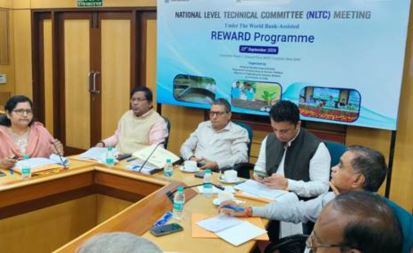
REWARD programme meeting focuses on data-driven watershed planning, faster DPR preparation and new technical guidelines for future watershed projects
Key Highlights:
- National Rainfed Area Authority (NRAA) held the National Level Technical Committee meeting under the REWARD programme on 22 September 2026 in New Delhi.
- Around 45 participants from government agencies, ICAR institutes, agricultural universities, IITs, NGOs and technical partners attended.
- Odisha and Karnataka were advised to share watershed data and Decision Support Systems (DSS) with stakeholders.
- ICAR called for integrating Land Resource Inventory (LRI) and hydrology into watershed planning.
- Proposal to reduce Detailed Project Report (DPR) preparation time from six months to three months.
- The new National Technical Guidelines (NTG) will support future watershed development under Watershed Development Component of Pradhan Mantri Krishi Sinchayee Yojana (WDC-PMKSY) 3.0.
NRAA Reviews Watershed Development Framework Under REWARD
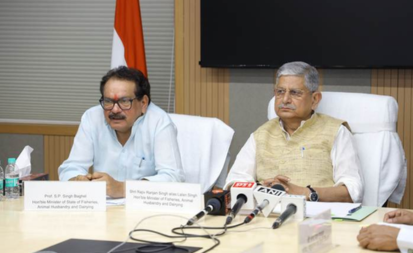
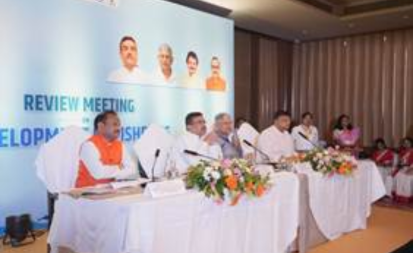
The National Rainfed Area Authority (NRAA) under the Ministry of Agriculture and Farmers’ Welfare organised a National Level Technical Committee (NLTC) meeting under the Rejuvenating Watersheds for Agricultural Resilience through Innovative Development (REWARD) programme at the NASC Complex, New Delhi, on 22 September 2026.
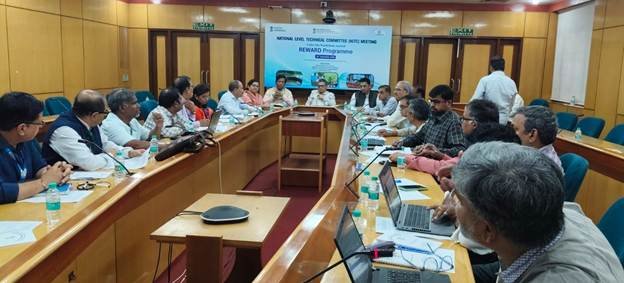
The meeting was chaired by NRAA CEO Dr. Chandra Shekhar Kumar, IAS, and brought together senior officials, scientists, State Level Nodal Agencies, technical institutions, NGOs and consortium partners involved in watershed development.
The discussions focused on strengthening the technical framework for watershed planning, improving the use of field data and accelerating project implementation.
Data and Technology to Drive Watershed Planning
Dr. Chandra Shekhar Kumar stressed the need to validate statements and claims included in the draft National Technical Guidelines (NTG) using data generated through the REWARD programme.
Odisha and Karnataka were advised to share watershed-related data and Decision Support Systems (DSS) with stakeholders to facilitate wider analysis and evidence-based planning.
Dr. A. K. Nayak, DDG (NRM), ICAR, highlighted the importance of integrating Land Resource Inventory (LRI) with hydrological information to improve watershed planning. He also called for clearly documenting the methodologies used to arrive at results and conclusions in the NTG.
The development of dedicated web portals for making relevant information accessible was also discussed.
Government Proposes Faster DPR Preparation
A key proposal discussed during the meeting was to reduce the time required for preparing Detailed Project Reports (DPRs) for watershed projects.
Shri Nitin Khade, Joint Secretary (Watershed Management), Department of Land Resources, suggested reducing the DPR preparation period from six months to three months. The move could provide additional time for the actual execution of watershed development activities.
The committee also discussed greater convergence between different sectors and incorporating such approaches into the National Technical Guidelines.
National Technical Guidelines to Support Future Watershed Projects
At the beginning of the meeting, Dr. Susama Sudhishri, Technical Expert (Watershed Development) and PI-REWARD, NRAA, presented the action taken report from the previous NLTC meeting and outlined additions made to the second draft of the NTG.
The State Level Nodal Agencies of Odisha and Karnataka were also requested to share recorded data with NRAA and consortium partners for analysis, report preparation and validation of the guidelines.
The National Technical Guidelines currently under development are intended to guide the next generation of watershed development projects in India under the Watershed Development Component of Pradhan Mantri Krishi Sinchayee Yojana 3.0.
Impact on Food, Hospitality and Tourism
The focus on improved watershed management has a wider relevance for the food and hospitality ecosystem, particularly because rainfed agriculture contributes to the availability of agricultural commodities entering food supply chains.
Better watershed planning, hydrological management and climate-resilient agricultural practices can support farm productivity and more stable agricultural supply chains. For hotels, restaurants, caterers and food businesses, greater resilience in agricultural production can contribute to more reliable sourcing of food commodities over the longer term.
In rural and agritourism destinations, improved water-resource management can also support agricultural activities and local livelihoods, potentially strengthening the wider rural tourism and destination economy.