Indian Railways Strengthens Gujarat Freight Network with Five Gati Shakti Cargo Terminals
Shivlakha GCT Inaugurated as Three Terminals Are Dedicated to Nation; New Salt Containers Aim to Improve Gujarat’s Salt Logistics New Delhi, September 15, 2026: Indian Railways has expanded freight-handling infrastructure in Gujarat with the inauguration, dedication
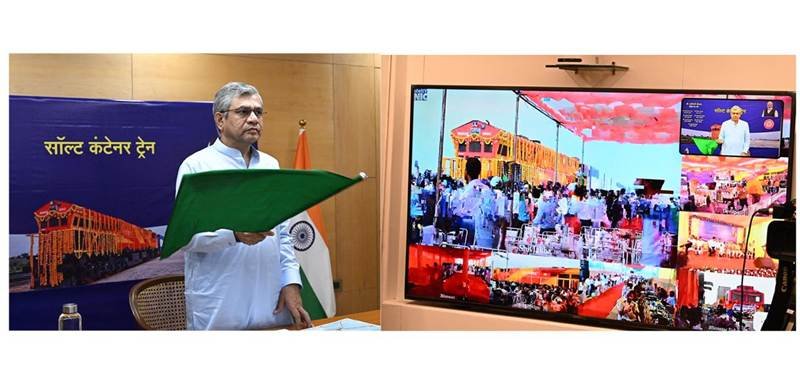
Shivlakha GCT Inaugurated as Three Terminals Are Dedicated to Nation; New Salt Containers Aim to Improve Gujarat’s Salt Logistics
New Delhi, September 15, 2026: Indian Railways has expanded freight-handling infrastructure in Gujarat with the inauguration, dedication and foundation laying of five Gati Shakti Cargo Terminals (GCTs), aimed at improving cargo movement between regional production centres, ports and national markets.
Railway Minister Ashwini Vaishnaw inaugurated the Shivlakha GCT in Kachchh, dedicated the GCTs at Bhimasar, Devaliya and Chandisar to the nation, and laid the foundation stone for the Linch GCT in Mahesana.
The development comes alongside the flagging off of a salt-loaded freight train from Shivlakha GCT to Mithapur, highlighting the role of rail infrastructure in supporting Gujarat’s large salt-producing and industrial ecosystem.
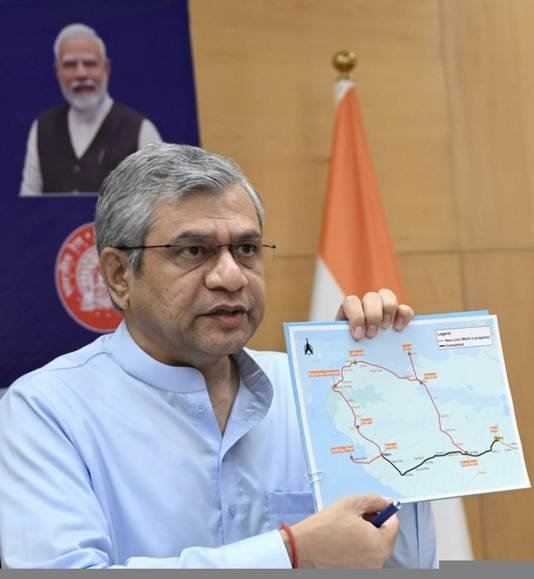
Key Highlights
- Five Gati Shakti Cargo Terminals inaugurated, dedicated or taken up in Gujarat.
- Shivlakha GCT inaugurated in Kachchh.
- GCTs at Bhimasar, Devaliya and Chandisar dedicated to the nation.
- Foundation stone laid for Linch GCT in Mahesana.
- Salt-loaded freight train flagged off from Shivlakha to Mithapur.
- New lightweight stainless-steel salt containers designed to simplify salt loading, unloading and transportation.
- Railway projects worth around ₹5,600 crore are underway in Kachchh, according to the Railway Minister.
- Samakhiali–Bhachau and Gandhidham–Adipur sections have been made four-line; Adipur–Bhuj is being doubled.
- Bhuj–Naliya has been converted from metre gauge to broad gauge.
- Naliya–Jakhau Port new broad-gauge line has been sanctioned.
- The five Gujarat developments take the national GCT network to 150 commissioned terminals, according to the Minister.
Five GCTs Expand Gujarat’s Freight Connectivity
The five terminals are located across key industrial and commercial regions of Gujarat:
| GCT | Location | Status |
|---|---|---|
| Shivlakha | Kachchh | Inaugurated |
| Bhimasar | Kachchh | Dedicated to the nation |
| Devaliya | Morbi | Dedicated to the nation |
| Chandisar | Banaskantha | Dedicated to the nation |
| Linch | Mahesana | Foundation stone laid |
The terminals are intended to increase rail freight-handling capacity, ease congestion and improve connectivity between Gujarat’s ports and the northern hinterland.
For regional businesses, improved access to cargo terminals can provide more direct links to national markets while supporting the movement of industrial commodities and other goods.
Salt Logistics Gets a Rail-Focused Push
A key feature of the event was the flag-off of a salt-loaded freight train from Shivlakha GCT to Mithapur.
Gujarat, particularly Kachchh, is a major salt-producing region. Salt transportation has specific logistical challenges because the commodity can absorb moisture during transit, while conventional railway wagons also add to the overall weight being transported.
To address these issues, Indian Railways has introduced lightweight stainless-steel salt containers designed specifically for the commodity.
The containers allow top loading and side unloading, potentially making the handling process more efficient while reducing operational difficulties associated with conventional salt transportation.
The development has relevance beyond freight operations because salt is a basic food commodity and an important input across India’s food and hospitality ecosystem, from household consumption to commercial food preparation and processed-food production.
Kachchh Railway Infrastructure Receives Major Capacity Push
According to the Railway Minister, railway projects worth approximately ₹5,600 crore are currently underway in Kachchh.
Capacity augmentation and doubling works are being undertaken across important sections connecting Samakhiali, Bhachau, Gandhidham, Adipur and Bhuj.
The Samakhiali–Bhachau section has been made four-line, while the Gandhidham–Adipur section has also been made four-line. The Adipur–Bhuj section is being doubled.
The Bhuj–Naliya section has recently been converted from metre gauge to broad gauge, while a new broad-gauge line from Naliya to Jakhau Port has also been sanctioned.
Further railway development is planned towards Jakhau Port, Vayor, Luna, Hajipur and Desalpar, according to the release.
These projects are expected to strengthen both freight and passenger connectivity in a region where industrial activity, ports, tourism and local communities depend on efficient transport infrastructure.
What the GCT Expansion Means for Travel, Tourism and Hospitality
The development has a direct freight focus, but its wider implications extend to Gujarat’s tourism and hospitality ecosystem.
For Kachchh tourism: Better rail infrastructure can improve the underlying transport network supporting a destination known for its distinctive landscape, crafts, cultural experiences and seasonal visitor activity.
For hotels and restaurants: Improved logistics can strengthen the movement of food products, packaged goods, equipment and other supplies required by hospitality businesses.
For local businesses: GCTs can connect regional producers and businesses more efficiently with larger markets, potentially supporting trade in locally produced goods.
For food supply chains: The salt container initiative is particularly relevant to food logistics because salt is a fundamental ingredient across household, commercial and food-processing operations.
For destination development: Better freight and passenger infrastructure can support the wider ecosystem of accommodation, food and beverage, transportation, retail and tourism services.
Dedicated Freight Corridors and High-Speed Rail Projects
The Railway Minister also highlighted the role of Dedicated Freight Corridors (DFCs) in enabling faster and more efficient movement of goods. Work on strengthening east-west freight connectivity is also being pursued.
The Mumbai–Ahmedabad High-Speed Rail project was another focus of the address. Construction on the Vapi–Surat section is targeted for completion by December 2026, followed by testing and associated works, according to the release.
The Minister also stated that the first coach of India’s indigenous high-speed train has been prepared and is undergoing testing.
Industry Takeaway
Gujarat’s latest Gati Shakti Cargo Terminal expansion strengthens the state’s position within India’s wider freight and logistics network, while the salt container initiative demonstrates how commodity-specific transport solutions can address practical supply-chain challenges.
For the hospitality, food and tourism sectors, the significance lies in the broader infrastructure effect: improved rail connectivity can support destination access, regional commerce, food supply chains and the movement of goods required by hotels, restaurants and tourism businesses.
With major rail capacity projects underway across Kachchh and stronger links to ports and industrial centres, the evolving network could also influence how efficiently tourism destinations, local producers and hospitality businesses connect with larger domestic markets.