ICAR–ICRISAT Partnership Marks 50 Years with New Focus on Resilient Farming and Future-Ready Agriculture
Dryland Congress 2026 highlights climate-smart farming, stronger seed systems, agrobiodiversity and greater participation of women and youth New Delhi, September 11, 2026: The second day of Dryland Congress 2026 marked 50 years of collaboration between the
Dryland Congress 2026 highlights climate-smart farming, stronger seed systems, agrobiodiversity and greater participation of women and youth
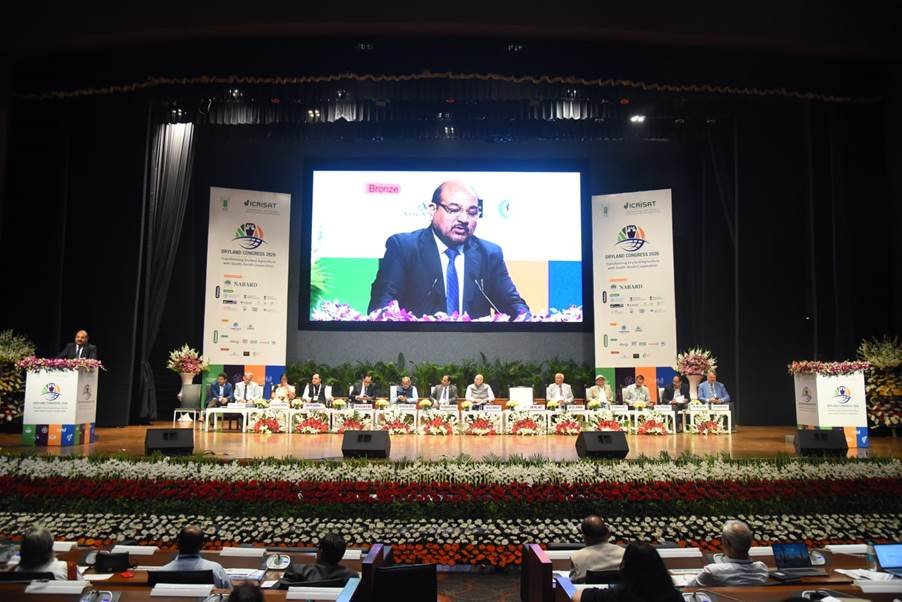
New Delhi, September 11, 2026: The second day of Dryland Congress 2026 marked 50 years of collaboration between the Indian Council of Agricultural Research (ICAR) and the International Crops Research Institute for the Semi-Arid Tropics (ICRISAT), with agricultural experts calling for stronger research partnerships and faster scaling of innovations to transform dryland farming.
The special session brought together former and current leaders of both institutions to review five decades of cooperation and outline a roadmap for the next phase of collaboration, including its contribution towards Viksit Bharat 2047.
Key Highlights
- 50 years of ICAR–ICRISAT collaboration commemorated at Dryland Congress 2026.
- New roadmap proposed to leverage complementary scientific capabilities towards Viksit Bharat 2047.
- Focus on climate-smart and resilient dryland farming systems.
- Stronger seed delivery systems and public-private partnerships discussed.
- Agrobiodiversity highlighted as a tool for strengthening dryland resilience.
- Gender and youth participation identified as critical to future agri-food transformation.
- More than 145 research posters being evaluated for Best Poster Awards.
- Greater emphasis on taking successful agricultural innovations from individual projects to system- and landscape-level deployment.
Five Decades of ICAR–ICRISAT Collaboration
The 50th anniversary session was co-chaired by Dr R. S. Paroda, former Director General of ICAR, and Dr William D. Dar, former Director General of ICRISAT.
Former leaders from both institutions reflected on the evolution of the partnership and its contribution to agricultural research and development.
Dr M. L. Jat, Secretary, Department of Agricultural Research and Education (DARE) and Director General, ICAR, said the complementary strengths of ICAR and ICRISAT should be leveraged to address emerging agricultural challenges and create greater impact.
The next phase of the partnership is expected to focus on scientific innovation, research translation and scaling solutions that can deliver measurable benefits to farmers.
Roadmap for Dryland Agriculture Towards 2047
Dr D. K. Yadava, Deputy Director General, Crop Science, ICAR, and Dr Raman Babu, Global Research Program Director, Accelerated Crop Improvement, ICRISAT, presented a roadmap for strengthening collaboration towards Viksit Bharat 2047.
The emphasis is on converting scientific capabilities into solutions that can be deployed at scale, particularly across vulnerable dryland farming regions.
Dr Himanshu Pathak, Director General, ICRISAT, highlighted the need for stronger innovation, South–South cooperation and collective action to accelerate dryland transformation in India and beyond.
Resilient Farming and Stronger Seed Systems
Three major thematic discussions on the second day focused on:
- Reimagining Resilient Dryland Farming Systems
- Transforming Seed Systems in the Global South
- Gender and Youth-Centered Transformation
The discussions examined climate-smart approaches for smallholder farmers, stronger seed delivery mechanisms and public-private partnerships across Asia and Africa.
The emphasis on seed systems is particularly important for ensuring that farmers can access improved and climate-resilient planting material. The discussions also focused on connecting research and innovation more effectively with farming communities.
Agrobiodiversity as a Tool for Dryland Resilience
A key address by Dr R. S. Paroda focused on “Agrobiodiversity for Building Resilience of Drylands.”
The session highlighted the importance of conserving and effectively using agricultural biodiversity to make farming systems more resilient and sustainable.
For dryland regions, maintaining crop diversity can contribute to more adaptable farming systems while supporting diverse food systems and nutritional outcomes.
Women and Youth at the Centre of Rural Transformation
The Congress also placed emphasis on increasing the participation of women and young people in dryland agriculture.
Experts called for greater opportunities for women and youth in leadership, innovation and agricultural enterprise. This approach is intended to make dryland agri-food systems more inclusive while creating new livelihood opportunities for rural communities.
Scaling Agricultural Innovation Beyond Individual Projects
The discussions also stressed that successful agricultural innovations need to move beyond isolated interventions.
Dr A. V. Bhavani Shankar, Chief General Manager, NABARD, highlighted the importance of developing innovations that can be deployed at systems and landscape levels.
The focus on scaling is significant for dryland agriculture, where solutions need to reach large numbers of smallholder farmers and operate across diverse environmental and socio-economic conditions.
145+ Research Posters Showcase Emerging Science
Students and research scholars also presented their work through the Congress poster programme.
More than 145 posters are being evaluated for the Best Poster Awards, providing young researchers an opportunity to present scientific findings and interact with experts from India and abroad.
Impact on Food, Hospitality & Travel and Tourism
Food Security and Ingredient Supply
More resilient dryland farming systems can contribute to the long-term stability of India’s food and ingredient supply chains, benefiting food processors, restaurants, hotels and institutional kitchens.
Nutrition and Diverse Food Systems
The focus on agrobiodiversity, resilient crops and nutrition could support greater use of diverse regional grains, pulses and climate-resilient crops, creating opportunities for innovative food and beverage offerings.
Farm-to-Table and Culinary Tourism
Greater recognition of dryland crops and traditional agricultural systems can strengthen farm-to-table experiences and culinary tourism, particularly in destinations where local food traditions are closely linked to dryland farming.
Rural and Agri-Tourism
Stronger rural enterprises, youth participation and scalable agricultural innovation can contribute to new agri-tourism and experiential tourism opportunities, connecting visitors with farming communities, local produce and traditional food systems.
Business Travel and Knowledge Tourism
International participation at Dryland Congress 2026 also contributes to New Delhi’s position as a destination for agricultural conferences, scientific meetings and knowledge-driven business travel.
Industry Takeaway
The 50-year ICAR–ICRISAT partnership demonstrates how sustained international and institutional collaboration can translate agricultural research into practical impact. The next phase’s emphasis on resilient farming, seed systems, agrobiodiversity, innovation, youth and women-led enterprise could have implications well beyond agriculture.
For India’s hospitality and tourism ecosystem, the opportunity lies in connecting these developments with regional food identities, sustainable sourcing, culinary experiences and rural tourism, while a stronger agricultural base can contribute to more resilient food supply chains.