Gati Shakti Vishwavidyalaya Concludes Bharat CPSE Conclave 2026, Focuses on Infrastructure Excellence and Capacity Building
GSV, Capacity Building Commission and Department of Public Enterprises to Publish Best Practices Compendium for India's Infrastructure Ecosystem The 3rd Bharat CPSEs' Consultative Conclave 2026 concluded at Gati Shakti Vishwavidyalaya (GSV), Vadodara, bringing together policymakers, public
GSV, Capacity Building Commission and Department of Public Enterprises to Publish Best Practices Compendium for India’s Infrastructure Ecosystem
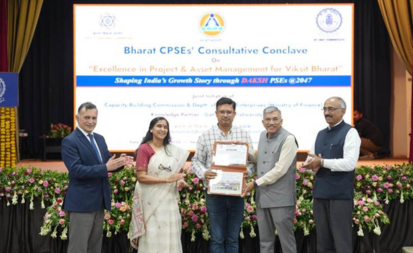
The 3rd Bharat CPSEs’ Consultative Conclave 2026 concluded at Gati Shakti Vishwavidyalaya (GSV), Vadodara, bringing together policymakers, public sector leaders and infrastructure experts to discuss strategies for improving project execution, asset management and organisational excellence across India’s Energy and Mining Central Public Sector Enterprises (CPSEs).
Jointly organised by the Capacity Building Commission (CBC), the Department of Public Enterprises (DPE), Ministry of Finance, and Gati Shakti Vishwavidyalaya, the three-day conclave focused on strengthening infrastructure project delivery and supporting the vision of Viksit Bharat 2047 through better governance, technology adoption and professional capacity building.
Key Highlights
- Three-day Bharat CPSEs’ Consultative Conclave 2026 concludes at GSV, Vadodara.
- Organised by CBC, Department of Public Enterprises and GSV.
- 39 senior delegates from leading Energy and Mining CPSEs participated.
- Discussions covered project planning, DPR preparation, contracting, land acquisition and asset lifecycle management.
- Strong focus on deep-tech adoption and the PM Gati Shakti platform.
- GSV and CBC to publish a Bharat CPSE Compendium of Best Practices.
- Initiative supports infrastructure capacity building under Viksit Bharat 2047.
Focus on Smarter Infrastructure Project Delivery
The conclave served as a collaborative platform for government officials, industry experts, academia and senior executives from major public sector enterprises to exchange best practices on delivering large-scale infrastructure projects more efficiently.
Key themes included:
- Project planning and Detailed Project Reports (DPRs)
- Contract management and procurement
- Land acquisition strategies
- Asset lifecycle management
- Adoption of deep technologies
- Leveraging the PM Gati Shakti National Master Plan for integrated infrastructure development
Participants represented leading CPSEs including NTPC, Coal India, BPCL, HPCL, Indian Oil, ONGC, Oil India, GAIL, SAIL, NHPC, Power Grid, NALCO, NMDC and several others.
Best Practices Compendium in the Works
One of the key outcomes of the conclave is the decision by GSV and the Capacity Building Commission to jointly publish a Bharat CPSE Compendium of Best Practices, documenting successful project execution models and recommendations emerging from the discussions.
The publication is expected to serve as a knowledge resource for improving governance, operational efficiency and project management across India’s public infrastructure sector.
Building Capacity for Viksit Bharat 2047
During the valedictory session, GSV Vice Chancellor Prof. Manoj Choudhary highlighted the university’s growing role in capacity building across infrastructure sectors including railways, highways, aviation, maritime and logistics. He reiterated that the partnership between GSV and CBC will continue to strengthen professional capabilities required for India’s long-term infrastructure development.
CBC Member (Administration) Dr. Alka Mittal emphasised that improving project outcomes requires a combination of organisational culture, disciplined execution, technology adoption and supportive policy frameworks. She also reaffirmed CBC’s commitment to continuing its collaboration with GSV to enhance infrastructure capacity building.
Hospitality, Travel & Tourism Impact
While the conclave primarily focused on infrastructure governance, its outcomes have significant long-term implications for India’s hospitality and tourism sectors.
Improved Connectivity
Better execution of infrastructure projects across railways, highways, airports and logistics can enhance connectivity to tourism destinations, making travel more efficient for domestic and international visitors.
Boost for Hotel Development
Faster completion of infrastructure projects often accelerates hospitality investments, encouraging the development of hotels, resorts and convention centres in emerging destinations.
Support for MICE Tourism
Efficient transport and logistics networks are essential for Meetings, Incentives, Conferences and Exhibitions (MICE). Improved infrastructure planning can strengthen India’s competitiveness in attracting global business events.
Regional Tourism Growth
Enhanced infrastructure delivery under initiatives such as PM Gati Shakti can unlock tourism potential in lesser-explored regions by improving accessibility and supporting destination development.
Why It Matters
The Bharat CPSEs’ Consultative Conclave reflects the government’s continued emphasis on improving project execution and infrastructure governance through collaboration, technology and knowledge sharing. For the hospitality and tourism industry, stronger infrastructure management translates into better connectivity, increased investment opportunities and enhanced visitor experiences—key pillars in achieving India’s ambition of becoming a globally competitive travel destination.