India Successfully Ships Dashehari and Langra Mangoes to Dubai by Sea, Opening Cost-Effective Export Route
ICAR-CISH and APEDA validate 25-day sea-route protocol, enabling premium Uttar Pradesh mangoes to reach Dubai while boosting farmer incomes and strengthening India's fresh fruit exports Key Highlights 12.5 tonnes of Dashehari and Langra mangoes exported from Amroha,

ICAR-CISH and APEDA validate 25-day sea-route protocol, enabling premium Uttar Pradesh mangoes to reach Dubai while boosting farmer incomes and strengthening India’s fresh fruit exports
Key Highlights
- 12.5 tonnes of Dashehari and Langra mangoes exported from Amroha, Uttar Pradesh, to Dubai via sea.
- Shipment transported in a 40-foot refrigerated (reefer) container under a continuous cold chain.
- Export protocol jointly developed by ICAR–Central Institute for Subtropical Horticulture (ICAR-CISH) and APEDA.
- Consignment supplied to Lulu Group, UAE, one of the Gulf’s leading retail chains.
- Mangoes completed a 25-day harvest-to-market journey, with around 90% arriving in marketable condition.
- Farmers earned an additional ₹15–20 per kg compared to conventional export channels.
- Successful trial expected to accelerate sea-route exports from Uttar Pradesh and other mango-producing states.
Sea Freight Breakthrough Strengthens India’s Mango Export Story
India has achieved a significant milestone in its fresh fruit export sector with the successful commercial sea shipment of 12.5 tonnes of premium Dashehari and Langra mangoes from Amroha, Uttar Pradesh, to Dubai, United Arab Emirates.
The export was carried out using a scientifically validated sea-route protocol jointly developed by the ICAR–Central Institute for Subtropical Horticulture (ICAR-CISH), Lucknow, and the Agricultural and Processed Food Products Export Development Authority (APEDA).
The consignment was exported by Shehnaz Export, Amroha, in partnership with Attashi Global, and supplied to Lulu Group, UAE, one of the Gulf region’s largest retail chains.

Scientific Post-Harvest Technology Extends Shelf Life
The mangoes were harvested on June 22, 2026, and underwent a series of scientific post-harvest treatments before export.
The fruits were:
- Treated using ICAR-CISH’s METWASH technology to extend shelf life.
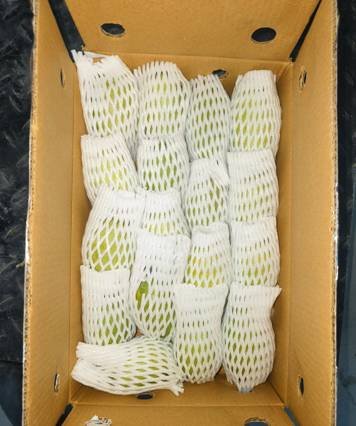
- Scientifically graded and packed at the Amroha Pack House.
- Loaded into a refrigerated 40-foot container.
- Transported entirely under a continuous cold chain via sea.
Although weather-related disruptions caused by a Western Disturbance extended the journey, the shipment reached Dubai on July 17, completing a 25-day harvest-to-market transit.
Despite the longer travel time, approximately 90% of the mangoes remained in excellent marketable condition, validating the effectiveness of the sea-route export protocol.
Sea Freight Delivers Better Returns for Farmers
The successful shipment demonstrates the commercial viability of exporting premium Indian mangoes through sea freight, a significantly more economical alternative to air cargo.
Lower logistics costs enabled exporters to pay farmers ₹15–20 per kilogram more than conventional export channels, improving farm profitability while maintaining the competitiveness of Indian mangoes in overseas markets.
The achievement marks the first successful commercial sea shipment of Dashehari and Langra mangoes from Uttar Pradesh to Dubai under an extended 25-day transit period, paving the way for larger-scale exports in the future.
Exports to Gulf Markets Set to Expand
The Government expects the technology to encourage wider adoption of sea-route exports for mangoes from Uttar Pradesh and other major producing states.
With reduced transportation costs and validated post-harvest handling techniques, exporters can access Gulf and other international markets more efficiently, boosting export earnings and creating stronger market opportunities for Indian mango growers.
The initiative also aligns with India’s broader efforts to enhance agricultural exports through innovation, improved cold-chain logistics and scientific post-harvest management.
Hospitality, Food & Tourism Impact
The successful sea-route export of premium Indian mangoes has positive implications for the hospitality, foodservice and tourism sectors in both domestic and international markets.
- Hotels, restaurants and luxury resorts in the Gulf can access premium Indian mango varieties for a longer period, supporting seasonal menus, desserts, beverages and gourmet dining experiences.
- Lower logistics costs may improve the affordability and availability of premium Indian mangoes for international hospitality businesses.
- Stronger exports to leading retailers such as Lulu Group enhance the global visibility of Indian mangoes, strengthening India’s culinary brand among international consumers and travellers.
- Improved post-harvest technologies and cold-chain logistics support consistent quality, benefiting foodservice operators that rely on premium fresh produce.
- The success of sea-route exports also reinforces mango tourism, regional food festivals and orchard-based experiences in Uttar Pradesh by increasing recognition of iconic varieties such as Dashehari and Langra.
Hospitality Outlook
The validation of a 25-day sea-route export protocol is a major step for India’s fresh fruit industry and hospitality supply chain. By making premium mango exports more economical while preserving quality, the initiative enhances India’s global culinary reputation, supports food and beverage businesses with reliable premium produce and creates new opportunities for gastronomic tourism, export-led agriculture and international market expansion.