NRAA Holds National Consultation to Improve Data Access for Rainfed Agriculture Planning
Experts, research institutions and states discuss quality data generation to strengthen sustainable development and project implementation in India's rainfed regions Key Highlights National Rainfed Area Authority (NRAA) convenes a national consultation on improving quality data generation and
Experts, research institutions and states discuss quality data generation to strengthen sustainable development and project implementation in India’s rainfed regions
Key Highlights
- National Rainfed Area Authority (NRAA) convenes a national consultation on improving quality data generation and dissemination.
- Focus on making agricultural and natural resource data more accessible for effective planning in rainfed areas.
- Research institutions showcase datasets while states highlight challenges in accessing reliable information.
- Consultation covers rainfall, soil health, water resources, land use, crop performance and climate risk data.
- States including Tamil Nadu, Maharashtra, Rajasthan, Andhra Pradesh, Assam, Uttar Pradesh and Bihar participate.
- NRAA aims to create a stronger data ecosystem for evidence-based policy and sustainable rural development.
New Delhi, July 8, 2026:
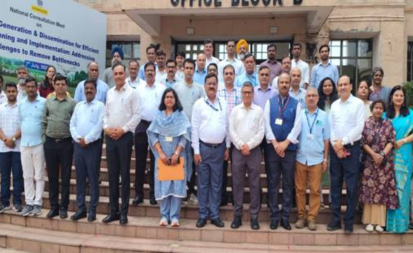
The National Rainfed Area Authority (NRAA) has organised a national consultation to strengthen the generation, accessibility and dissemination of quality data for better planning and implementation of development projects in India’s rainfed regions.
Held at the NASC Complex, Pusa, New Delhi, the one-day consultation focused on improving the availability of reliable datasets that can support evidence-based policymaking, resource allocation and sustainable agricultural development across rainfed areas.
The consultation brought together research organisations, technical institutions and state government departments to bridge the gap between data producers and end users responsible for planning and implementing projects at the grassroots level.
Quality Data Key to Better Planning
Addressing the gathering, Dr. Chandra Shekhar Kumar, Chief Executive Officer of NRAA, stressed that easy access to standardised and high-quality data is essential for improving the effectiveness of government schemes.
He noted that development programmes can deliver better outcomes when implementing agencies have access to reliable baseline information and performance data from previous projects. According to him, the consultation provides an opportunity to understand the practical data requirements of states while creating mechanisms that make critical datasets readily available for planning sustainable interventions.
Research Institutions Present Data Resources
The consultation featured two technical sessions involving leading research and scientific institutions.
The first session focused on data generation, storage and dissemination challenges, with presentations from organisations including the India Meteorological Department, ICAR-National Bureau of Soil Survey and Land Use Planning, Borlaug Institute for South Asia, Indian Agricultural Research Institute, International Water Management Institute, Mahalanobis National Crop Forecast Centre, and ICAR-Central Research Institute for Dryland Agriculture.
These institutions showcased datasets covering rainfall, soil characteristics, land use, water resources, watershed information, crop performance, climate risks and other natural resource indicators.
States Highlight Data Accessibility Challenges
The second technical session examined the data requirements of state governments and the challenges faced in accessing information for project planning.
Officials from Tamil Nadu, Maharashtra, Punjab, Rajasthan, Andhra Pradesh, Assam, Uttar Pradesh and Bihar actively participated, sharing practical issues related to data accessibility and the need for more user-friendly dissemination mechanisms.
The discussions highlighted that timely access to comprehensive datasets can significantly improve project design, monitoring, evaluation and implementation in rainfed regions.
Supporting Sustainable Development in Rainfed Areas
According to NRAA, high-quality datasets covering rainfall patterns, soils, crop performance, socio-economic conditions and climate risks enable policymakers to design location-specific interventions, optimise resource allocation and assess programme outcomes more accurately.
The consultation is expected to contribute towards building a more integrated and accessible agricultural data ecosystem that supports sustainable development in rainfed regions across India.
Hospitality, Food & Tourism Impact
While the consultation focuses on agricultural data systems, its long-term benefits extend to India’s food, hospitality and rural tourism sectors.
Improved planning in rainfed agriculture can enhance the stability of crop production, ensuring more consistent supplies of cereals, pulses, oilseeds and horticultural produce that form the backbone of hotel, restaurant and catering supply chains. Better agricultural forecasting also supports food processors, beverage manufacturers and agribusinesses by reducing production uncertainties.
For rural and agri-tourism destinations, stronger planning and sustainable natural resource management can improve farm productivity, generate rural employment and encourage the development of farm stays, local food experiences and community-based tourism. Reliable agricultural data also strengthens climate resilience, helping safeguard food security and supporting the long-term sustainability of India’s hospitality and tourism ecosystem.