Government Simplifies Agri Rules Under PM Modi’s ‘Reform Express’; Faster Fertiliser Approvals, Digital Imports to Benefit Food & Hospitality Sectors
New reforms announced by Union Agriculture Minister Shri Shivraj Singh Chouhan aim to reduce paperwork, digitise agricultural trade processes and accelerate access to farm inputs across India In a major push towards ease of doing business
New reforms announced by Union Agriculture Minister Shri Shivraj Singh Chouhan aim to reduce paperwork, digitise agricultural trade processes and accelerate access to farm inputs across India
In a major push towards ease of doing business in agriculture, Union Agriculture Minister Shri Shivraj Singh Chouhan has announced a series of reforms designed to simplify regulatory procedures for farmers, agri-traders, fertiliser manufacturers and importers under Prime Minister Shri Narendra Modi’s “Reform Express” initiative.
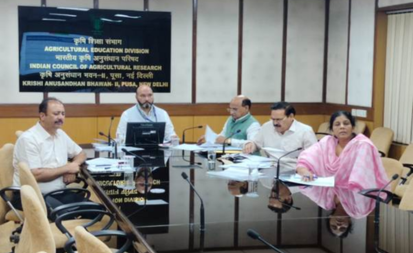
The reforms, reviewed during a high-level meeting of the Ministry of Agriculture and Farmers’ Welfare, focus on reducing compliance burdens, accelerating approvals and strengthening digital governance in the agriculture ecosystem.
Officials informed that several outdated procedures linked to pesticides, fertilisers, agricultural imports and seed trade have either been simplified or completely removed.
Key Highlights
- Licensing process for sale and storage of household pesticides simplified
- Application form reduced from 3 pages to 1 page
- QR codes replace physical product leaflets on pesticide packaging
- Over 40 lakh retailers expected to benefit
- Fertiliser approval process streamlined under FCO, 1985
- Dual approval mechanism removed for new fertiliser registrations
- All 649 customs ports digitally integrated for agri imports
- Single-window application system introduced through ICEGATE
- EXIM Committee abolished for seed and planting material imports/exports
- Bharat-VISTAAR AI platform crosses 44 lakh farmer queries
- Proposal under review to exempt certain inorganic fertilisers from field trials
Simpler Rules for Household Pesticide Retailers
One of the biggest reforms announced relates to the licensing process for household pesticides such as mosquito repellent mats, coils, liquid vaporisers and cockroach sprays.
According to ministry officials, the application process for licences related to sale and storage has now been reduced from three pages to a single-page format. Additionally, physical information leaflets traditionally provided with pesticide products will now be replaced with QR codes printed directly on product labels.
The move is expected to ease compliance for more than 40 lakh retailers and grocery shopkeepers across India.
Faster Fertiliser Approvals to Boost Agri Innovation
The government has also simplified the registration process for new fertilisers under the Fertilizer Control Order (FCO), 1985.
Earlier, manufacturers had to obtain approvals from both the Technical Committee and the Central Fertilizer Committee before introducing new fertiliser products. The revised system removes the dual approval structure, authorising only the Central Fertilizer Committee for approvals.
Officials stated that 19 fertiliser applicants and manufacturers have already benefited from the revised framework.
The ministry is also considering another major reform under which inorganic fertilisers meeting predefined safety and quality standards may no longer require mandatory field trials before approval. The proposal is currently under consultation with the Indian Council of Agricultural Research, state governments and industry stakeholders.
Digital Integration Across 649 Customs Ports
To facilitate smoother import of agricultural commodities, the government has completed end-to-end digital integration across all 649 customs ports in India.
The Plant Quarantine Management System (PQMS) has now been integrated with ICEGATE, enabling importers to file a single online application. Import Release Orders (IROs) will now be issued directly through the importer’s digital login.
The government also abolished the EXIM Committee and removed the mandatory “Prior Recommendation” requirement for import and export of seeds and planting materials, significantly reducing processing timelines.
Bharat-VISTAAR AI Platform Crosses 44 Lakh Queries
The ministry also reviewed the Bharat-VISTAAR – AI in Agriculture platform, launched earlier this year to provide farmers with unified access to agricultural information.
Officials said the AI-based platform has already handled over 44 lakh queries since the launch of its first phase on February 17, 2026.
The platform consolidates information that was previously spread across more than 15 separate portals, allowing farmers to access services and information from a single digital interface.
Hospitality, Foodservice & Tourism Industry Impact
The reforms are expected to have a direct and indirect impact on India’s hospitality, foodservice, tourism and agri-supply ecosystem.
Faster Agricultural Imports Could Improve Food Supply Chains
The digital integration of customs ports and simplified import approvals can help hotels, restaurants, cloud kitchens and food manufacturers access imported agricultural commodities more efficiently. Faster clearances may reduce delays in sourcing specialty ingredients, processed foods and planting materials used in hospitality-linked supply chains.
Boost for Farm-to-Fork and Culinary Tourism
Simplified fertiliser approvals and improved access to agri technologies may support better crop productivity and diversification, benefiting India’s growing farm-to-table dining segment and agri-tourism experiences.
Easier Retail Operations for FMCG & Hospitality Vendors
The simplified licensing process for household pesticides is expected to ease compliance for hospitality suppliers, convenience retailers, travel retail outlets and hotel procurement partners dealing with hygiene and pest-control products.
Technology Push Supports Rural Tourism Ecosystem
The Bharat-VISTAAR AI platform can also strengthen rural entrepreneurship and agri-linked tourism by improving access to real-time agricultural information, especially in emerging rural tourism destinations.
At the conclusion of the review meeting, Union Agriculture Minister Shri Shivraj Singh Chouhan directed officials to further intensify reforms focused on transparency, digital efficiency and governance simplification across the agriculture sector.