JP Nadda and Shivraj Singh Chouhan Launch ‘SEHAT Mission’ Linking Agriculture, Nutrition and Healthcare
ICAR-ICMR partnership aims to build a national framework for ‘Healthy Food, Healthy Farms and Healthy India’ In a major policy shift connecting agriculture with public health, Union Health Minister JP Nadda and Union Agriculture Minister Shivraj
ICAR-ICMR partnership aims to build a national framework for ‘Healthy Food, Healthy Farms and Healthy India’
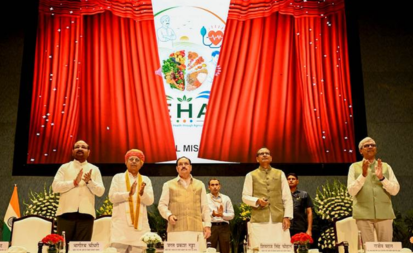
In a major policy shift connecting agriculture with public health, Union Health Minister JP Nadda and Union Agriculture Minister Shivraj Singh Chouhan launched the ‘SEHAT Mission’ in New Delhi, positioning it as a national initiative focused on nutrition, disease prevention and sustainable food systems.
The mission — jointly launched by the Indian Council of Agricultural Research (ICAR) and the Indian Council of Medical Research (ICMR) — aims to create a science-driven framework integrating agriculture, nutrition and healthcare under the theme “Healthy Food, Healthy Farms and a Healthy India.”
Key Highlights
- ‘SEHAT Mission’ launched jointly by ICAR and ICMR
- Initiative links agriculture, nutrition and healthcare systems
- Focus on prevention-oriented healthcare and nutrition security
- Emphasis on bio-fortified crops and traditional grains
- Mission targets lifestyle diseases, malnutrition and micronutrient deficiencies
- Integrated farming and farmer health included as core pillars
- “Food itself can function as medicine,” says Shivraj Singh Chouhan
Shift from Reactive to Preventive Healthcare
Speaking at the launch, Union Health Minister JP Nadda said the mission represents a major transformation in India’s policy approach by moving beyond treatment-focused systems toward prevention, early detection and continuous healthcare.
According to Shri Nadda, the collaboration between ICAR and ICMR marks the beginning of a more integrated and evidence-driven approach to addressing:
- Malnutrition
- Hidden hunger
- Diabetes
- Hypertension
- Cancer
- Other non-communicable diseases
He said India now needs affordable, science-backed and indigenous health solutions rooted in local research and institutional expertise.
“India Must Grow What People Should Eat”
Union Agriculture Minister Shivraj Singh Chouhan described the initiative as a historic step that connects farms, nutrition and healthcare into one coordinated framework.
The minister stressed that India must now move beyond merely increasing food production and instead focus on cultivating crops that improve public health and nutrition outcomes.
He highlighted the importance of:
- Bio-fortified crops
- Nutrient-rich grains
- Balanced diets
- Seasonal food habits
- Integrated farming systems
Traditional grains such as:
- Bajra
- Jowar
- Ragi
- Kodo millet
- Kutki
were specifically highlighted as important for future nutrition security.
Integrated Farming and Farmer Health at Core
The SEHAT Mission will also focus on:
- Farmer health and occupational safety
- Reducing harmful exposure to chemicals and pesticides
- Promoting balanced fertiliser use
- Encouraging sustainable farming practices
According to Shri Shivraj Singh Chouhan, integrated farming systems combining:
- Crops
- Fruits
- Vegetables
- Animal husbandry
- Fisheries
- Beekeeping
can significantly improve nutrition and health outcomes for rural families.
Focus on Food as Preventive Healthcare
The mission places strong emphasis on the relationship between food systems and lifestyle diseases.
Officials said long-term scientific research under the initiative will explore how dietary patterns and crop choices can help prevent or manage:
- Diabetes
- Hypertension
- Obesity
- Micronutrient deficiencies
The programme also aligns with the broader ‘One Health’ approach linking agriculture, human health and environmental sustainability.
Strong Relevance for Food and Hospitality Industries
The SEHAT Mission is expected to have significant implications for India’s:
- Food processing sector
- Hospitality industry
- Institutional catering
- Wellness food market
- Functional foods segment
Demand for:
- Nutrient-rich grains
- Bio-fortified ingredients
- Health-focused menus
- Preventive nutrition products
- Millet-based offerings
is likely to accelerate as healthcare and agriculture policies increasingly converge.
Officials said the mission’s long-term objective is to create a scientific and policy ecosystem where food production, nutrition planning and public health systems work in coordination to build a healthier population and more sustainable food economy.