ICAR Chief Calls for Global Partnerships to Transform Agricultural Education and Strengthen Agri-Food Value Chains
DARE Secretary and ICAR Director General Dr. M. L. Jat highlights industry–academia collaboration, international research partnerships and agricultural diaspora networks to prepare future professionals for emerging food security and sustainability challenges. India is calling for a
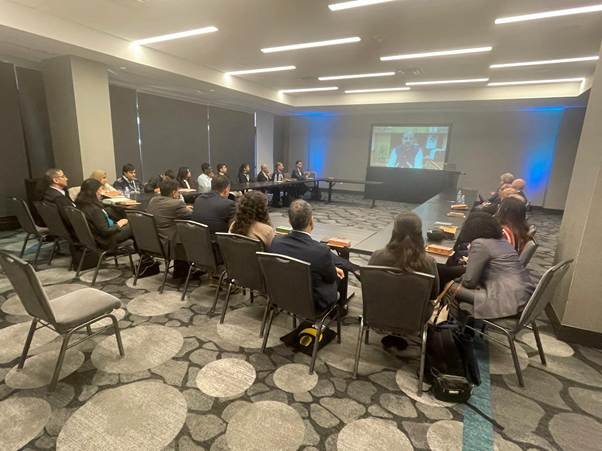
DARE Secretary and ICAR Director General Dr. M. L. Jat highlights industry–academia collaboration, international research partnerships and agricultural diaspora networks to prepare future professionals for emerging food security and sustainability challenges.
India is calling for a more globally connected and industry-oriented approach to agricultural higher education, with stronger partnerships between research institutions, universities, policymakers and businesses across the agri-food value chain.
Dr. M. L. Jat, Secretary of the Department of Agricultural Research and Education (DARE) and Director General of the Indian Council of Agricultural Research (ICAR), outlined this vision while addressing a roundtable virtually during the 2026 Norman E. Borlaug International Dialogue organised by the World Food Prize Foundation in Des Moines, United States.
Speaking as President of India’s National Academy of Agricultural Sciences (NAAS), Dr. Jat emphasised the need to prepare future agricultural professionals to address climate change, natural resource degradation, biodiversity loss and the growing demand for nutritious and healthy food.
He called for agricultural education and research to evolve beyond a production-centric approach towards an integrated agri-food systems and value-chain model, connecting scientific research, education, industry participation and farmer support.
Industry–Academia Collaboration to Strengthen Agricultural Skills
Dr. Jat highlighted the importance of closer collaboration between academia and industry to develop industry-ready professionals and address the changing requirements of agricultural and food systems.
The approach seeks to encourage industry participation across the agri-food value chain, including activities that support farmers. Greater interaction between educational institutions and businesses could help align research priorities, professional training and technological development with practical industry requirements.
For the hospitality and food sectors, this broader value-chain perspective is relevant to the relationship between agricultural production, food processing, sourcing and the supply of ingredients to commercial kitchens and food service businesses.
International Research Partnerships and Knowledge Exchange
Dr. Jat highlighted India’s longstanding partnerships with international institutions, noting that global collaboration creates opportunities for mutual learning and the exchange of scientific and educational advances.
He also referred to efforts to connect the Indian agricultural diaspora with domestic research and educational institutions. Such networks can facilitate knowledge exchange and bring international expertise and experience into India’s agricultural education and research ecosystem.
An important development highlighted during the address was the signing of a Memorandum of Understanding (MoU) with the Council for Agricultural Science and Technology (CAST). The partnership is expected to open avenues for cooperation in agricultural research, capacity development and knowledge exchange.
Dr. Jat expressed confidence that stronger international institutional partnerships would contribute to agricultural research, education and extension, particularly across countries of the Global South.
Policy Dialogue to Address Emerging Agricultural Challenges
The NAAS President also underlined the role of evidence-based policy discussions in strengthening agricultural research and development. He highlighted policy dialogues, policy papers and policy briefs as important mechanisms for addressing emerging challenges.
He called for researchers, policymakers, academic institutions, industry representatives and other stakeholders to work together on collaborative solutions that support resilient and sustainable agri-food systems.
The initiative reflects a broader emphasis on connecting scientific knowledge, policy development and industry requirements to improve the preparedness of future agricultural professionals.
Key Highlights
- Global engagement: DARE Secretary and ICAR Director General Dr. M. L. Jat addressed an international agricultural education roundtable virtually.
- Event: 2026 Norman E. Borlaug International Dialogue, organised by the World Food Prize Foundation in Des Moines, United States.
- Education reform: A call to reimagine agricultural higher education in response to global food and environmental challenges.
- Industry–academia partnerships: Greater collaboration to develop industry-ready agricultural professionals.
- Value-chain approach: Moving beyond production-centric agriculture towards integrated agri-food systems.
- International cooperation: An MoU with the Council for Agricultural Science and Technology (CAST) is expected to support research, capacity development and knowledge exchange.
- Agricultural diaspora: Strengthening links between overseas Indian agricultural expertise and domestic institutions.
- Policy development: Promoting dialogue and evidence-based policy resources to address agricultural research and development priorities.
Impact on Hospitality, Food Processing, Travel and Tourism
1. Stronger links between agriculture and the food service industry
A value-chain approach to agricultural education could encourage greater collaboration between researchers, food producers, processors and downstream businesses. Hotels, restaurants, caterers and institutional kitchens depend on agricultural supply chains for ingredients, making research and skills development relevant to their long-term sourcing requirements.
2. Opportunities for food innovation and product development
Stronger industry–academia collaboration could create opportunities for research into food quality, agricultural products, processing methods and sustainable production systems. Such developments may eventually benefit food manufacturers, restaurant groups and hospitality businesses looking to diversify menus and strengthen ingredient sourcing. The PIB announcement, however, does not specify particular commercial projects or products arising from these partnerships.
3. Relevance for sustainable hospitality procurement
The emphasis on climate change, biodiversity and natural resource management is relevant to hospitality businesses working towards more responsible sourcing. Greater research collaboration could help strengthen the knowledge base around sustainable agricultural practices, although direct outcomes will depend on the research undertaken and its adoption by producers and buyers.
4. Potential for culinary and agri-tourism experiences
India’s agricultural diversity and regional food traditions provide a foundation for farm-based visitor experiences, culinary trails and rural tourism. Stronger connections among agricultural institutions, industry and international knowledge networks could support future opportunities in these areas. However, the announced partnership is focused on agricultural research, capacity development and knowledge exchange rather than a dedicated tourism programme.
Industry Takeaway
The call to reimagine agricultural higher education places global collaboration, industry participation and integrated agri-food value chains at the centre of India’s agricultural development agenda.
For hospitality, food processing and tourism businesses, the significance lies in the potential for stronger research-to-industry connections, improved professional skills and greater attention to sustainable food systems. The benefits will depend on how these partnerships translate into practical research, workforce development and collaboration across the wider food value chain.
Source: Press Information Bureau (PIB), Department of Agricultural Research and Education (DARE), October 22, 2026.