AgriVoltaics in India: Government Plans Major PM-KUSUM Push to Combine Solar Power with Farming
Shivraj Singh Chouhan inaugurates 7th AgriVoltaics World Conference in Delhi; proposed expansion aims to help farmers generate electricity without giving up crop cultivation, while creating rural employment opportunities. India is looking to expand the integration of
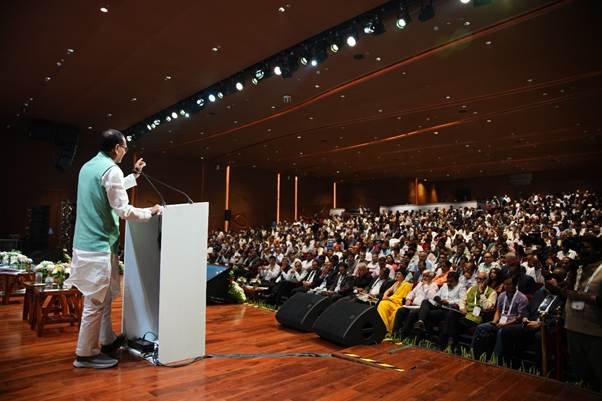
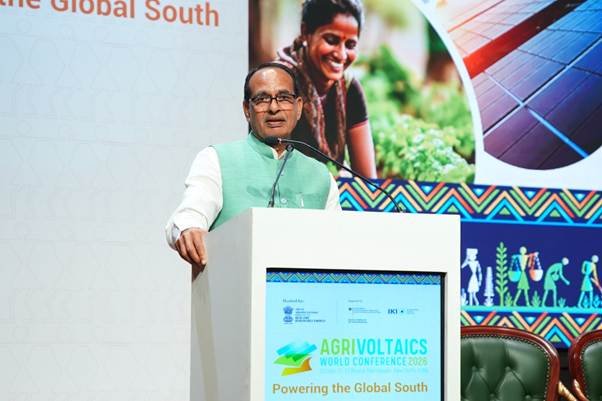
Shivraj Singh Chouhan inaugurates 7th AgriVoltaics World Conference in Delhi; proposed expansion aims to help farmers generate electricity without giving up crop cultivation, while creating rural employment opportunities.
India is looking to expand the integration of solar energy generation with agricultural production, with the government announcing plans for a major AgriVoltaics programme under the next phase of the PM-KUSUM scheme. The initiative aims to enable farmers to generate electricity while continuing to cultivate crops on the same land, creating an additional avenue for rural income.
Union Minister for Agriculture and Farmers’ Welfare and Rural Development Shivraj Singh Chouhan announced the government’s priorities at the inauguration of the 7th AgriVoltaics World Conference at Bharat Mandapam, New Delhi, on October 21, 2026. He emphasised that AgriVoltaics policies must be designed around the needs of small and marginal farmers, who account for more than 85% of India’s farming community.
AgriVoltaics, also known as agrivoltaics, involves installing solar panels above agricultural land while allowing crops to grow underneath. The approach aims to combine food production and renewable electricity generation without requiring farmers to abandon cultivation.
Government Focuses on Small and Marginal Farmers
Chouhan stressed that AgriVoltaics projects must remain practical for India’s average agricultural landholding of approximately 0.96 hectares. He said solar installations should not compromise agricultural productivity and must allow farmers to continue ploughing, cultivating different crops and adjusting crop cycles according to their needs.
The Agriculture Minister also highlighted the importance of suitable panel heights, spacing between supporting structures and arrangements for rainwater drainage and collection. These factors are intended to help prevent soil erosion, conserve water and ensure that agricultural operations can continue efficiently.
The government also emphasised the need for reliable electricity purchase arrangements, grid connectivity and transparent, timely payments to farmers. Farmer Producer Organisations (FPOs) are expected to play a role in implementation, while training rural youth and women in equipment operation, maintenance and repairs could create employment within villages.
Chouhan said the Agriculture Ministry would work closely with the Ministry of New and Renewable Energy to develop an approach that supports farm productivity, renewable energy generation and farmers’ economic well-being.
India Identifies Significant Potential for Agrivoltaics
Union Minister for New and Renewable Energy Pralhad Joshi highlighted the potential scale of the technology, citing a study by The Energy and Resources Institute (TERI).
According to the figures presented at the conference, approximately 47.5 million hectares of India’s agricultural land were technically suitable for AgriVoltaics. Maharashtra, Rajasthan, Andhra Pradesh, Madhya Pradesh, Karnataka and Uttar Pradesh together account for around half of this suitable area.
Joshi stated that installing AgriVoltaics systems on 10% of the technically suitable land could meet India’s projected electricity demand through 2050, according to the cited assessment. He also referred to studies indicating that the technology could increase crop yields by 10–20% under suitable conditions.
These figures represent the potential identified by the cited studies, rather than guaranteed outcomes for every installation. Actual performance will depend on crop selection, solar-panel design, local climate, land conditions and project economics.
Joshi also said India’s total installed electricity generation capacity had exceeded 560 GW, including more than 308 GW of non-fossil energy capacity.
PM-KUSUM Expansion Could Create Rural Jobs
The proposed AgriVoltaics programme will be introduced under the next phase of the PM-KUSUM scheme, which supports the adoption of solar energy in agriculture.
According to Joshi, around 30 lakh agricultural pumps had already been connected to solar energy under PM-KUSUM. The next phase is expected to expand the programme’s focus towards combining crop cultivation with solar power generation.
Studies cited at the conference estimate that the AgriVoltaics sector could generate approximately 3.32 lakh full-time local jobs. Potential employment areas include solar installation, equipment maintenance, repairs and other supporting services.
The programme could also create opportunities for rural enterprises and help reduce migration by providing technical and service-related employment closer to farmers’ homes. However, the scale of employment will depend on programme implementation and the pace of project development.
Key Highlights of the 7th AgriVoltaics World Conference
- Conference: 7th AgriVoltaics World Conference, inaugurated at Bharat Mandapam, New Delhi.
- Government priority: Integrating crop cultivation with solar electricity generation.
- Small-farmer focus: Policies designed around the needs of farmers with limited landholdings.
- Potential suitable area: 47.5 million hectares of agricultural land, according to a TERI study cited at the conference.
- Crop-yield potential: Studies cited by the government indicate possible increases of 10–20% under suitable conditions.
- PM-KUSUM expansion: A major AgriVoltaics programme is planned under the scheme’s next phase.
- Employment potential: Approximately 3.32 lakh full-time local jobs, based on cited studies.
- Implementation priorities: Crop-compatible panel design, rainwater management, grid connectivity and transparent electricity payments.
- Rural skill development: Training opportunities for rural youth and women in solar equipment operation and maintenance.
Impact on Hospitality, Food Processing and Travel & Tourism
1. Potential benefits for hotel energy management
Hotels and resorts require electricity for air-conditioning, lighting, kitchens, refrigeration, laundry and other energy-intensive operations. Greater deployment of renewable energy across India could contribute to the wider availability of cleaner electricity and create additional opportunities for businesses exploring renewable-energy procurement.
However, AgriVoltaics installations on agricultural land do not automatically supply power to nearby hotels. Any direct benefit would depend on grid connectivity, power-purchase arrangements and the applicable regulatory framework.
2. Opportunities for rural resorts and farm stays
Agricultural properties that combine farming with renewable energy could, where suitable and legally permitted, explore complementary activities such as farm stays, rural experiences and educational visits. Solar installations alongside productive farmland may also provide an opportunity to demonstrate sustainable agriculture and renewable energy to visitors.
The conference announcement does not establish a specific tourism programme, so such opportunities would depend on individual projects, local planning requirements and commercial viability.
3. Relevance for food supply chains
The emphasis on continuing crop cultivation alongside solar generation is important for the food sector because it seeks to avoid the complete displacement of agricultural production by energy infrastructure. If implemented effectively, AgriVoltaics could diversify farmers’ income sources while retaining agricultural activity on suitable land.
For hotel procurement teams, restaurants and food processors, the longer-term relevance will depend on whether the model sustains crop productivity and supports reliable supplies of agricultural produce.
4. Sustainable destination development
Renewable energy combined with agricultural production could support sustainability initiatives at rural tourism destinations and nature-based hospitality properties. Potential applications include educational tourism, farm-based experiences and demonstrations of climate-conscious land use, subject to appropriate infrastructure and local permissions.
5. New opportunities for rural enterprises
The proposed programme’s emphasis on local technical skills and employment could strengthen service ecosystems in participating rural areas. In destinations where tourism and agriculture coexist, a stronger network of trained local workers and rural enterprises may create complementary economic opportunities.
Industry Takeaway
India’s proposed expansion of AgriVoltaics under PM-KUSUM signals an effort to combine agricultural productivity with renewable energy generation, particularly for small and marginal farmers. The government’s emphasis on crop-compatible solar infrastructure, reliable payments and rural skills will be important to the model’s success.
For hospitality and tourism businesses, the initiative’s relevance lies in its potential contribution to renewable-energy development, rural enterprise and sustainable destination experiences. Its impact on hotel energy costs, food sourcing and tourism activity will depend on the programme’s rollout, project-level economics and the ability to protect agricultural productivity.
Source: Press Information Bureau (PIB), Ministry of Agriculture and Farmers’ Welfare, October 21, 2026.