India’s Agriculture Sector Accelerates Shift to Digital, Precision and Sustainable Farming
From AI-powered crop monitoring and digital surveys to drones, mechanisation and climate-smart practices, government initiatives are reshaping farm productivity, resource efficiency and rural livelihoods Key Highlights More than 10.33 crore Farmer IDs generated under AgriStack as of
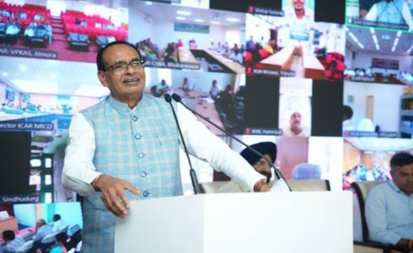
From AI-powered crop monitoring and digital surveys to drones, mechanisation and climate-smart practices, government initiatives are reshaping farm productivity, resource efficiency and rural livelihoods
Key Highlights
- More than 10.33 crore Farmer IDs generated under AgriStack as of August 6, 2026.
- Digital Crop Survey covered 604 districts and over 28.5 crore plots during Kharif 2025.
- DGCES expanded to 23 States/UTs, bringing greater transparency to crop-yield estimation.
- 2,122 agricultural drones distributed/approved under SMAM, while 1,094 drones have been distributed to women SHGs under Namo Drone Didi.
- Precision agriculture technologies are delivering gains in water efficiency, crop yields, farm income and labour productivity.
- Sustainable agriculture programmes have brought 114.60 lakh hectares under micro-irrigation and 11.81 lakh hectares under natural farming.
- Kalanamak rice has emerged as a high-value specialty crop, with its price rising from ₹40/kg in 2018 to ₹150/kg in 2026.
- Chhattisgarh is emerging as an export-oriented Tilapia production and processing hub, with 382 tonnes already exported to the US.
Technology becomes central to India’s farm transformation
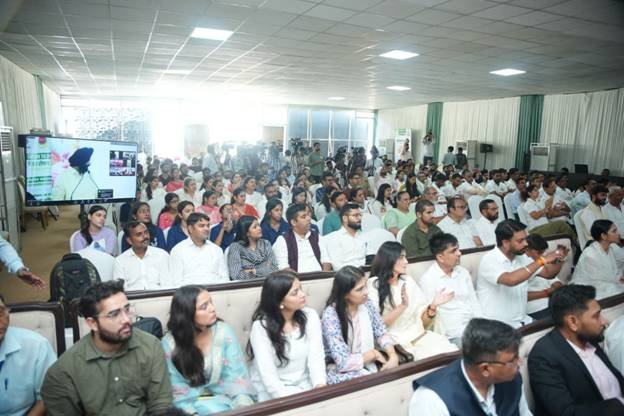
India’s agriculture sector is increasingly moving beyond conventional cultivation towards a technology-driven model combining satellite imagery, drones, Artificial Intelligence (AI), Internet of Things (IoT), sensors, GIS, remote sensing, robotics and digital platforms.
Recent government updates presented in Parliament and through the Agriculture Ministry highlight how these technologies are being deployed across crop monitoring, yield estimation, farm mechanisation, precision irrigation, pest surveillance, crop insurance, livestock management and market-oriented production.
The shift is particularly significant for small and marginal farmers, as government-backed Custom Hiring Centres, Farm Machinery Banks and rental platforms aim to provide access to advanced equipment without requiring individual ownership.
Digital agriculture expands across the country
The Digital Agriculture Mission is creating a digital foundation for farmer-centric services. More than 10.33 crore Farmer IDs had been generated by August 6, 2026.
The Digital Crop Survey, meanwhile, digitally captures crops grown on farmland using photographs and geo-tags. During Kharif 2025, the survey covered 604 districts and more than 28.5 crore plots, supporting production estimates, procurement planning, input supply and logistics.
The Digital General Crop Estimation Survey (DGCES) has also expanded from a pilot in 10 States during Kharif 2023-24 to 23 States/UTs currently. Its paperless system uses geo-tagging, time-stamping and photographic evidence to improve the reliability and timeliness of Crop Cutting Experiments.
The government is also deploying AI through platforms such as BharatVistaar, which has served more than 5.9 lakh farmers and addressed over 93 lakh queries, providing location-specific advisories on crops, livestock, weather, markets, schemes and pest management.
Drones and precision farming gain momentum
Under the Sub-Mission on Agricultural Mechanization (SMAM), farmers receive financial assistance for agricultural machinery and drones. A total of 2,122 drones have been distributed or approved under the scheme.
The Namo Drone Didi programme is creating another pathway for technology adoption by equipping selected women Self Help Groups with drones that can be rented to farmers for spraying fertilisers and pesticides. As of the latest update, 1,094 drones had been distributed to Drone Didis.
ICAR’s National Network Programme on Precision Agriculture (ICAR-NePPA) brings together 16 research institutes working on sensor-based crop and soil monitoring, drone and satellite applications, AI, IoT, precision aquaculture and livestock technologies.
The reported outcomes demonstrate the potential of these technologies. In Goa, precision farming increased rice and cowpea yields while substantially reducing irrigation water and labour requirements. Drone-based foliar nutrient application was reported to improve crop yields by 4-5% and reduce spraying costs by around 15%.
Mechanisation targets India’s small farms
The government is also strengthening farm mechanisation through SMAM.
Farmers can receive 40-50% financial assistance for machinery, while Custom Hiring Centres can receive assistance of up to 40% of project cost. Farm Machinery Banks receive up to 80% assistance, rising to 95% in the North Eastern States.
The policy also promotes precision agriculture equipment, drones, women-friendly machinery, machinery testing, training and demonstrations.
Meanwhile, the Crop Residue Management scheme in Punjab, Haryana, Uttar Pradesh, Madhya Pradesh and Delhi supports machinery-based solutions to reduce stubble burning.
The government has also permitted 100% FDI through the automatic route in agricultural machinery manufacturing, creating scope for greater domestic production and technology transfer.
Sustainability increasingly linked with farm economics
Technology adoption is being accompanied by a wider push towards sustainable agriculture.
Government programmes have generated 26.18 crore Soil Health Cards, while 114.60 lakh hectares have been brought under micro-irrigation, benefiting around 100 lakh farmers.
Natural farming under the National Mission on Natural Farming has covered 11.81 lakh hectares across 24,031 clusters, benefiting 24.69 lakh farmers.
Organic farming programmes have also expanded, while agroforestry initiatives have supported the establishment of 826 nurseries and the raising of around 1,062.18 lakh saplings over the last three years.
Government evaluations cited in the Parliament update indicate that 90.1% of farmers under the National Mission on Natural Farming reported reduced input costs compared with chemical fertiliser-based farming.
Specialty crops offer new income and export opportunities
The government’s focus is not limited to production efficiency. Several initiatives are aimed at converting distinctive agricultural products into higher-value market opportunities.
In Uttar Pradesh, Kalanamak rice has seen substantial growth in cultivation and profitability. Its reported sale price increased from ₹40/kg in 2018 to ₹150/kg in 2026, while the number of farmers cultivating the crop rose from 2,915 in 2018 to 23,000 in 2024.
A Common Facility Centre in Siddharthnagar is supporting processing, packaging and export activities, while APEDA is facilitating international market access.
Similarly, Chhattisgarh is developing an export-oriented Tilapia cluster. The State has already exported 382 tonnes of Tilapia to the United States, while government and institutional support is being directed towards quality seed, processing, value addition, cold-chain infrastructure and market linkages.
The wider strategy covers 34 fisheries production and processing clusters, aimed at making Indian fisheries more competitive in international markets.
Agriculture education and entrepreneurship receive a technology push
The technology transition is also creating demand for a new generation of agricultural professionals.
The government recently released ₹21.35 crore in scholarships to more than 6,000 agriculture students through the National Scholarship Portal-DBT system. The initiative is designed to ensure more timely and transparent scholarship payments.
Agriculture students are also being encouraged to gain practical exposure and pursue research, innovation and agri-startups, reflecting the increasingly multidisciplinary nature of modern farming.
Green initiatives complement the technology transition
The agriculture sector’s transformation is being accompanied by stronger environmental messaging.
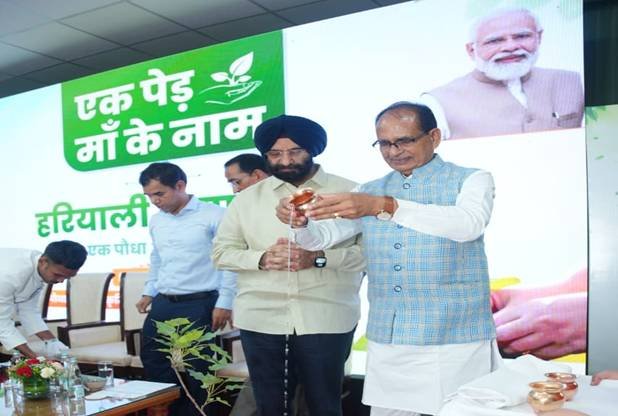
More than 50,000 saplings were planted across 31 States during the Hariyali Amavasya plantation campaign led by Agriculture Minister Shivraj Singh Chouhan and the Vriksh Mitra Parivar.
The initiative, linked with the broader “Ek Ped Maa Ke Naam” campaign, emphasised that environmental protection is closely connected with agriculture, soil health and water security.
What this means for rural and agritourism
The combined push towards precision agriculture, sustainable farming, specialty crops and technology-enabled fisheries could have a wider impact beyond farm production.
For the hospitality, travel and tourism ecosystem, several opportunities stand out:
- Agri-tourism: Technology-enabled farms, organic clusters and specialty-crop regions can become experiential tourism destinations.
- Food tourism: Products such as Kalanamak rice can strengthen regional culinary identities and premium food experiences.
- Rural stays: Higher farm incomes and organised agricultural clusters can support farm stays, rural resorts and community-based tourism.
- Culinary exports: Value-added fisheries and specialty agricultural products can create stronger links between local food production, restaurants and international markets.
- Sustainable hospitality: Water-efficient agriculture, natural farming and agroforestry align with the growing demand for environmentally responsible tourism.
- Farm-to-table supply chains: Digital traceability and improved cold chains could make it easier for hotels and restaurants to source distinctive regional produce.
The bigger picture
Taken together, these initiatives indicate a broader transition in Indian agriculture—from increasing production alone to building data-driven, resource-efficient, climate-resilient and market-linked agricultural ecosystems.
The next opportunity lies in connecting this transformation more closely with food processing, hospitality, tourism, exports and rural entrepreneurship, allowing farmers and rural communities to capture greater value from the products and experiences they create.