10,000 Farmer Producer Organisations Formed as FPO Turnover Crosses ₹20,000 Crore
Government says FPOs are expanding into aggregation, value addition and marketing, strengthening farmer linkages with organised food markets Key Highlights 10,000 FPOs have been formed under the Central Sector Scheme since 2020-21. 1,175 FPOs have 100% women membership. Women
Government says FPOs are expanding into aggregation, value addition and marketing, strengthening farmer linkages with organised food markets
Key Highlights
- 10,000 FPOs have been formed under the Central Sector Scheme since 2020-21.
- 1,175 FPOs have 100% women membership.
- Women account for around 40% of total FPO shareholders.
- FPOs have reported cumulative turnover of ₹20,358 crore as of July 31, 2026.
- 9,865 FPOs have availed management-cost support.
- 8,357 FPOs have received equity grants.
- 3,140 FPOs have accessed credit guarantees.
- FPOs are engaged in input supply, aggregation, procurement, value addition and marketing of agricultural produce.
India’s network of Farmer Producer Organisations (FPOs) has reached 10,000 entities under the government’s Central Sector Scheme for Formation and Promotion of 10,000 FPOs, with their cumulative reported turnover crossing ₹20,000 crore.
According to the government, FPOs formed under the scheme reported a combined turnover of ₹20,358 crore as of July 31, 2026, indicating the growing role of farmer collectives in organised agricultural marketing and value chains.
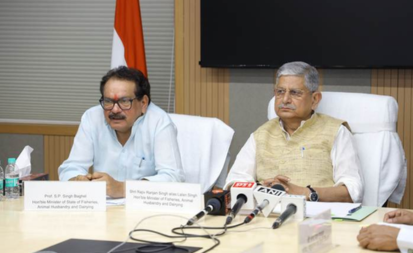
The information was provided by Minister of State for Agriculture and Farmers Welfare Ramnath Thakur in a written reply in the Rajya Sabha.
FPOs expand beyond farm production
The FPOs are operational across different stages of the agricultural value chain.
Their activities include:
- agricultural input supply;
- aggregation of produce;
- procurement;
- value addition;
- processing and marketing; and
- connecting farmers with markets.
By pooling the produce of multiple farmers, FPOs can create greater volumes for buyers and potentially improve farmers’ bargaining power and market access.
However, individual FPOs are at different stages of development, meaning their scale of operations and turnover varies according to their age, membership and business activities.
Women gain a larger role in FPOs
Women’s participation is a significant component of the programme.
The government reports that 1,175 FPOs have been formed with 100% women members, while women account for approximately 40% of total shareholders across FPOs.
The scheme also requires the Board of Directors or Governing Body of every FPO to have at least one woman member.
The growing participation of women in producer organisations could strengthen their role in agricultural marketing, processing and value-added food businesses.
Financial and professional support continues
The government provides FPOs with financial and institutional support during their early stages.
As of the latest assessment:
- 9,865 FPOs have received management-cost support;
- 8,357 FPOs have received equity grants; and
- 3,140 FPOs have availed credit guarantees.
Each FPO is also provided five years of professional handholding support from the date of registration through designated implementing agencies.
Where an FPO shows low levels of activity, Cluster-Based Business Organisations (CBBOs) can provide additional capacity building, business facilitation and market-linkage support.
The objective is to help FPOs become commercially sustainable rather than remain dependent on initial government assistance.
₹20,358 crore cumulative turnover
The reported ₹20,358 crore cumulative turnover represents the business activity generated by FPOs formed under the Central Sector Scheme.
The figure should not be interpreted as uniform performance across all 10,000 organisations, as the government notes that FPOs were established in different years and are at different stages of development.
Older and more established FPOs generally have had more time to build their membership, markets, processing activities and customer base.
Why FPO growth matters to hospitality
The expansion of FPOs could become increasingly relevant to India’s hotel, restaurant and foodservice industry.
Hotels and restaurants require consistent supplies of vegetables, fruits, grains, pulses, spices, oilseeds and other agricultural products. FPOs can potentially act as organised aggregation points between farmers and large institutional buyers.
This can create opportunities for hospitality businesses to develop more structured farm-to-hotel and farm-to-restaurant sourcing models.
For large hotel groups and institutional kitchens, the ability to purchase aggregated produce from organised farmer groups can potentially simplify procurement while improving traceability.
Opportunity for local and regional sourcing
FPOs involved in value addition and processing can also move beyond supplying raw agricultural commodities.
Potential products include:
- processed fruits and vegetables;
- packaged pulses;
- cold-pressed oils;
- spices;
- regional food products;
- grains and millets; and
- other locally produced specialty foods.
This creates an opportunity for hotels and restaurants to incorporate regionally sourced products into menus and retail offerings.
For hospitality brands focused on local sourcing, FPOs could become an important link between farmers and commercial kitchens.
FPOs and culinary tourism
The development also has a potential connection with culinary and rural tourism.
India’s regional cuisines are closely connected to local agricultural products. Stronger farmer organisations can help preserve and commercialise these regional food chains by creating organised channels for local produce.
Hotels and tourism operators could potentially use FPO-linked products in:
- regional cuisine experiences;
- farm-to-table dining;
- local food festivals;
- destination food trails; and
- agri-tourism experiences.
For rural destinations, stronger FPOs could also support local employment and value addition instead of agricultural produce leaving the region as an unprocessed commodity.
A more organised farm-to-food chain
The government’s FPO programme is gradually creating a layer of organised farmer-owned enterprises between primary producers and agricultural markets.
With 10,000 FPOs formed and ₹20,358 crore in cumulative reported turnover, the next phase will be about improving their commercial scale, processing capabilities, market access and institutional-buyer linkages.
For the hospitality industry, this could mean a growing opportunity to connect directly with organised farmer groups and build more traceable, local and resilient food supply chains.
The bigger opportunity
The success of FPOs will ultimately depend on their ability to operate as sustainable businesses after the initial handholding period.
If more FPOs develop strong processing, branding, logistics and institutional-buyer relationships, they could become important suppliers to India’s expanding food, hospitality and tourism ecosystem, while allowing farmers to capture a larger share of value generated beyond the farm gate.