India Develops Agro-Climatic Agricultural Roadmaps to Boost Productivity, Farmer Income and Food Resilience
ICAR-led planning underway across seven States and the Andaman & Nicobar Islands to align agriculture with local climate, resources and market needs Key Highlights Agricultural Action Plans have been initiated for Assam, Goa, Maharashtra, Uttarakhand, Tamil Nadu,
ICAR-led planning underway across seven States and the Andaman & Nicobar Islands to align agriculture with local climate, resources and market needs
Key Highlights
- Agricultural Action Plans have been initiated for Assam, Goa, Maharashtra, Uttarakhand, Tamil Nadu, Andhra Pradesh and the Andaman & Nicobar Islands.
- Roadmaps are being developed around agro-climatic conditions, natural resources, climate resilience and farmers’ needs.
- ICAR, State Governments, agricultural universities and experts are collaborating on the plans.
- The framework aims to improve productivity, profitability and resource-use efficiency.
- States can use the roadmaps while preparing annual action plans under various agricultural schemes.
- The initiative could strengthen regional food production and support local sourcing, culinary tourism and rural tourism.
India is developing agro-climatic agricultural roadmaps for several States and the Andaman & Nicobar Islands, with the objective of aligning farming practices and investments with local climate conditions, natural resources and farmers’ requirements.
According to the government, Agricultural Action Plans have been initiated in Assam, Goa, Maharashtra, Uttarakhand, Tamil Nadu, Andhra Pradesh and the Andaman & Nicobar Islands.
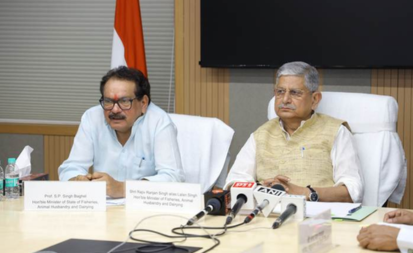
The information was provided by Minister of State for Agriculture and Farmers Welfare Ramnath Thakur in a written reply in the Lok Sabha.
Agriculture planning tailored to local conditions
The roadmaps are being prepared through collaboration between ICAR, the Department of Agriculture & Farmers Welfare, ICAR institutes, State Governments, State Agricultural Universities and agricultural experts.
The planning process considers factors including:
- agro-climatic regions;
- natural resource availability;
- climate resilience;
- technological interventions;
- farmers’ requirements; and
- State-specific agricultural priorities.
The objective is to ensure that agricultural development strategies are technically validated while remaining aligned with the conditions in individual regions.
Focus on productivity and resource efficiency
The Agricultural Roadmaps are intended to provide a broad policy framework for agriculture and allied sectors.
The government says they will focus on improving productivity, profitability and resource-use efficiency, while helping States address their specific agro-climatic challenges.
Rather than applying a uniform agricultural model across the country, the approach seeks to identify strategies that are better suited to local conditions.
States and Union Territories can refer to these guiding principles while preparing annual action plans under different government schemes.
Building climate-resilient agricultural systems
Climate resilience is a central component of the roadmap approach.
Agricultural production is increasingly affected by variations in rainfall, temperature, water availability and other climatic factors. Aligning crop and allied-sector planning with local conditions can help States make more informed decisions about resource allocation, technology adoption and production systems.
The roadmaps are also intended to support more efficient use of natural resources while maintaining agricultural productivity.
Potential to strengthen regional food production
One of the expected outcomes is greater self-sufficiency in agricultural and allied commodities.
For India’s food economy, region-specific agricultural planning could influence the availability of locally produced grains, pulses, fruits, vegetables, spices and other agricultural products.
This has potential relevance for the hotel, restaurant and foodservice industry, particularly as businesses increasingly explore local and regional sourcing.
Better alignment between agricultural production and local agro-climatic conditions could help strengthen the supply base for region-specific ingredients and reduce dependence on production systems that may be poorly suited to local resources.
Implications for hospitality and culinary tourism
The initiative also has a potential connection with culinary tourism.
India’s food identity varies significantly from region to region, and local agricultural products are often at the heart of those cuisines.
Agricultural planning that supports region-specific crops and allied activities could help preserve and strengthen local food ecosystems, creating opportunities for:
- farm-to-table sourcing;
- regional cuisine programmes in hotels and restaurants;
- local food experiences;
- farm and agri-tourism;
- destination-specific culinary products; and
- stronger links between farmers and hospitality businesses.
For destinations such as Goa, Assam, Uttarakhand, Tamil Nadu and the Andaman & Nicobar Islands, where tourism and local food are closely connected, strengthening agricultural supply chains could have wider economic implications.
Rural employment and tourism opportunities
The roadmaps also aim to generate rural employment opportunities and support sustainable growth in agriculture and allied sectors.
A stronger agricultural economy can complement rural and experiential tourism by creating opportunities around farms, local food production, processing, traditional agricultural practices and regional culinary experiences.
However, converting these agricultural gains into tourism opportunities will depend on investment in infrastructure, market linkages, processing and visitor-facing experiences.
A shift towards region-specific agricultural planning
The Agricultural Roadmaps represent a move towards planning agriculture according to local agro-climatic realities rather than applying a one-size-fits-all approach.
By linking climate resilience, technology, natural resources, farmer needs and State priorities, the framework aims to improve agricultural productivity while supporting income growth and sustainable resource use.
For India’s hospitality and tourism sectors, the longer-term opportunity lies in building stronger connections between regional agriculture, local food supply chains and destination experiences.