10,000 Farmer Producer Organisations Formed as FPOs Expand into Processing, Trade and Food Supply Chains
Government says more than 65 lakh farmers have been brought into FPOs, with thousands now holding input licences and operating processing units Key Highlights 10,000 FPOs have been formed under the Central Sector Scheme since 2020–21. More than
Government says more than 65 lakh farmers have been brought into FPOs, with thousands now holding input licences and operating processing units
Key Highlights
- 10,000 FPOs have been formed under the Central Sector Scheme since 2020–21.
- More than 65 lakh shareholders, predominantly small and marginal farmers, have been collectivised.
- 5,765 FPOs have their own processing units.
- 6,928 FPOs hold seed licences, while 4,987 have pesticide licences and 6,650 have fertiliser licences.
- FPOs are increasingly involved in aggregation, processing, trading, digital commerce and exports.
- Government has released ₹827.81 crore as management-cost assistance and ₹631.98 crore as matching equity grants.
India has completed the formation of 10,000 Farmer Producer Organisations (FPOs) under its flagship FPO promotion scheme, strengthening farmer aggregation while expanding the role of producer organisations across agricultural processing, trading, digital commerce and food supply chains.
The Central Sector Scheme for Formation and Promotion of 10,000 FPOs has been operational since 2020–21. According to the government, the organisations are increasingly moving beyond primary agricultural production into activities such as input supply, aggregation, value addition, processing, seed production, e-commerce and export promotion.
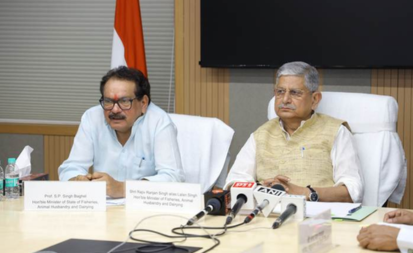
The information was provided by Minister of State for Agriculture and Farmers Welfare Ramnath Thakur in a written reply in the Lok Sabha.
FPOs increasingly moving into processing and trade
FPOs allow farmers to collectively purchase inputs, aggregate produce and negotiate with buyers, helping them leverage economies of scale.
Their business activities now cover a broad range of areas, including:
- agricultural input supply;
- aggregation and trading;
- value addition and food processing;
- seed production;
- digital commerce through e-marketplaces;
- custom hiring services; and
- export promotion.
The scale of these organisations is also reflected in their financial performance.
According to audited financial statements for 2024–25, 6,964 FPOs recorded annual turnover of up to ₹50 lakh. Another 862 FPOs reported turnover between ₹50 lakh and ₹1 crore, while 1,135 FPOs recorded turnover of more than ₹1 crore.
More than 65 lakh farmers brought into collective model
The scheme has so far brought together more than 65 lakh shareholders, predominantly small and marginal farmers.
The collective model is intended to improve farmers’ bargaining power for both agricultural inputs and the sale of produce while enabling them to participate in higher-value activities.
The government provides financial support of up to ₹18 lakh per FPO towards management and handholding expenses during the initial three years.
Eligible FPOs can also receive a matching equity grant of up to ₹15 lakh, while a credit guarantee facility is available for project loans of up to ₹2 crore per FPO.
In addition, each FPO receives up to five years of handholding support through Cluster-Based Business Organisations (CBBOs), covering areas such as capacity building, business planning, market linkages and institutional development.
So far, ₹827.81 crore has been released as management-cost assistance and ₹631.98 crore as matching equity grants.
Thousands of FPOs now have processing capabilities
The growing focus on value addition is particularly relevant to India’s food supply chain.
According to the government, 5,765 FPOs have their own processing units, enabling producer organisations to move further up the value chain instead of selling agricultural produce only in raw form.
The scheme has also supported the development of FPO capabilities in agricultural input distribution.
As of now:
- 6,928 FPOs have seed licences;
- 4,987 FPOs have pesticide licences;
- 6,650 FPOs have fertiliser licences; and
- 3,083 FPOs have availed credit guarantees.
This expanding infrastructure could allow more farmer organisations to participate directly in organised agricultural and food markets.
Industry linkages identified as a priority
The National Academy of Agricultural Sciences, in Policy Paper No. 144 covering FPOs registered across the country, has recommended strengthening linkages between FPOs and industry.
The recommendations include connecting FPOs with institutional buyers, strengthening industry linkages and improving their access to research and development.
Such linkages could be important in helping FPOs transition from primarily farmer-aggregation platforms into commercially viable businesses serving larger food and agricultural markets.
What it means for food and hospitality
The expansion of FPOs has direct relevance to the food, hospitality and organised retail supply chain.
FPOs with aggregation, processing and trading capabilities can potentially become more structured suppliers of agricultural commodities to food businesses.
For hotels, restaurants, caterers and food processors, stronger FPO networks could create opportunities for:
- direct sourcing of farm produce;
- more consistent supply and quality;
- procurement of regional and specialty ingredients;
- greater traceability of agricultural products;
- sourcing processed and value-added products directly from producer groups; and
- stronger farm-to-market connections.
The development could also support the growth of local and regional food experiences, particularly where FPOs aggregate specialty crops, horticultural products, pulses, spices or other ingredients associated with particular destinations.
Potential impact on travel and tourism
For tourism, the FPO model can strengthen the agricultural base behind culinary tourism, farm tourism and rural tourism.
Greater farmer aggregation and value addition can create opportunities for destinations to showcase local produce through farm visits, food experiences, regional products and local cuisine.
The benefits, however, will depend on how effectively FPOs build reliable commercial relationships with institutional buyers, hospitality businesses, retailers and processors.
Building a stronger farm-to-food chain
The formation of 10,000 FPOs marks a significant expansion of India’s farmer-collective ecosystem. With thousands already entering processing, trading, digital commerce and other value-added activities, the next phase will increasingly depend on commercial market linkages and institutional procurement.
For the hospitality and food sector, this could gradually create a more organised bridge between Indian farmers and the businesses that turn agricultural produce into food, dining experiences and regional culinary products.