Building Tomorrow’s Hotels: Integrating Design, Technology, and ESG
Design First, Sustain Forever: Rethinking Hotel Development
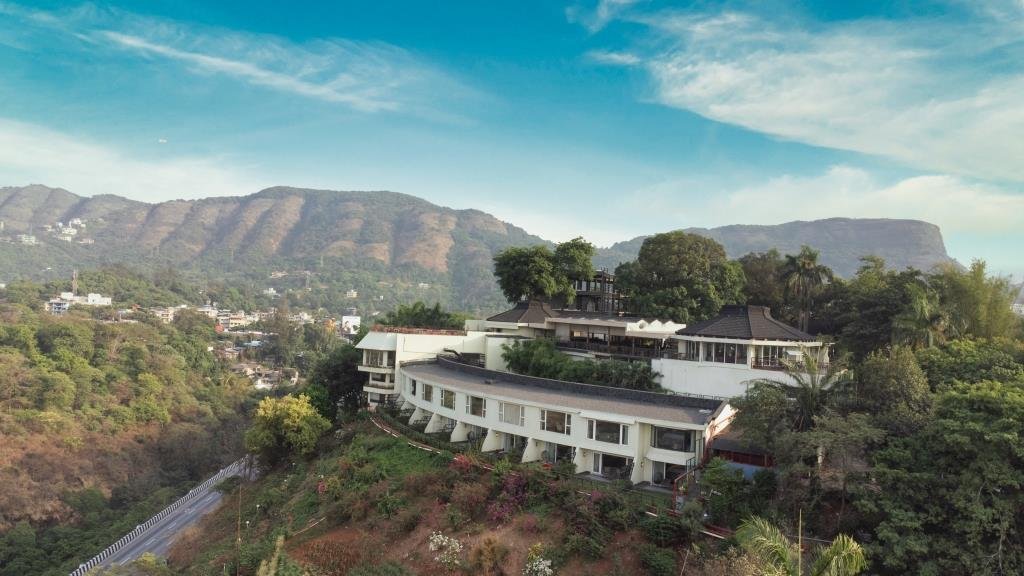
In Conversation with Salil Khare, Chief Projects Officer, Chalet Hotels Limited

How can architecture and design directly reduce energy and water consumption in hotel operations?
Design has the highest influence on operational efficiency when performance is embedded at the concept stage rather than added later.
Energy efficiency in hospitality assets is largely driven by passive design optimisation—including solar orientation analysis, façade design with appropriate window-to-wall ratios, external shading devices, high-performance glazing, and envelope insulation to reduce heat gain. Computational tools are now widely used in early-stage design to simulate daylight autonomy, solar exposure, and thermal loads, enabling reductions in HVAC demand before systems are even specified.
Advanced strategies such as natural ventilation modelling, atrium stack effect design, and hybrid ventilation systems can significantly reduce dependence on mechanical cooling in suitable climates.
Water efficiency is similarly achieved through integrated planning. This includes dual plumbing systems for greywater reuse, on-site sewage treatment plants (STPs) for recycling non-potable water, rainwater harvesting linked to groundwater recharge, and pressure-regulated, aerated fixtures calibrated to reduce consumption without affecting user experience.
On the systems side, performance is enhanced through heat recovery wheels, variable refrigerant flow (VRF) systems, high COP heat pumps, and smart BMS platforms that integrate occupancy data, weather inputs, and demand response algorithms.
The most effective hospitality projects combine passive design, engineered systems, and digital controls into a unified energy-water strategy, enabling measurable reductions in consumption while maintaining guest comfort standards.
How does Chalet Hotels Limited approach sustainability across its development portfolio?
At Chalet, sustainability is treated as a design and engineering problem solved at the front end of the project lifecycle.
A significant focus is placed on site planning and massing, where building orientation, shading geometry, and microclimate response are analysed to minimise thermal loads. These decisions directly influence the sizing of mechanical systems, resulting in long-term energy savings and capex optimisation.
Material selection is approached from both a performance and lifecycle perspective—prioritising low-embodied carbon materials, regional sourcing, and durability in high-traffic hospitality environments.
From an infrastructure standpoint, projects incorporate integrated water cycles—including STPs, treated water reuse for HVAC and landscaping, and stormwater management systems designed for peak rainfall events.
Operational efficiency is further supported through digital asset management systems, sub-metering, and real-time monitoring to ensure that design intent translates into actual performance.
By contrast, retrofit-driven interventions often address isolated inefficiencies. Chalet’s approach focuses on system-level optimisation, ensuring that sustainability measures contribute directly to operational resilience, cost efficiency, and long-term asset performance.
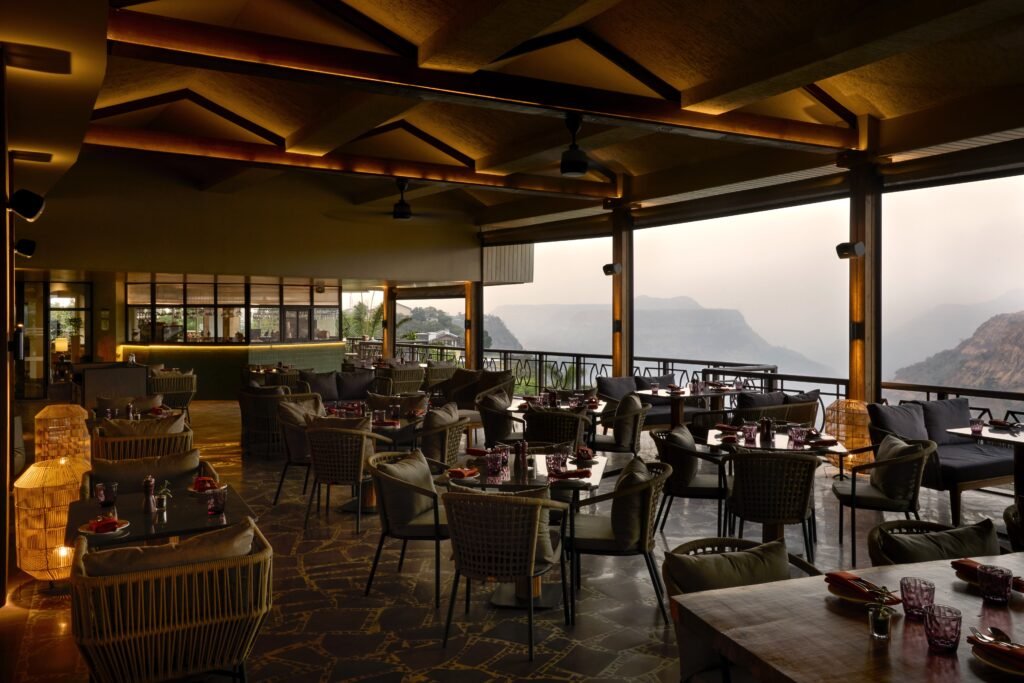
How do you ensure sustainability without compromising aesthetics?
Sustainability and aesthetics are increasingly aligned through material intelligence and climate-responsive design.
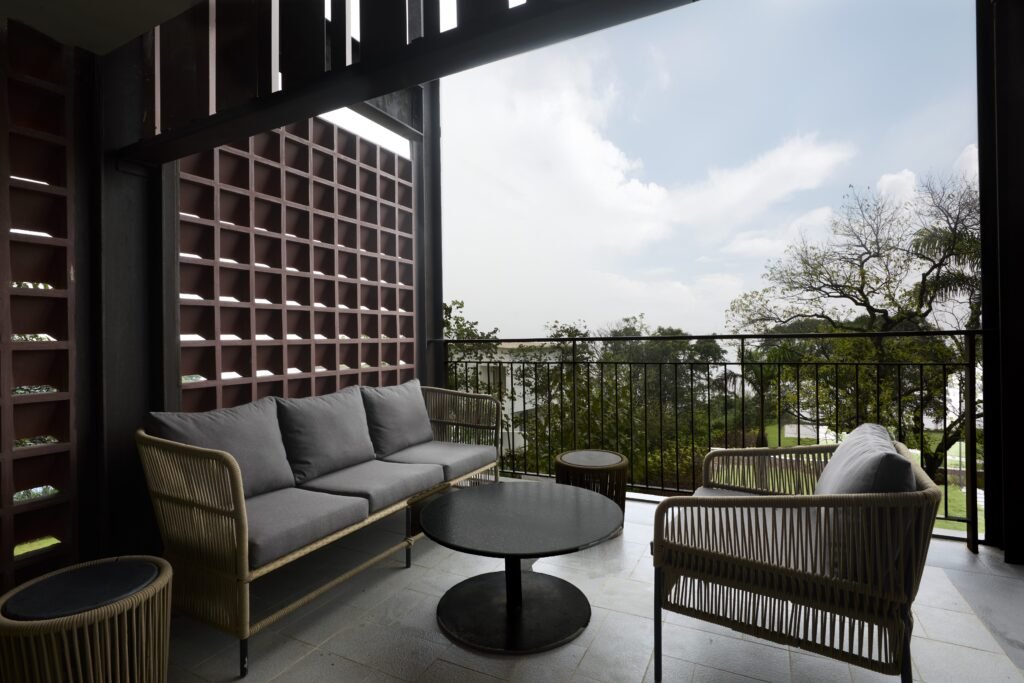
The use of regionally appropriate materials—such as laterite stone, terracotta screens, lime-based plasters, and engineered timber—provides both thermal performance benefits and a strong visual identity. For example, ventilated façades and jali screens act as passive shading devices while contributing to architectural expression.
Contextual design further enhances this integration. By responding to site-specific parameters—sun path, prevailing wind direction, humidity, and topography—buildings can achieve passive cooling, glare reduction, and daylight diffusion without reliance on artificial systems.
From a technical lens, façade design is now often driven by parametric modelling, enabling architects to optimise shading depth, aperture size, and material performance while maintaining visual coherence.
For guests, these design strategies translate into improved thermal comfort, better indoor air quality, and a stronger sense of place. Sustainability therefore becomes an enabler of experience—delivering spaces that are both environmentally responsive and culturally authentic.
A lifecycle-based approach ensures these design choices remain practical, maintainable, and operationally efficient over time.
What is driving the shift towards design-led sustainability in hospitality?
The shift is being driven primarily by performance gaps observed in retrofit-based sustainability models.
Historically, hotels relied on post-construction upgrades—such as LED retrofits or fixture replacements—which offered incremental savings but did not address core inefficiencies in building orientation, envelope performance, or system design.
Today, developers and operators recognise that up to 70–80% of a building’s lifecycle performance is influenced by early design decisions—including spatial planning, system integration, and passive strategies.
Additionally, increasing energy costs, water scarcity in urban centres, and evolving ESG expectations from investors are pushing developers toward predictable, measurable performance outcomes, which are only achievable through integrated design approaches.
Digital tools such as energy simulation, BIM-based coordination, and lifecycle costing models are also enabling more precise decision-making at the design stage.
While adoption varies across market segments, the industry is clearly moving toward a model where sustainability is not an add-on but a core planning parameter that influences design, engineering, and operations simultaneously.
What trends will shape the next generation of hotel developments in India?
The next generation of hospitality developments will be defined by performance-driven, climate-responsive design frameworks.
Key trends include the integration of high-performance building envelopes, optimised glazing systems, and advanced shading strategies to reduce cooling loads in tropical and composite climates.
Water resilience will become central, with closed-loop water systems, on-site treatment, and reuse infrastructure being standard across large-format developments.
On the energy side, a shift toward electrification of thermal loads, including heat pumps and renewable integration (such as rooftop or façade-integrated solar), is expected to accelerate.
Smart infrastructure will also evolve—from basic automation to AI-enabled building management systems capable of predictive maintenance, load optimisation, and real-time performance benchmarking across properties.
Spatial planning will prioritise flexibility and multi-functionality, allowing hotels to adapt to changing demand patterns while improving utilisation efficiency.
However, the key challenge remains bridging the gap between design intent and operational performance. The next phase of innovation will focus on data-driven validation, continuous commissioning, and stronger integration between design, operations, and asset management teams.
How will sustainability standards evolve over the next 5–10 years?
Sustainability standards in hospitality are likely to shift from prescriptive compliance frameworks to performance-based benchmarks.
Rather than focusing solely on certifications, the industry will increasingly adopt measurable KPIs—such as energy use intensity (EUI), water use per occupied room, carbon emissions per key, and indoor environmental quality metrics.
Design strategies will need to support net-zero readiness, including high-efficiency envelopes, electrified systems, and renewable integration. Carbon accounting—both operational and embodied—is expected to play a larger role in project evaluation.
At the guest level, sustainability will be delivered through invisible performance enhancements—such as improved thermal comfort through passive systems, enhanced indoor air quality, and daylight-optimised environments—without compromising luxury expectations.
Emerging trends such as biophilic design, wellness integration, and “quiet luxury” will naturally align with these goals, reinforcing the link between sustainability and experience.
Overall, the focus will move toward continuous performance monitoring, transparency, and lifecycle accountability, ensuring that sustainability outcomes are both measurable and verifiable over time.
How can ESG-aligned design strengthen long-term asset value?
ESG-aligned design directly influences financial performance, risk mitigation, and asset longevity.
From an environmental standpoint, optimised energy and water systems reduce operating expenses and improve net operating income (NOI). Assets designed with resilience in mind—such as flood management, heat mitigation, and resource efficiency—are better positioned to withstand climate-related risks.
Social factors—such as employee well-being, local sourcing, and community integration—enhance brand perception and guest loyalty, which are critical in the hospitality sector.
Governance frameworks ensure operational transparency, regulatory compliance, and consistent performance tracking, reducing long-term risk exposure.
Importantly, ESG metrics are increasingly influencing investment decisions, lending terms, and asset valuations. Investors are favouring assets that demonstrate stable, predictable performance and lower lifecycle risk.
When ESG principles are embedded at the design stage and carried through operations, they create more efficient, adaptable, and future-ready assets, delivering both immediate cost benefits and sustained long-term value.