Mumbai–Ahmedabad Bullet Train Project Achieves Third Tunnel Breakthrough in Maharashtra
High-speed rail corridor records its third mountain tunnel breakthrough in five months, underscoring rapid progress on India's first bullet train project connecting Maharashtra and Gujarat. Key Highlights Third mountain tunnel breakthrough achieved in Maharashtra's Palghar district. MT-07 tunnel
High-speed rail corridor records its third mountain tunnel breakthrough in five months, underscoring rapid progress on India’s first bullet train project connecting Maharashtra and Gujarat.
Key Highlights
- Third mountain tunnel breakthrough achieved in Maharashtra’s Palghar district.
- MT-07 tunnel spans 417 metres and will carry both up and down bullet train tracks.
- Three mountain tunnel breakthroughs completed within five months.
- Advanced monitoring, safety and tunnelling technologies deployed.
- Seven of the project’s eight mountain tunnels are located in Maharashtra.
- Mumbai–Ahmedabad corridor passes through major industrial and economic zones.
- Project expected to transform intercity travel, business mobility and tourism.
- High-speed rail infrastructure likely to create long-term opportunities for hospitality and destination development.
Mumbai–Ahmedabad Bullet Train Project Crosses Another Major Engineering Milestone
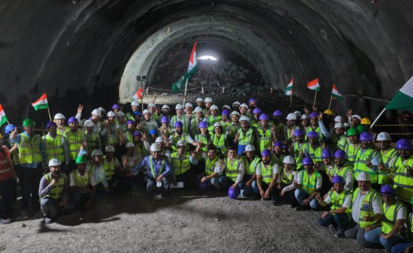
Mumbai, June 2: Construction of India’s first high-speed rail corridor continues to gather momentum with the successful breakthrough of the third mountain tunnel in Maharashtra, marking another significant milestone for the ambitious Mumbai–Ahmedabad Bullet Train Project.
The latest breakthrough was achieved at the MT-07 tunnel near Ambesari village in Dahanu Taluka of Palghar district. Stretching 417 metres in length and 14.4 metres in width, the tunnel is designed to accommodate both up and down tracks of the future bullet train network.
The achievement is particularly noteworthy because it represents the third mountain tunnel breakthrough completed in Maharashtra within just five months, highlighting the accelerating pace of work on one of the country’s most complex infrastructure projects.
Engineers executed the excavation using controlled drilling and blasting techniques from both ends of the tunnel while employing sophisticated monitoring systems to ensure safety, structural stability and construction precision.
Real-time monitoring technologies including surface settlement systems, strain gauges, 3D targets and seismographs were deployed throughout the project to track vibrations and ground conditions. Comprehensive worker-safety mechanisms, including ventilation, fire-safety infrastructure and geotechnical supervision, were also maintained during construction.
The breakthrough follows earlier milestones achieved on MT-05 and MT-06 tunnels in January and February this year respectively.
Project authorities reported that tunnelling progress across the Maharashtra section continues to advance steadily. Several other mountain tunnels have either reached advanced stages of excavation or have already been completed.
The Mumbai–Ahmedabad High-Speed Rail corridor traverses one of India’s most economically significant regions, connecting industrial clusters, manufacturing hubs and major urban centres across Maharashtra and Gujarat.
Beyond its engineering significance, the project is increasingly being viewed as a catalyst for regional economic transformation and future mobility infrastructure.
Why It Matters for Travel & Tourism
The Mumbai–Ahmedabad Bullet Train corridor has the potential to fundamentally alter travel dynamics between western India’s major commercial and tourism destinations.
Once operational, high-speed rail is expected to significantly reduce travel times between key cities, making same-day business travel more convenient while creating opportunities for short-duration leisure trips.
Industry observers believe improved connectivity could strengthen tourism flows between destinations in Maharashtra and Gujarat, encouraging weekend travel, cultural tourism, business tourism and regional exploration.
Cities located along the corridor may also witness increased visitor traffic as improved accessibility often leads to greater hotel demand, retail development and tourism investment.
The experience of high-speed rail systems globally suggests that stations frequently emerge as hubs for commercial activity, hospitality projects, convention facilities and mixed-use developments.
Hospitality Sector Outlook
For the hospitality industry, the project could generate long-term opportunities across multiple segments.
Potential Benefits Include:
- Increased business travel between Mumbai, Surat, Vadodara and Ahmedabad.
- Growth in MICE tourism (Meetings, Incentives, Conferences and Exhibitions).
- Rising demand for hotels and serviced accommodations near future stations.
- Expansion of food and beverage outlets around high-speed rail hubs.
- Improved accessibility to secondary tourism destinations.
- Growth in weekend and short-stay travel markets.
Hospitality developers and tourism stakeholders are closely monitoring infrastructure projects such as the bullet train corridor because enhanced transportation connectivity often translates into higher visitor arrivals and stronger regional tourism ecosystems.
Infrastructure and Economic Significance
The project also showcases India’s growing expertise in advanced tunnelling, monitoring and high-speed rail technologies. The successful completion of multiple mountain tunnel breakthroughs demonstrates increasing domestic capabilities in delivering complex transportation infrastructure at scale.
As work progresses across the corridor, the Mumbai–Ahmedabad Bullet Train Project continues to be one of India’s most closely watched infrastructure developments, with implications extending beyond transportation into tourism, hospitality, urban development and regional economic growth.
SEO Keywords
Mumbai Ahmedabad Bullet Train, Bullet Train Project India, High Speed Rail India, Palghar Tunnel Breakthrough, Maharashtra Infrastructure News, Railway Infrastructure India, Tourism Connectivity India, Hospitality Industry Growth, Business Travel India, High Speed Rail Tourism, Mumbai Ahmedabad Corridor, Travel Infrastructure India, Bullet Train Construction Update, Tourism Development India, Infrastructure Projects India.
Source: PIB | Ministry of Railways | June 2, 2026