Piyush Goyal and Rajiv Ranjan Singh Review Fisheries Export Strategy as India Hits Record ₹72,325 Crore Seafood Exports
Centre pushes value-added seafood, inland fisheries exports and processing infrastructure to strengthen India’s global seafood position India’s fisheries export sector received a fresh policy push as Union Commerce Minister Piyush Goyal and Union Fisheries Minister Rajiv
Centre pushes value-added seafood, inland fisheries exports and processing infrastructure to strengthen India’s global seafood position
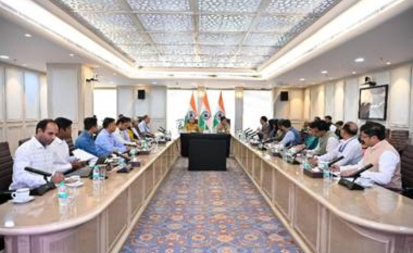
India’s fisheries export sector received a fresh policy push as Union Commerce Minister Piyush Goyal and Union Fisheries Minister Rajiv Ranjan Singh co-chaired a high-level meeting in New Delhi to discuss seafood export promotion, value addition and infrastructure development.
The meeting focused on strengthening India’s seafood export ecosystem through better coordination between the Department of Commerce and the Department of Fisheries, while also exploring strategies to expand inland fisheries exports and improve global market access.
Key Highlights
- India records all-time high seafood exports of ₹72,325.82 crore in FY 2025–26
- Frozen shrimp remains the biggest export contributor
- Centre focuses on value-added seafood products and export diversification
- Push for inland fisheries exports and freshwater species promotion
- Proposal to establish processing plants in every district
- Government stresses traceability, SPS approvals and sustainability compliance
- Tuna exports and deep-sea fishing infrastructure identified as major growth opportunities
India’s Seafood Exports Reach Record High
During the meeting, Piyush Goyal appreciated the fisheries sector for achieving:
- ₹72,325.82 crore in seafood exports
- US$ 8.28 billion export value
- 19.32 lakh metric tonnes export volume
in FY 2025–26.
This marks a significant rise compared to FY 2024–25 exports of:
- ₹62,408 crore
- US$ 7.45 billion
- 16.98 lakh metric tonnes
Frozen shrimp continued to dominate India’s seafood exports, contributing over ₹47,973 crore and accounting for more than two-thirds of total export earnings.
Focus on Value Addition and Export Infrastructure
The ministers discussed several measures to improve India’s competitiveness in global seafood markets, including:
- Scheme convergence between ministries
- Expansion of seafood processing infrastructure
- Promotion of value-added fish products
- Strengthening sanitary and phytosanitary (SPS) compliance
- Market diversification
- Branding and traceability systems
Union Fisheries Minister Rajiv Ranjan Singh stressed the need to establish at least one seafood processing plant in every district to strengthen post-harvest infrastructure and reduce wastage.
He also called for:
- Exporter capacity building
- Skill development programmes
- Improved market readiness
- Expansion of institutional support in coastal and island regions
Inland Fisheries and Freshwater Species Gain Attention
A major focus area of the meeting was developing export opportunities for inland states and freshwater fish species.
Officials discussed:
- Species-wise export potential
- Export gaps across inland states and UTs
- Freshwater fisheries strategies
- Expansion of processing and cold chain networks
The government also highlighted the untapped export potential of high-value tuna species from:
- Andaman and Nicobar Islands
- Lakshadweep
Traceability and Sustainability Become Central Themes
Abhilaksh Likhi, Secretary of the Department of Fisheries, emphasised that traceability and sustainability compliance are becoming increasingly important for international seafood trade.
The government highlighted several recent initiatives, including:
- National Traceability Framework for Fisheries and Aquaculture (2025)
- Marine mammal comparability approval from the US
- Promotion of Turtle Excluder Devices (TEDs)
- Strengthened antibiotic and residue controls
- Notification of EEZ Rules and High Seas Guidelines 2025
Officials said these measures are aimed at improving India’s reputation as a reliable and sustainable seafood supplier in international markets.
Strong Implications for Food Processing and Hospitality Sectors
The fisheries export push is expected to create fresh opportunities for:
- Seafood processing companies
- Frozen and ready-to-cook seafood brands
- Cold chain logistics players
- Export-oriented hospitality suppliers
- Premium seafood restaurants and hotel chains
The increased focus on:
- Value-added seafood
- Traceability
- Sustainability
- Processing infrastructure
- Branding
could also boost India’s position in premium global seafood markets over the coming years.
Officials said the joint meeting has laid the groundwork for a long-term roadmap aimed at strengthening India’s seafood exports in line with the broader vision of Viksit Bharat 2047.