Agriculture Department’s Special Campaign 6 Exceeds Cleanliness Targets, Frees 13,553 Sq. Ft. of Office Space
DA&FW conducts nationwide cleanliness and plantation drives, disposes of 3,733 e-waste items and generates over ₹32 lakh through scrap disposal; initiatives highlight sustainability and resource efficiency. The Department of Agriculture & Farmers Welfare (DA&FW) has reported
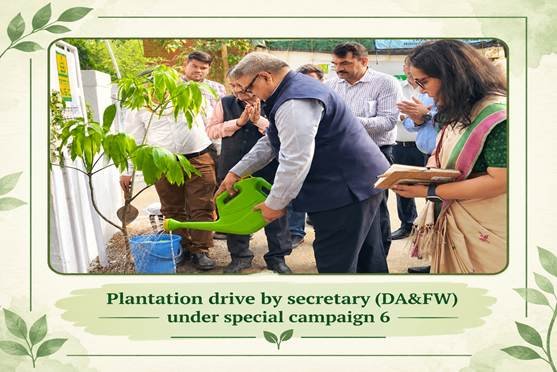
DA&FW conducts nationwide cleanliness and plantation drives, disposes of 3,733 e-waste items and generates over ₹32 lakh through scrap disposal; initiatives highlight sustainability and resource efficiency.
The Department of Agriculture & Farmers Welfare (DA&FW) has reported significant progress under the Government’s Special Campaign 6, recording achievements beyond several targets in cleanliness, waste management and administrative efficiency across its offices and field units nationwide.
Conducted between 2 October and 31 October 2026, following a preparatory phase from 16–30 September, the campaign focused on institutionalising cleanliness, reducing administrative pendency, improving record management and ensuring the responsible disposal of scrap and electronic waste.
As part of the initiative, 21 October 2026 was observed as a dedicated day for DA&FW, with a nationwide, day-long drive focusing on cleanliness and administrative efficiency.
Key Highlights of Special Campaign 6
- 1,179 cleanliness sites covered against a target of 999, exceeding the target by approximately 18%.
- More than 2,000 plants planted across the Department’s attached, subordinate and field offices.
- 3,733 e-waste items disposed of, against a target of 3,298.
- 13,553 sq. ft. of office space freed through systematic disposal and space-management initiatives.
- ₹32.19 lakh generated through scrap disposal.
- 43,411 physical files reviewed, exceeding the target of 39,347.
- 14,032 e-files closed as targeted.
- 26,379 physical files weeded out as part of record-management activities.
- 63,952 public grievances disposed of, against a target of 33,821.
- 177 out of 179 pending references from Members of Parliament addressed.
Waste-to-Wealth and Sustainability Initiatives Take Centre Stage
A notable aspect of the campaign was its emphasis on converting discarded materials into useful and innovative products.
Field institutions, including the Central Farm Machinery Training and Testing Institute (CFMTTI), Budni; MANAGE, Hyderabad; Northern Region Farm Machinery Training and Testing Institute (NRFMTTI), Hisar; and North Eastern Region Farm Machinery Training and Testing Institute (NERFMTTI), Biswanath Chariali, showcased creative models developed using electronic waste and discarded machinery components.
Among the exhibits was a life-sized rhinoceros model created using circuit boards at NERFMTTI, Assam, along with working models of sea boats and tractors made from scrap machinery.
At the National Seeds Corporation (NSC), the DA&FW Secretary reviewed campaign activities, including the disposal of scrap and e-waste through authorised recyclers. The visit also highlighted an 84 kW rooftop solar power facility and initiatives such as preparing bird feed using non-seed materials and producing microgreens from unsold seeds.
These initiatives demonstrated the department’s approach towards resource optimisation, recycling and the Waste-to-Wealth concept.
Impact on Hospitality, Food and Tourism
Although Special Campaign 6 primarily targets government offices, its focus on cleanliness, waste management and resource efficiency offers relevant lessons for India’s hospitality, food service and tourism industries.
1. Stronger sustainability practices for hotels and restaurants
The campaign’s emphasis on authorised e-waste disposal, scrap segregation and recycling reinforces practices that hotels, restaurants and institutional kitchens can adopt to improve their environmental management systems.
2. Waste-to-Wealth opportunities in food service
The NSC initiatives involving microgreens from unsold seeds and alternative uses of non-seed materials highlight the potential for better resource utilisation. Hotels, restaurants and catering businesses can explore similar approaches to reduce avoidable waste and develop sustainable food practices.
3. Cleaner destinations and improved visitor experiences
The nationwide cleanliness and plantation initiatives reinforce the importance of maintaining hygienic and environmentally responsible public spaces. Clean surroundings are an important component of destination attractiveness, particularly for tourism hubs, heritage locations and emerging travel destinations.
4. Greater focus on green operations
The 84 kW rooftop solar installation at NSC also highlights the role of renewable energy in reducing dependence on conventional power sources. Hotels and hospitality establishments can draw lessons from such initiatives while strengthening their own energy-efficiency programmes.
Industry Takeaway
Special Campaign 6 highlights how institutional cleanliness, responsible waste disposal, renewable energy and resource optimisation can contribute to more sustainable operations.
For India’s hospitality and tourism industry, these priorities are increasingly relevant as hotels, restaurants, tourism establishments and food businesses face growing expectations around environmental responsibility, operational efficiency and sustainable destination management.
The DA&FW campaign demonstrates that sustainability is not limited to large infrastructure investments; it can also be advanced through everyday operational practices, systematic waste management and better utilisation of existing resources.