India, Afghanistan Deepen Agricultural Partnership; Joint Working Group Planned to Expand Cooperation
Shivraj Singh Chouhan and Afghanistan's Agriculture Minister discuss seeds, irrigation, climate-resilient farming, agri-trade and research collaboration Key Highlights India and Afghanistan agree to strengthen long-term agricultural cooperation. Both countries to work towards establishing a Joint Working Group (JWG)

Shivraj Singh Chouhan and Afghanistan’s Agriculture Minister discuss seeds, irrigation, climate-resilient farming, agri-trade and research collaboration
Key Highlights
- India and Afghanistan agree to strengthen long-term agricultural cooperation.
- Both countries to work towards establishing a Joint Working Group (JWG) for a structured cooperation roadmap.
- Focus areas include quality seeds, irrigation, climate-resilient agriculture, livestock, fisheries, dairy and agri-trade.
- India offers support in micro-irrigation, digital agriculture, soil health, post-harvest management and capacity building.
- ICAR to expand collaboration through research partnerships, seed systems and agricultural education.
- Discussions also cover value-added agricultural products, private sector participation and market access.
New Delhi, July 8, 2026:
India and Afghanistan have agreed to deepen bilateral cooperation in agriculture, irrigation, livestock and agricultural research, with both countries deciding to work towards establishing a Joint Working Group (JWG) to prepare a long-term roadmap for collaboration.
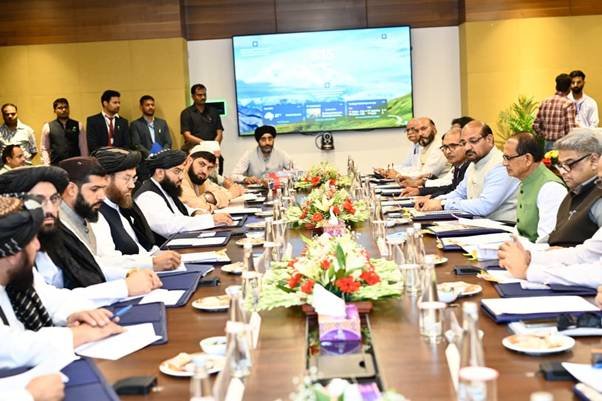
The decision emerged during a bilateral meeting between Union Minister for Agriculture & Farmers’ Welfare and Rural Development Shivraj Singh Chouhan and Afghanistan’s Minister of Agriculture, Irrigation and Livestock Mawlawi Ataullah Omari, held in New Delhi on Tuesday.
Senior officials from the Ministry of Agriculture & Farmers’ Welfare and the Indian Council of Agricultural Research also participated in the discussions.
Focus on Food Security and Seed Systems
Reaffirming India’s commitment to supporting Afghanistan’s agricultural transformation, Shri Chouhan said the two countries share centuries-old civilisational ties built on trust, friendship and strong people-to-people relations.
Food security and crop productivity emerged as key priorities during the meeting.
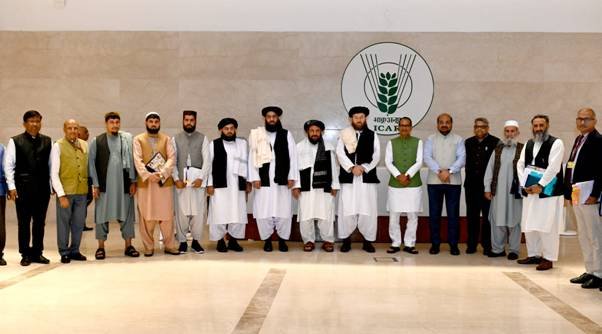
The Afghan delegation sought India’s assistance in improving wheat production through advanced seed technologies and agricultural research. India offered support through the supply of quality wheat, maize and potato seeds, along with climate-resilient and biofortified crop varieties developed by ICAR institutions.
The cooperation is expected to strengthen Afghanistan’s seed systems while enhancing agricultural productivity.
Water Management and Climate-Resilient Farming
Water conservation and climate adaptation formed another major area of discussion.
Afghanistan highlighted challenges arising from water scarcity and climate change, seeking India’s expertise in irrigation infrastructure and watershed development.
India offered technical cooperation in areas including:
- Micro-irrigation systems
- Rainwater harvesting
- Farm ponds and check dams
- Efficient water-use technologies
- Climate-resilient farming practices
Shri Chouhan emphasised that water conservation, scientific farming and quality seeds remain the foundation of sustainable agriculture.
Research, Education and Capacity Building
Both countries agreed to strengthen collaboration in agricultural research and education through ICAR.
The proposed cooperation includes:
- Joint agricultural research programmes
- Faculty and student exchange initiatives
- Laboratory support
- Training for scientists and extension personnel
- Capacity building for veterinarians and agricultural professionals
Discussions also covered collaboration in horticulture, dairy, livestock, poultry, fisheries, digital agriculture, soil health management and post-harvest technologies.
Boost to Agri-Trade and Value Addition
The two sides also explored opportunities to expand bilateral agricultural trade and private sector participation.
Talks focused on promoting trade in agricultural commodities, quality seeds and value-added products while strengthening agricultural value chains and improving market access for Afghan farm produce.
ICAR officials highlighted the longstanding cooperation between India and Afghanistan in agricultural research, watershed management, germplasm exchange and human resource development, while expressing readiness to further expand partnerships across multiple agricultural sectors.
Joint Working Group to Chart Future Roadmap
To institutionalise the partnership, both countries agreed to work towards constituting a Joint Working Group that will prepare a structured roadmap for long-term cooperation, facilitate regular institutional engagement and identify new areas of collaboration based on mutual priorities.
Concluding the meeting, Shri Chouhan reiterated India’s commitment to supporting Afghanistan through research, innovation, technology transfer and capacity building to promote sustainable agriculture, food security and farmer prosperity.
Hospitality, Food & Tourism Impact
The strengthening of India-Afghanistan agricultural cooperation carries positive implications for the hospitality, food processing and trade ecosystem.
Enhanced collaboration in quality seeds, post-harvest management and value-added agricultural products can improve the availability of premium farm produce for food processors, hotels, restaurants and catering businesses. Greater emphasis on agricultural value chains may also create new opportunities for imports of specialty products such as Afghan dry fruits, fresh fruits, saffron and other high-value commodities that are widely used in India’s hospitality sector.
In the long term, stronger agricultural ties and expanded agri-trade can support food security, stabilise raw material supplies for the food and beverage industry and encourage greater business engagement between the two countries. Increased institutional cooperation and people-to-people exchanges in agriculture may also complement future trade missions, culinary collaborations and agro-based tourism initiatives, strengthening regional economic connectivity.