Shivraj Singh Unveils ‘Farmers’ School’ in Vidisha, Launches Scientific Farming Roadmap and Khet Bachao Abhiyan
49-acre model Krishi Vigyan Kendra to serve as a live agricultural laboratory; focus on integrated farming, food processing, agri-startups and value addition to boost rural incomes Key Highlights Union Agriculture Minister Shivraj Singh Chouhan performed the foundation
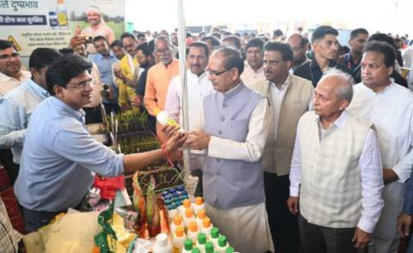
49-acre model Krishi Vigyan Kendra to serve as a live agricultural laboratory; focus on integrated farming, food processing, agri-startups and value addition to boost rural incomes
Key Highlights
- Union Agriculture Minister Shivraj Singh Chouhan performed the foundation stone ceremony for a model Krishi Vigyan Kendra (KVK) in Vidisha, Madhya Pradesh.
- 49-acre facility will function as a live laboratory for modern farming demonstrations.
- Scientific farming roadmap launched for Vidisha, Raisen, Sehore and Dewas districts.
- ‘Khet Bachao Abhiyan’ expanded with emphasis on soil health, balanced fertilizer use and sustainable agriculture.
- Agri Clinic, helpline services and mobile-based advisory systems announced for farmers.
- Custom Hiring Centres and machine banks to provide affordable access to modern farm equipment.
- Strong push for food processing, value addition and agri-based startups.
- MSP procurement assurance for pulses and incentives for dal mill establishment.
Vidisha Set to Become a Model Hub for Scientific Farming, Food Processing and Rural Entrepreneurship
Vidisha, June 14: Union Agriculture and Farmers’ Welfare Minister Shivraj Singh Chouhan has launched an ambitious agricultural transformation initiative in Madhya Pradesh’s Vidisha district, combining scientific farming, technology adoption, food processing and entrepreneurship under one integrated framework.
During a major farmer outreach programme, the minister performed the bhumi pujan of a model Krishi Vigyan Kendra (KVK) at Berkhedi Jetu village and announced a series of measures aimed at improving farm productivity, sustainability and rural incomes.
The centrepiece of the initiative is a 49-acre model KVK, envisioned as a live demonstration laboratory where farmers will receive practical training on modern agricultural techniques rather than conventional classroom-based instruction.
A ‘School for Farmers’
Positioning the event as a learning platform rather than a political gathering, Chouhan described every attending farmer as a student and emphasized field-based demonstrations, direct interaction with scientists and practical technology adoption.
The model KVK will facilitate direct transfer of agricultural innovations developed by the Indian Council of Agricultural Research (ICAR) network to farmers through demonstrations, training sessions and digital outreach.
Integrated Farming Model for Small Landholders
A key component of the programme is a scientific farming roadmap prepared for Vidisha, Raisen, Sehore and Dewas districts.
The strategy promotes integrated farming systems, combining crop cultivation, horticulture, livestock, fisheries, beekeeping and mushroom production to help small and marginal farmers generate sustainable incomes from limited landholdings.
According to the minister, even farmers with around one hectare of land can significantly improve profitability through diversified farming practices.
Focus on Soil Health and Sustainable Agriculture
Under the expanded Khet Bachao Abhiyan, the government plans to intensify soil testing campaigns and promote balanced fertilizer application.
Farmers will be encouraged to adopt scientific natural farming practices while improving soil health through better nutrient management. The campaign aims to reduce indiscriminate use of chemical fertilizers and pesticides while preserving long-term agricultural productivity.
Digital Advisory and Crop Healthcare
To strengthen extension services, the government will establish an Agri Clinic at the Vidisha KVK, enabling farmers to seek scientific diagnosis and treatment recommendations for crop diseases.
In addition, farmers will receive advisory support through helpline services, mobile applications and digital platforms that provide real-time guidance on soil nutrients, fertilizer requirements and pest management.
Affordable Access to Farm Machinery
Recognizing the financial challenges faced by small farmers, the minister announced the creation of Custom Hiring Centres and Machine Banks.
These facilities will offer access to advanced agricultural equipment such as:
- Laser levellers
- Direct Seeded Rice (DSR) machines
- Drip irrigation systems
- Sprinkler irrigation equipment
The initiative is expected to improve mechanization levels while reducing capital expenditure for farmers.
Major Push for Food Processing and Value Addition
One of the most significant announcements from a food and hospitality perspective was the emphasis on value addition and food processing.
The KVK will provide training in:
- Tomato processing
- Fruit and vegetable value addition
- Food packaging
- Market linkage development
- Agri-business entrepreneurship
The programme will also support startups in sectors such as mushroom cultivation, dairy, poultry and beekeeping, creating new rural business opportunities beyond traditional farming.
Impact on Hospitality, Food Processing and Tourism
The government’s focus on value-added agriculture could have significant implications for India’s hospitality and food service sectors.
Enhanced processing capabilities at the farm level can improve the availability of:
- Locally processed fruits and vegetables
- Specialty mushroom products
- Dairy-based ingredients
- Packaged regional food products
- Farm-origin value-added goods for hotels and restaurants
As hospitality businesses increasingly prioritize local sourcing and farm-to-fork experiences, initiatives such as the Vidisha model KVK can help strengthen regional supply chains and create new opportunities for food entrepreneurs.
The promotion of agri-startups and food processing units may also contribute to the growth of rural tourism experiences centered around farming, food production and local culinary traditions.
Pulses and Oilseeds Mission Gets Fresh Momentum
The minister also reiterated the government’s commitment to increasing domestic production of pulses and oilseeds through cluster-based farming, free seed demonstrations and MSP-backed procurement.
He assured farmers that crops such as pigeon pea, black gram and lentils would continue to receive procurement support, while regions with higher production levels could access subsidies of up to ₹25 lakh for establishing dal mills.
Outlook
The Vidisha initiative represents a comprehensive attempt to bridge agriculture, technology, food processing and entrepreneurship. If successfully implemented, the model could become a template for similar agricultural innovation centres across the country, while simultaneously creating stronger linkages between farming, food manufacturing and the hospitality ecosystem.