Bihar Bets Big on Blue Economy: ₹31.21 Crore Integrated Aqua Park and NFDB Regional Centre to Transform Fisheries Landscape
New fisheries infrastructure at Bhojpur and Patna aims to boost fish production, value-added processing, rural livelihoods, eco-tourism and food supply chains across Eastern India Patna, June 15, 2026: In a major step towards strengthening India's Blue
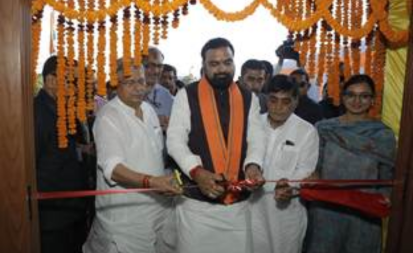
New fisheries infrastructure at Bhojpur and Patna aims to boost fish production, value-added processing, rural livelihoods, eco-tourism and food supply chains across Eastern India
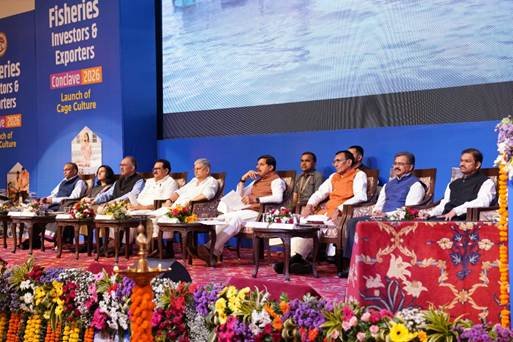
Patna, June 15, 2026: In a major step towards strengthening India’s Blue Economy and Bihar’s growing inland fisheries sector, Union Minister for Fisheries, Animal Husbandry & Dairying and Panchayati Raj Rajiv Ranjan Singh and Bihar Chief Minister Samrat Choudhary on Monday laid the foundation stone of a ₹31.21 crore Integrated Aqua Park at Bhojpur and inaugurated the National Fisheries Development Board (NFDB) Regional Centre in Patna.
The twin projects are expected to accelerate technology adoption, improve fish seed production, strengthen value-added fisheries infrastructure and create new opportunities for food processing, hospitality, tourism and rural entrepreneurship in eastern India.
Key Highlights
- ₹31.21 crore Integrated Aqua Park approved under Pradhan Mantri Matsya Sampada Yojana (PMMSY)
- State-of-the-art aquaculture complex to come up at Vanasaur Fish Seed Farm, Bhojpur
- NFDB Regional Centre inaugurated in Patna to serve Bihar and neighbouring eastern states
- Bihar’s fish production has grown from 3.18 lakh tonnes in 2005 to more than 10.2 lakh tonnes in 2025
- Over ₹900 crore invested in Bihar’s fisheries sector during the last decade
- Bihar now ranks as India’s fourth-largest inland fish-producing state
- Eco-tourism development planned as part of the Integrated Aqua Park project
Modern Aquaculture Hub for Bihar
The Integrated Aqua Park will function as a comprehensive aquaculture ecosystem featuring carp and striped catfish hatcheries, brooder incubation units, biofloc systems, Recirculatory Aquaculture System (RAS) units, fish feed manufacturing facilities, water quality and disease diagnostic laboratories, quarantine infrastructure and a 50-bed residential training hostel.
The project has been designed to improve the availability of quality fish seed, reduce dependence on neighbouring states, promote scientific aquaculture practices and enhance productivity across Bihar’s fisheries value chain.
According to the Ministry of Fisheries, the facility will also serve as a demonstration and training centre, helping fish farmers and entrepreneurs adopt modern technologies that can increase production while ensuring sustainability.
NFDB Centre Brings Technical Support Closer to Fish Farmers
The newly inaugurated NFDB Regional Centre in Patna will act as a strategic fisheries knowledge hub for Bihar and neighbouring eastern states. The centre will focus on training, project development, digital outreach, capacity building and technical support for fishers, cooperatives and aquaculture entrepreneurs.
The centre is expected to promote advanced farming systems such as biofloc technology, cage culture, precision aquaculture and RAS-based fish production, supporting the sector’s transition towards higher productivity and export readiness.
Bihar Emerging as an Inland Fisheries Powerhouse
Speaking at the event, Union Minister Rajiv Ranjan Singh highlighted Bihar’s remarkable fisheries growth story, noting that fish production has risen from 3.18 lakh tonnes in 2005 to over 10.2 lakh tonnes in 2025 due to sustained investments and policy support.
Government data shows that Bihar has received more than ₹902 crore in fisheries-related investments over the past eleven years, including nearly ₹600 crore under PMMSY. These investments have contributed to the creation of hatcheries, feed plants, cold-chain infrastructure, fish transport networks and aquatic health facilities.
Today, Bihar supplies nearly 89,600 metric tonnes of fish annually to neighbouring states, reinforcing its position as a leading inland fisheries producer.
Eco-Tourism Potential Added to the Project
One of the most significant announcements came from Bihar Chief Minister Samrat Choudhary, who revealed that the Integrated Aqua Park will also be developed as an eco-tourism destination.
The initiative aligns with the growing trend of experiential tourism, where visitors seek educational and nature-based experiences linked to agriculture, food production and sustainability.
If developed effectively, the Aqua Park could attract students, researchers, entrepreneurs, industry professionals and tourists interested in aquaculture, environmental conservation and rural development.
What It Means for Hospitality, Food and Tourism
The development carries important implications for the hospitality and food service sectors across eastern and northern India.
A stronger fisheries ecosystem can ensure a more reliable supply of freshwater fish varieties such as Rohu, Catla, Mrigal, Tilapia and Pangasius for hotels, restaurants, resorts and institutional catering operations. Improved cold-chain infrastructure and local processing facilities are also expected to reduce supply disruptions and improve product quality.
For tourism stakeholders, the proposed eco-tourism component opens opportunities for educational tours, culinary tourism, farm visits and community-based rural tourism experiences. As travellers increasingly seek authentic food journeys and sustainable travel experiences, fisheries-linked tourism could emerge as a new niche offering within Bihar’s tourism portfolio.
The Integrated Aqua Park and NFDB Regional Centre together create a complete production-to-knowledge ecosystem that not only strengthens fisheries but also supports broader economic activity across food, hospitality, logistics, tourism and rural development sectors.