India’s 160% Growth in Branded Residences and Sixth Global Rank: Decoding the rise of hospitality in Developers Strategies
By Mr Sandeep Ahuja, Global CEO of Atmosphere Living The question that most luxury residential buyers in India are carrying through the purchase process today is how a home will feel to live in three years
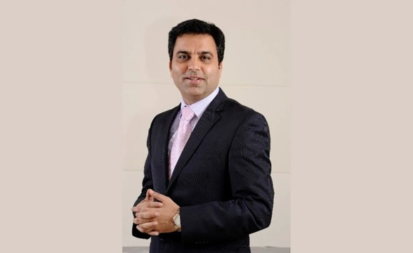
By Mr Sandeep Ahuja, Global CEO of Atmosphere Living
The question that most luxury residential buyers in India are carrying through the purchase process today is how a home will feel to live in three years after possession when the brochure photographs have faded from memory and the only thing that remains is the daily experience of being there.
Branded residences in India are no longer operating at the fringe of the luxury market. They are steadily becoming one of its defining formats. Knight Frank’s recent data, which places India sixth globally in live branded residences after growth of more than 160% over the last decade, reflects more than just momentum. It points to a structural shift in how premium housing is being positioned, valued, and consumed.
For years, luxury residential projects competed largely on visible markers such as architecture, amenities, address, and scale. Those fundamentals remain important, but they are no longer enough on their own. Buyers now evaluate what happens after possession with equal scrutiny. Buyers are placing greater importance on trust, operational credibility, brand association, and long-term value preservation. How is the property maintained? Does the service standard remain intact over time? Is the living experience consistent years after handover? These questions increasingly shape purchase decisions at the top end of the market.
This is where hospitality brands create meaningful differentiation from other forms of branded developments. A conventional brand partnership may influence aesthetics or positioning, but a hospitality brand brings with it an operational culture built around service delivery. The expectation is not simply premium design, but the assurance of five-star standards embedded into everyday living over the long term. That distinction matters because luxury residential buyers are no longer paying only for a product. They are paying for reliability in how that product is experienced over time.
Consider what this means as a daily reality. A resident returns from three weeks abroad to find the property exactly as they left it, the climate set to preference, dry cleaning collected and returned, a grocery order waiting. No call was made, no reminder sent. That is what an operator’s systems produce when they have been built around a genuine service culture rather than a residential management checklist, and it is what a hospitality brand carries into a residential context that a developer, however accomplished, typically cannot.
Since the pandemic, expectations around privacy, wellness, convenience, and managed living have become sharper and far more permanent. What was once the aspirational is now the minimum expectation for premium housing.
The trend is particularly visible across India’s key luxury markets. Mumbai and Delhi NCR continue to attract buyers looking for asset stability, prestige, and long-term value retention. These are highly competitive markets where differentiation increasingly depends on the quality of experience being offered, not just the quality of construction.
Bengaluru reflects another dimension of this evolution. Its globally exposed buyer base is far more accustomed to institutional standards of living and less willing to compromise on operational efficiency. Here, managed and branded residences are valued as much for their predictability as for their luxury positioning. Goa, meanwhile, is demonstrating how the category is expanding beyond
metropolitan primary homes into lifestyle-driven second-home ownership. Buyers are increasingly seeking residences that function like fully serviced private retreats rather than seasonal holiday properties.
What is becoming clear is that the premium housing market is moving into a phase where delivery standards matter as much as development itself. Buyers are no longer evaluating luxury only at launch. They are evaluating how well that luxury is sustained over time. That is fundamentally changing the role of hospitality partnerships within residential real estate.
For developers, these collaborations are not simply branding exercises. They influence buyer confidence, support stronger pricing, and create differentiation in increasingly crowded premium markets. More importantly, they align residential real estate with a service-led model that is better suited to the expectations of today’s global luxury consumer.
The category is also evolving beyond the physical residence. Increasingly, luxury living is being defined by continuity of experience, whether the homeowner is at the property or elsewhere. The larger direction is clear: luxury is becoming less about occasional indulgence and more about seamless, dependable access to service.
India’s position within the global branded residences market will continue to strengthen as buyer expectations evolve. The next phase of luxury housing is unlikely to be defined only by who builds the most impressive projects. It will be shaped by who can deliver the most consistent living experience over time.